World Wars: 1914–20XX
First World War (1914–1918)
Paul von Hindenburg (1847–1934): from Tannenberg to the German presidency
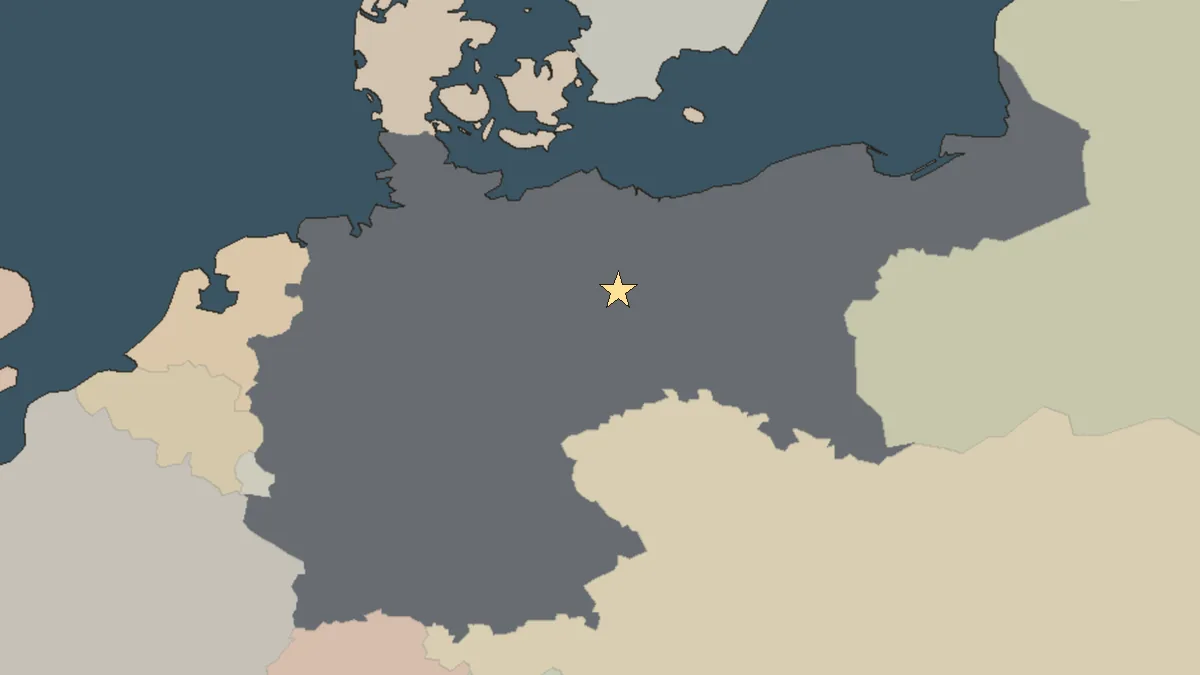
In August 1914 Paul von Hindenburg was a 66-year-old retired general living quietly in Hanover. Within weeks he was the most famous man in Germany. His victory over the Russians at Tannenberg made him a national idol, and from 1916 he and his chief of staff Erich Ludendorff ran not only the German army but much of the German state. After the war, as president of the Weimar Republic, he would make the decision that brought Adolf Hitler to power.
A soldier of the old Prussia
Hindenburg was born in 1847 into an old Prussian noble family with estates in East Prussia. He entered the cadet corps as a boy and fought in both of the wars that created the German Empire: against Austria in 1866, where he was wounded at Königgrätz, and against France in 1870–71. As a young officer he was present in the Hall of Mirrors at Versailles when the German Empire was proclaimed in January 1871.
His later career was solid rather than brilliant. He served on the General Staff and commanded a corps, and in 1911 he retired. He was a large, slow-speaking man with a calm manner and a reputation for steadiness, qualities that would matter in 1914 more than any talent for planning.
Called back: Tannenberg
When the war began, Germany sent most of its army west against France and left only the Eighth Army to defend East Prussia. Two Russian armies invaded faster than the Germans had expected, and after a setback at Gumbinnen the Eighth Army's commander lost his nerve and spoke of retreating behind the Vistula. He was dismissed. On 22 August 1914 Hindenburg received a telegram asking whether he was ready to serve. He was given the command, with Erich Ludendorff, a brilliant staff officer fresh from the capture of Liège, as his chief of staff.
The plan they inherited, worked out largely by the staff officer Max Hoffmann, was to leave a thin screen against the Russian First Army and concentrate against the Second Army under General Alexander Samsonov. Between 26 and 30 August 1914 Samsonov's army was surrounded and destroyed near Tannenberg. Some 90,000 Russians were captured. Hindenburg chose the name of the battle himself, to answer the defeat of the Teutonic Knights at the same place in 1410. In September the Eighth Army drove the Russian First Army out of East Prussia at the Masurian Lakes.
The victories made Hindenburg a living legend. He was promoted field marshal in November 1914 and given command of all German forces in the east. In Berlin a giant wooden statue of him, the "Iron Hindenburg", was set up in 1915, and people paid to hammer nails into it to raise money for the war effort.
The silent dictatorship
By the summer of 1916 Germany was in trouble: the attack at Verdun had failed, the Allies were attacking on the Somme, Russia's Brusilov offensive had shattered the Austro-Hungarian front, and Romania joined the Allies. On 29 August 1916 Kaiser Wilhelm II replaced the chief of the General Staff, Erich von Falkenhayn, with Hindenburg. Ludendorff came with him as First Quartermaster General, a post created for him so that he would share responsibility.
The pair, known together as the Third Supreme Army Command (OHL), soon dominated German politics. The "Hindenburg Programme" tried to double munitions output and mobilise the whole economy. In early 1917 the army withdrew on part of the Western Front to a shorter, heavily fortified position that the British called the Hindenburg Line. The OHL pressed for unrestricted submarine warfare in February 1917, accepting the risk of war with the United States, and helped force out the chancellor, Theobald von Bethmann Hollweg, in July. Historians often describe this period as a "silent dictatorship". Ludendorff did most of the planning; Hindenburg supplied authority, calm and the trust of the public.
Defeat and the legend that followed
After Russia left the war, Hindenburg and Ludendorff gambled on a final offensive in the west in the spring of 1918. It failed, and after the Allied counter-offensives of the summer the OHL told the government at the end of September 1918 that Germany needed an armistice. Ludendorff was dismissed in October; Hindenburg stayed at his post, saw the Kaiser abdicate in November and oversaw the army's return home.
In 1919, testifying before a parliamentary inquiry, Hindenburg repeated the claim that the German army had been "stabbed in the back" by unrest at home. The army had in fact been beaten in the field, but the myth spread widely and poisoned the politics of the new republic.
In 1925 Hindenburg was elected President of Germany, and in 1932 he was re-elected, defeating Adolf Hitler. Yet on 30 January 1933, persuaded by conservative advisers who believed they could control him, he appointed Hitler chancellor. He then signed the emergency decree that suspended civil liberties after the Reichstag fire. When he died in August 1934, Hitler merged the offices of president and chancellor and made himself the sole master of Germany.
Did you know?
- The famous airship Hindenburg, destroyed by fire at Lakehurst, New Jersey, in 1937, was named after him.
- Hindenburg was buried with great ceremony in the Tannenberg Memorial in East Prussia. As the Red Army approached in 1945, his coffin was moved west; he now lies in St. Elizabeth's Church in Marburg.
- The idea for the Tannenberg plan is often credited as much to Max Hoffmann as to Hindenburg or Ludendorff, and Hoffmann himself was said to enjoy pointing this out.
Hindenburg in World Wars: 1914–20XX
Hindenburg's entry in the in-game encyclopedia unlocks on 30 August 1914, the last day of the Battle of Tannenberg, together with the entry on the battle itself. In both scenarios you can lead the German Empire from 28 June 1914 and face the same problem that brought him out of retirement: a two-front war, with Russia advancing in the east while most of your army is committed against France.
In the Historical (1914) scenario the great events of his war, from the Marne to the Spring Offensive of 1918, arrive on their real dates. In the Parallel Fronts scenario, where engines, radio and aircraft matured decades early, East Prussia can be defended or lost with armoured divisions and air wings. Can you win in the east as Hindenburg did, and avoid the defeat in the west that followed?
▶ Play now Free in your browser, no download needed.
Further reading: Wikipedia (English)