World Wars: 1914–20XX
First World War (1914–1918)
Poison gas in World War I: chlorine, phosgene and mustard gas
Few weapons of the First World War caused as much horror as poison gas. It was invisible or drifted in strange coloured clouds, it could blind, burn and suffocate, and it seemed to break every rule of honourable war. In fact gas killed far fewer soldiers than artillery or machine guns, and once good masks were issued, it rarely decided a battle. But it caused enormous suffering, forced every soldier to carry a mask for the rest of the war, and left a deep mark on how the world remembers the conflict.
Chemistry goes to war
Before 1914, the Hague Declaration of 1899 had banned shells whose only purpose was to spread asphyxiating gases. But the trench deadlock pushed both sides to look for any new way to drive defenders out of their dugouts. Germany had the world's most advanced chemical industry, and the chemist Fritz Haber, head of a leading research institute in Berlin, became the driving force behind its gas programme.
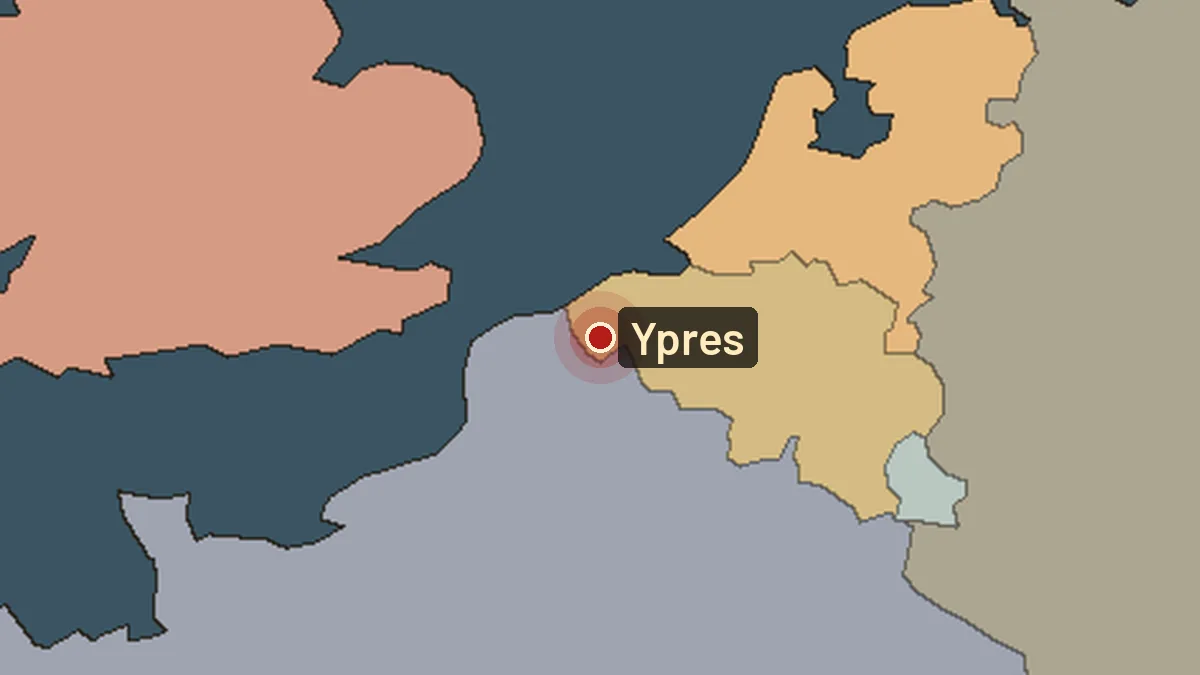
The French used tear gas grenades on a small scale early in the war, and in January 1915 the Germans fired shells containing an irritant gas at the Russians at Bolimów, with little effect in the cold. The first great lethal gas attack came on 22 April 1915 at Ypres in Belgium, when the Germans released chlorine from thousands of cylinders against French troops. It opened a gap several kilometres wide, but the Germans were not ready to exploit it. Within months the Allies were using gas too; the British first released chlorine at Loos in September 1915.
Three main gases
Chlorine was the first. Heavier than air, it sank into trenches and attacked the lungs, but its greenish colour and sharp smell gave a warning, and even simple wet pads over the mouth gave some protection.
Phosgene, introduced from late 1915, was more dangerous. It was nearly colourless, smelled faintly of hay, and could be breathed in without immediate pain. Victims sometimes felt well for hours before their lungs filled with fluid. Phosgene caused most of the gas deaths of the war.
Mustard gas, first used by the Germans near Ypres in July 1917, was different again. It was rarely fatal, but it burned skin, blistered eyes and lungs, and could blind men for weeks. It soaked into the ground and lingered for days, so whole areas became contaminated. By 1918 mustard gas caused more gas casualties than any other agent.
From clouds to shells
Releasing gas from cylinders depended on the wind, and a change in direction could blow the cloud back over one's own trenches, as happened to the British at Loos. Both sides therefore switched to gas shells fired by artillery, which could reach deep behind the enemy line, and the British developed the Livens projector, a simple mortar that threw drums of gas in large salvoes. Artillery mixed gas into ordinary bombardments to force enemy gunners and reserves into masks, slowing and exhausting them. Gas was used on the Western, Eastern and Italian fronts; at Caporetto in October 1917 German gas shells helped break the Italian line.
The gas mask
Protection improved quickly. Early cotton pads gave way to fabric hoods soaked in chemicals, and then to masks with filter boxes: the British small box respirator from 1916 and the German rubber mask with a screw-on canister. Gas alarms, sentries and drills became part of trench life, and even horses and dogs were given masks. Masks were hot and clumsy, and wearing one for hours wore men down, but they made gas far less deadly. Of all gas casualties, only a small share died; many more were blinded, burned or left with damaged lungs for life.
Aftermath
Estimates of gas casualties vary, but most put them at around one million, with perhaps 90,000 deaths, a small fraction of the war's dead. Russia, with poorer protection, suffered especially badly. Yet the fear of gas outlasted the war. Writers such as Wilfred Owen, whose poem "Dulce et Decorum Est" describes a gas attack, fixed its image in memory. In 1925 the Geneva Protocol banned the use of chemical weapons in war. It was not always respected: Italy used mustard gas in its invasion of Abyssinia in 1935–36. But poison gas was not used on the battlefields of Europe in the Second World War.
Did you know?
- Fritz Haber received the Nobel Prize in Chemistry for the synthesis of ammonia, a process that made both fertiliser and explosives. His wife, the chemist Clara Immerwahr, took her own life in May 1915, shortly after the Ypres attack; many accounts link her death to her opposition to his work.
- Adolf Hitler, then a corporal, was temporarily blinded in a British gas attack near Ypres in October 1918 and was in hospital when the war ended.
Poison gas in World Wars: 1914–20XX
The Poison gas entry in the in-game encyclopedia unlocks on 22 April 1915, the day of the first great gas attack at Ypres, together with the entry on the Second Battle of Ypres. It describes the three main gases, how masks reduced their effect, and the 1925 ban. In the Historical (1914) scenario, gas arrives on the Western Front as the trenches have already frozen the war in place.
In the Parallel Fronts scenario, where engines, radio and flight matured decades early, armies have other ways to break a line: armoured divisions and bomber wings. Whichever world you choose, the trench deadlock is the problem you have to solve. How will you break it?
▶ Play now Free in your browser, no download needed.
Further reading: Wikipedia (English)