World Wars: 1914–20XX
First World War (1914–1918)
The Russian Empire in World War I (1914–1917): the steamroller that broke
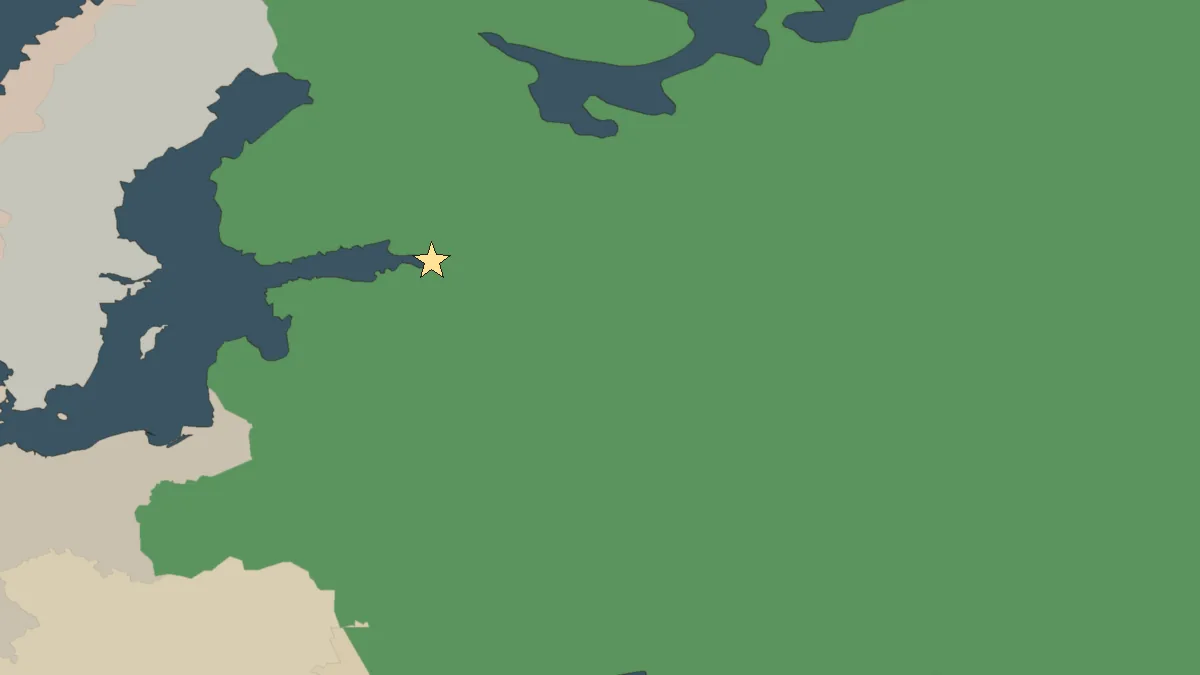
In 1914 Russia's allies spoke of the "Russian steamroller": an army so large that, once mobilised, it would roll over Germany and Austria-Hungary by sheer weight of numbers. The steamroller did move, and at times it came close to breaking Austria-Hungary. But it rested on a weak industrial base, a thin railway network and an autocracy unable to adapt. Three years of war brought down the Romanov dynasty, and Russia left the war in 1918 on terms dictated by Germany.
The giant of Europe
The Russian Empire stretched from Poland to the Pacific and had more people than Germany and Austria-Hungary combined. Its peacetime army was the biggest in Europe. Yet most of its population were peasants, many of them illiterate, its factories were concentrated in a few cities, and its railways were far less dense than Germany's, which meant Russia mobilised slowly and struggled to keep armies supplied.
Politically, Tsar Nicholas II still ruled as an autocrat, although the revolution of 1905 had forced him to accept an elected parliament, the Duma, with limited powers. Russia saw itself as the protector of the Slavs of the Balkans, and when Austria-Hungary declared war on Serbia in July 1914, Russia began to mobilise. Germany treated this as a threat and declared war on Russia on 1 August 1914.
1914: triumph in Galicia, disaster in Prussia
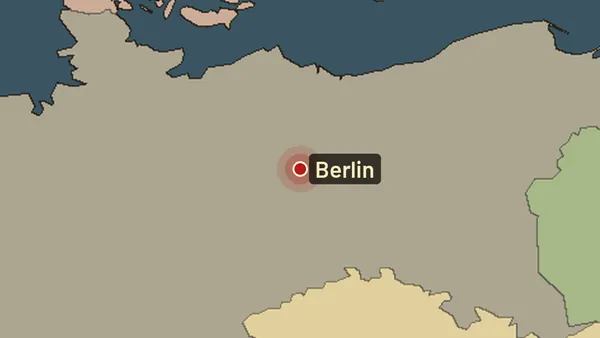
To relieve France, Russia attacked East Prussia sooner than its own plans foresaw. Two Russian armies advanced in August, but they were badly coordinated and sent orders by unencrypted radio. At Tannenberg, at the end of August, the German Eighth Army under Paul von Hindenburg and Erich Ludendorff encircled General Alexander Samsonov's Second Army and took around 90,000 prisoners; Samsonov took his own life. A second defeat followed at the Masurian Lakes in September.
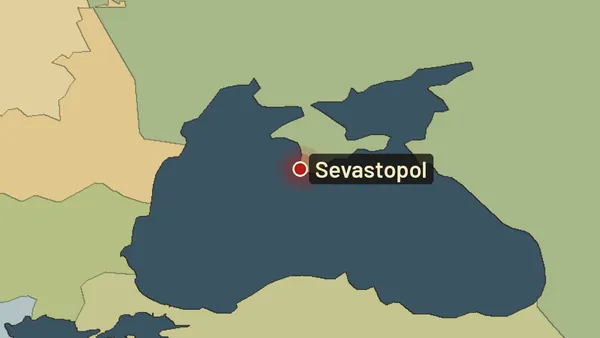
Against Austria-Hungary the story was very different. In the Battle of Galicia in August and September 1914 Russian armies routed the Austro-Hungarians and took Lemberg (today Lviv). The great fortress of Przemyśl was besieged and surrendered in March 1915 with more than 100,000 men. In the Caucasus, the Ottoman offensive at Sarıkamış in the winter of 1914–15 ended in catastrophe for the attackers.
1915: the Great Retreat
In May 1915 German and Austro-Hungarian forces broke through at Gorlice–Tarnów. Russian soldiers were short of rifles and especially of shells, and, according to many accounts, some were sent forward unarmed and told to take rifles from the fallen. Over the summer the army fell back hundreds of kilometres, giving up Russian Poland, Warsaw included, and much of Lithuania. Millions of refugees fled east. Losses, counting prisoners, ran into the millions.
In September 1915 Nicholas II took personal command of the army, against the advice of his ministers. From then on every defeat would be blamed on him personally, and in Petrograd government was left to the Empress Alexandra, who was unpopular because she was German-born and because of the influence of the mystic Grigori Rasputin. Ministers came and went in rapid succession.
1916: Brusilov's blow
Russia's war industry recovered remarkably in 1916, and the army still had real strength. In the Caucasus, General Nikolai Yudenich took Erzurum in February 1916 and Trabzon in April. In June General Aleksei Brusilov launched an offensive against the Austro-Hungarians along a broad front, using short bombardments and attacks at many points to deny the enemy warning. It was one of the most successful Allied offensives of the war: Austria-Hungary lost huge numbers of men, many as prisoners, and never fully recovered. But Russian losses were also enormous, and the offensive stalled once German reinforcements arrived.
1917: revolution and exit
By the winter of 1916–17 food and fuel were short in the cities, prices had soared, and faith in the monarchy had collapsed. Rasputin was murdered by aristocratic conspirators in December 1916. In March 1917 (February in Russia's old calendar) strikes and bread riots in Petrograd turned into revolution when soldiers refused to fire on the crowds. Nicholas II abdicated, and a Provisional Government took power alongside the Petrograd Soviet of workers' and soldiers' deputies.
The new government kept fighting. The offensive of July 1917, associated with the war minister Alexander Kerensky, quickly collapsed, and desertion spread through the army. In November 1917 (October in the old calendar) Lenin's Bolsheviks seized power on a promise of "peace, land and bread". They signed an armistice in December, and on 3 March 1918 accepted the harsh Treaty of Brest-Litovsk, giving up Poland, the Baltic lands, Finland and Ukraine: territories holding roughly a third of the old empire's European population and much of its industry and farmland. Kars, Ardahan and Batum went back to the Ottoman Empire.
Legacy
Russia's sacrifice had drawn huge German and Austro-Hungarian forces east and helped the Western Allies survive 1914 and 1916. But it was not among the victors at the peace conference. Instead the war ended in a civil war that lasted until the early 1920s, the murder of the former Tsar and his family in July 1918, and the creation of the Soviet Union.
Did you know?
- St Petersburg was renamed Petrograd in August 1914 because the old name sounded too German.
- In 1917 the Provisional Government allowed women's combat units; the best known, the "Women's Battalion of Death", was raised by Maria Bochkareva.
Russia in World Wars: 1914–20XX
Russia is one of the 26 states on the 1914 map, so you can lead it, and its entry is in the in-game encyclopedia from the start. In the Historical (1914) scenario Germany declares war on Russia on 1 August 1914, and Russia's story unfolds through events such as Sarıkamış, the Brusilov Offensive, the murder of Rasputin and the revolutions of 1917, which change the government and drain stability and war support. At Brest-Litovsk the game pauses and you decide: sign the peace and give up land, or refuse and fight on at the risk of civil war. The Tannenberg entry unlocks at the end of August 1914, and the Brusilov and Lenin entries unlock as their events arrive.
In the Parallel Fronts scenario Russia's vast spaces meet armoured divisions and bomber wings, and its weak industry matters even more. Can you keep the steamroller moving and the Tsar on his throne?
▶ Play now Free in your browser, no download needed.
Further reading: Wikipedia (English)