World Wars: 1914–20XX
First World War (1914–1918)
Serbia in World War I (1914–1918): victory, retreat and return
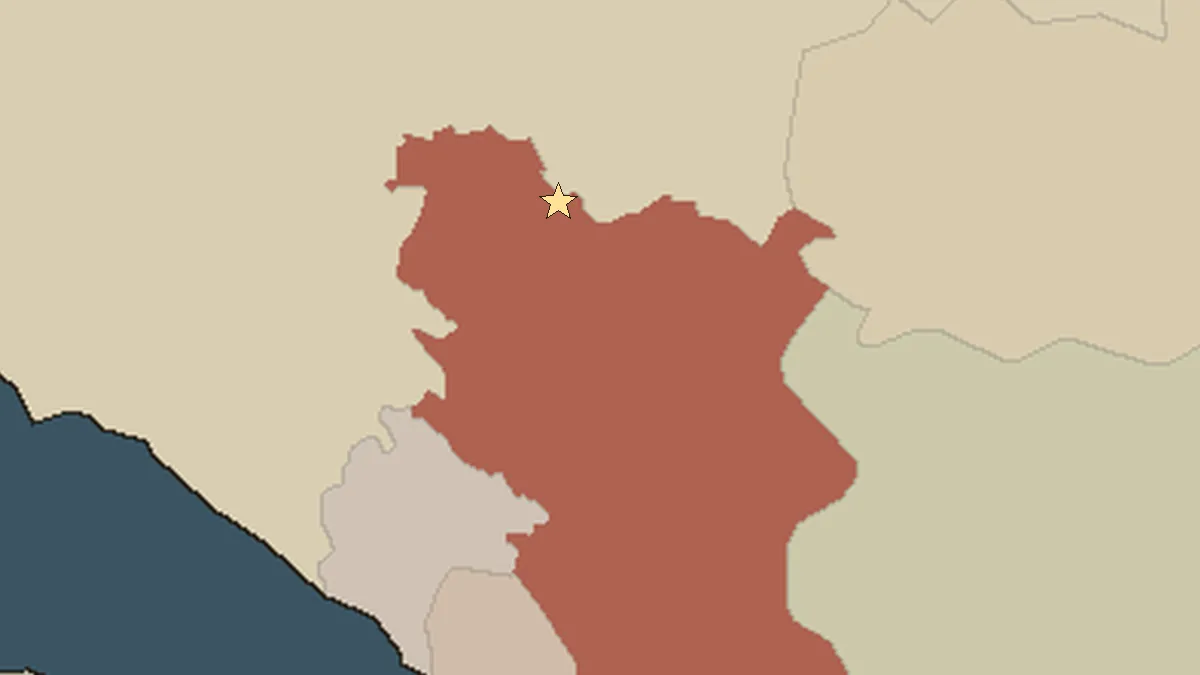
The First World War began as a war against Serbia. In July 1914 Austria-Hungary declared war on the small Balkan kingdom over the assassination of Archduke Franz Ferdinand, expecting a short punitive campaign. Instead Serbia won the first Allied victories of the war, survived a typhus epidemic, was overrun by three armies in 1915, carried out a desperate winter retreat across the mountains of Albania, and came back three years later to liberate its own country. Proportionally, few nations suffered more.
A young kingdom between empires
Serbia had won full independence from the Ottoman Empire in 1878 and doubled its territory in the Balkan Wars of 1912–13, taking much of Kosovo and Macedonia. Its army was experienced but exhausted, short of ammunition and equipment. Its government, led by Prime Minister Nikola Pašić, wanted time to recover. But many Serbs dreamed of uniting the South Slavs, including those living in Austria-Hungary, and a secret nationalist society known as the Black Hand, linked to officers in the Serbian army, had helped arm the young Bosnian Serbs who killed Franz Ferdinand in Sarajevo on 28 June 1914.
On 23 July Vienna sent an ultimatum designed to be rejected. Serbia's reply accepted most of its demands, but refused to let Austro-Hungarian officials take part in investigations on Serbian soil. Austria-Hungary declared war on 28 July 1914, and its guns began shelling Belgrade across the Danube the next day.
1914: two unexpected victories
Serbia's chief of staff, the elderly Field Marshal Radomir Putnik, was taking a cure in Austria when the war broke out; he was allowed to travel home. In August 1914 the Austro-Hungarian army under General Oskar Potiorek crossed the Drina. The Serbs met it on the slopes of Mount Cer and drove it back across the river in what is often called the first Allied victory of the war.
A second invasion in the autumn went further. The Serbian army, short of shells, fell back, and Belgrade was abandoned at the start of December. Then, with fresh ammunition arriving from France, General Živojin Mišić's First Army counter-attacked in the Battle of the Kolubara. The Austro-Hungarian forces were routed, and Belgrade was retaken on 15 December 1914. Austria-Hungary had suffered a humiliating defeat at the hands of a much smaller state.
1915: typhus, invasion and the retreat through Albania
The victory came at a terrible cost. In the winter of 1914–15 a typhus epidemic swept through the country, killing many thousands of soldiers, civilians and prisoners, along with many of the doctors and nurses who tried to treat them. Foreign medical missions, among them British women's units, came to help.
In October 1915 the Central Powers struck again. German and Austro-Hungarian armies under Field Marshal August von Mackensen attacked from the north, and Bulgaria, which had joined the Central Powers, invaded from the east. Allied troops landing at Salonika (Thessaloniki) were too few and too late to help. Facing encirclement, the Serbian government and high command decided not to surrender but to retreat through Montenegro and Albania to the Adriatic coast.
The retreat of the winter of 1915–16 became the central tragedy in Serbia's memory of the war. Soldiers, civilians and boys of military age crossed snow-covered mountains with little food. The aged King Peter travelled with his army, and Putnik, too ill to walk, was carried in a chair. Many tens of thousands died of cold, hunger, disease and attacks along the way. Allied ships, mostly French and Italian, carried the survivors to the Greek island of Corfu, where many more died; the small nearby islet of Vido, where the dying were taken, is remembered as the "island of death".
The Salonika front and liberation
On Corfu the army was rebuilt, rearmed by France and shipped to the Salonika front in northern Greece in 1916. In September 1916 Serbian troops took the peak of Kajmakčalan, more than 2,500 metres high, and in November entered Monastir (Bitola). In July 1917 the Corfu Declaration between the Serbian government and South Slav exiles from Austria-Hungary set out plans for a common state.
Inside occupied Serbia, Austria-Hungary and Bulgaria imposed harsh rule, with deportations, forced labour and the suppression of the Toplica uprising of 1917. Liberation came in September 1918. In the Battle of Dobro Pole from 15 September, Serbian and French troops under the French general Louis Franchet d'Espèrey broke the Bulgarian front. Bulgaria signed an armistice on 29 September, and Serbian divisions advanced north at remarkable speed, entering Belgrade on 1 November 1918.
Legacy
On 1 December 1918 the Kingdom of Serbs, Croats and Slovenes was proclaimed under the Serbian dynasty, later renamed Yugoslavia. For Serbia the war ended in victory and the fulfilment of a national dream, but at enormous human cost: estimates of its losses vary widely, but it lost a larger share of its population than almost any other belligerent.
Did you know?
- Milunka Savić, who joined the army in the Balkan Wars disguised as a man, became one of the most decorated women soldiers of the First World War, with French and Serbian awards.
- In 1918 the United States flew the Serbian flag over the White House on 28 July, the anniversary of the Austro-Hungarian declaration of war, as a mark of solidarity.
Serbia in World Wars: 1914–20XX
Serbia is one of the 26 states on the 1914 map, so you can lead it, and its entry is in the in-game encyclopedia from the start. The Historical (1914) scenario opens with the Sarajevo assassination on 28 June 1914, which drives up tension between Austria-Hungary and Serbia, and on 28 July Vienna decides whether to declare war or accept mediation. In October 1915 Bulgaria joins the Central Powers and declares war on Serbia, opening a supply route between Germany and the Ottoman Empire; in September 1918 the Battle of Dobro Pole turns the tide in the Balkans.
In the Parallel Fronts scenario the same small kingdom must face armoured divisions and bomber wings. Can you hold the Danube and keep Belgrade free in 1915?
▶ Play now Free in your browser, no download needed.
Further reading: Wikipedia (English)