World Wars: 1914–20XX
First World War (1914–1918)
Tsar Nicholas II (1868–1918): Russia's last emperor and the First World War
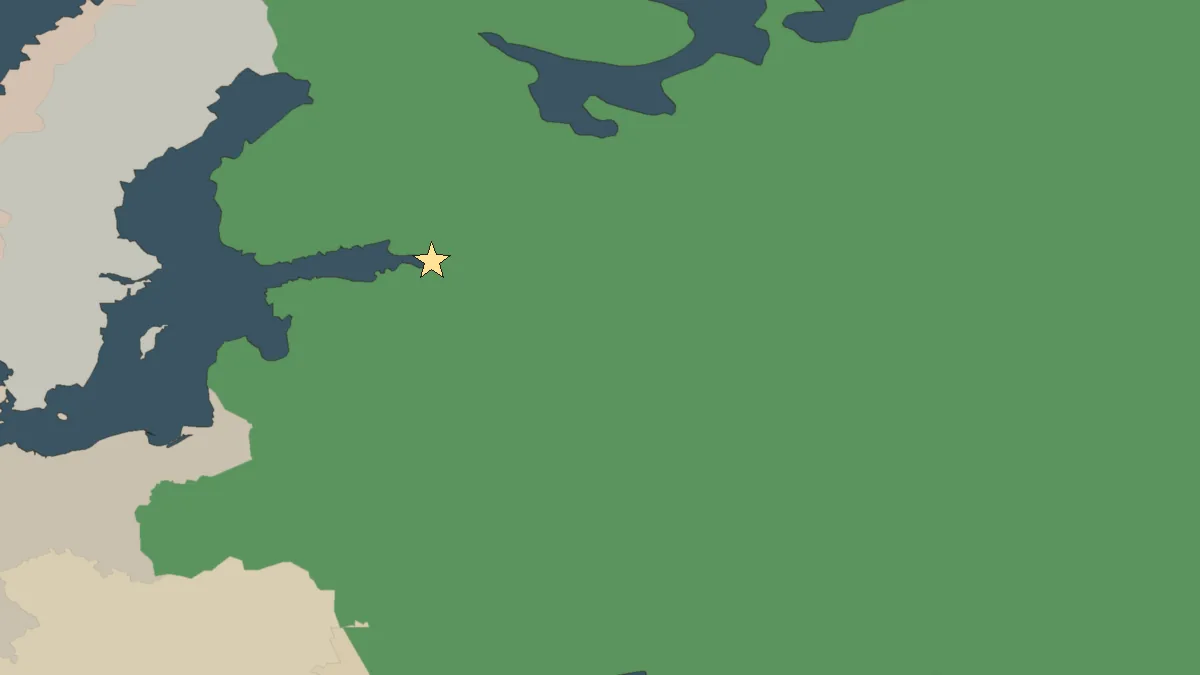
Nicholas II ruled the largest country on earth with a conviction that God had made him its autocrat. He was a devoted husband and father, courteous, modest in private and deeply religious. He was also indecisive, suspicious of talented ministers and unwilling to share power until it was too late. The First World War exposed every weakness of his rule. In March 1917 he gave up the throne, and sixteen months later he and his whole family were shot in a cellar in the Urals.
An unready heir
Nicholas was born in 1868, the eldest son of the future Alexander III, a giant of a man who ruled Russia with a firm hand. Nicholas was expected to reign for many years under his father's shadow. Instead Alexander III died suddenly of kidney disease on 1 November 1894, at only 49. Nicholas, aged 26, became emperor, and he is reported to have confessed that he was not prepared to be Tsar.
Weeks later he married Princess Alix of Hesse, a granddaughter of Queen Victoria, who took the name Alexandra Feodorovna. The marriage was a genuine love match. Their first four children were daughters: Olga, Tatiana, Maria and Anastasia. The long-awaited heir, Alexei, was born in 1904, and it soon became clear that he suffered from haemophilia, a disease that made every fall potentially fatal. The family kept it a closely guarded secret.
War with Japan and the revolution of 1905
Nicholas's coronation in 1896 was overshadowed by the disaster at Khodynka Field in Moscow, where a crush among crowds gathering for gifts killed more than a thousand people. Attending a ball the same evening gave him a reputation for indifference that he never shook off.
Expansion in the Far East led to war with Japan in 1904. Russia expected an easy victory and instead lost Port Arthur and, in May 1905, almost its entire Baltic Fleet at the Battle of Tsushima. At home, on 22 January 1905, troops fired on a peaceful procession of workers bringing a petition to the Winter Palace in St Petersburg. "Bloody Sunday" set off a year of strikes, mutinies and uprisings. To survive, Nicholas issued the October Manifesto, granting civil liberties and an elected parliament, the Duma. He never fully accepted it and dissolved the first Dumas when they proved hostile. His capable prime minister Pyotr Stolypin pushed through land reform but was assassinated in 1911.
Rasputin and the road to 1914
Desperate for help for her son, Alexandra came to depend on Grigori Rasputin, a Siberian peasant and wandering holy man who seemed able to calm Alexei's bleeding attacks. His influence over the empress, and through her over appointments, scandalised the court and the public. Rumours, many exaggerated, turned him into a symbol of a rotten regime.
In the July Crisis of 1914 Russia backed Serbia against Austria-Hungary. Nicholas hesitated, exchanging telegrams with his cousin Kaiser Wilhelm II, but on 30 July he approved general mobilisation. Germany declared war on 1 August.
The Tsar at the front
The war began with patriotic enthusiasm, and the capital was renamed Petrograd to sound less German. Then came disaster: the defeat at Tannenberg in East Prussia in August 1914 and the Great Retreat of 1915, when Russia lost Poland, Lithuania and huge numbers of men, often for want of rifles and shells.
In September 1915, against the advice of almost all his ministers, Nicholas removed the commander-in-chief, Grand Duke Nikolai Nikolaevich (a cousin of his father), and took personal command of the army at headquarters in Mogilev. The move made him personally responsible for every defeat, and it left the government in Petrograd in the hands of Alexandra and, people believed, Rasputin. Ministers came and went in rapid succession. The Brusilov Offensive of 1916 was a real success, but it cost enormous casualties. In December 1916 a group of aristocrats, among them Prince Felix Yusupov, murdered Rasputin, hoping to save the monarchy. It was already too late.
Abdication and death
In March 1917 (February in Russia's old calendar) food shortages and strikes in Petrograd turned into revolution when the garrison troops refused to fire on the crowds and joined them. Nicholas tried to return to the capital, but his train was stopped. At Pskov, with his generals advising him to go, he abdicated on 15 March 1917 for himself and for Alexei, in favour of his brother Grand Duke Michael, who declined the throne. Three centuries of Romanov rule were over.
The Provisional Government held the family at Tsarskoye Selo, then sent them to Tobolsk in Siberia. After the Bolsheviks seized power in November 1917, the family was moved to the Ipatiev House in Yekaterinburg. In July 1918, with anti-Bolshevik forces approaching, the local Bolshevik authorities had Nicholas, Alexandra, their five children and four of their household shot in the basement in the early hours of 17 July. In 2000 the Russian Orthodox Church canonised the family.
Did you know?
- Nicholas, Kaiser Wilhelm II and King George V of Britain were all cousins. Nicholas and George looked so alike that they were sometimes mistaken for each other.
- In 1899 Nicholas proposed the first Hague Peace Conference, which tried to limit armaments and set rules for warfare.
Nicholas II in World Wars: 1914–20XX
Nicholas II has his own entry in the in-game encyclopedia, available from the start, and the Russian Empire is one of the 26 states you can lead from 28 June 1914. In the Historical (1914) scenario Russia enters the war on 1 August 1914 alongside France and Serbia, and later fights its great offensive under Brusilov in 1916.
From 8 March 1917 the revolution arrives: the Tsar's regime gives way to a Provisional Government, stability and war support collapse, and a Bolshevik government follows later. In March 1918 you face the choice at Brest-Litovsk: sign a harsh peace or fight on and risk civil war. As Nicholas, can you win the war before your own capital turns against you?
▶ Play now Free in your browser, no download needed.
Further reading: Wikipedia (English)