World Wars: 1914–20XX
Second World War (1939–1945)
Turkey Declares War on Germany and Japan (23 February 1945): Why So Late?
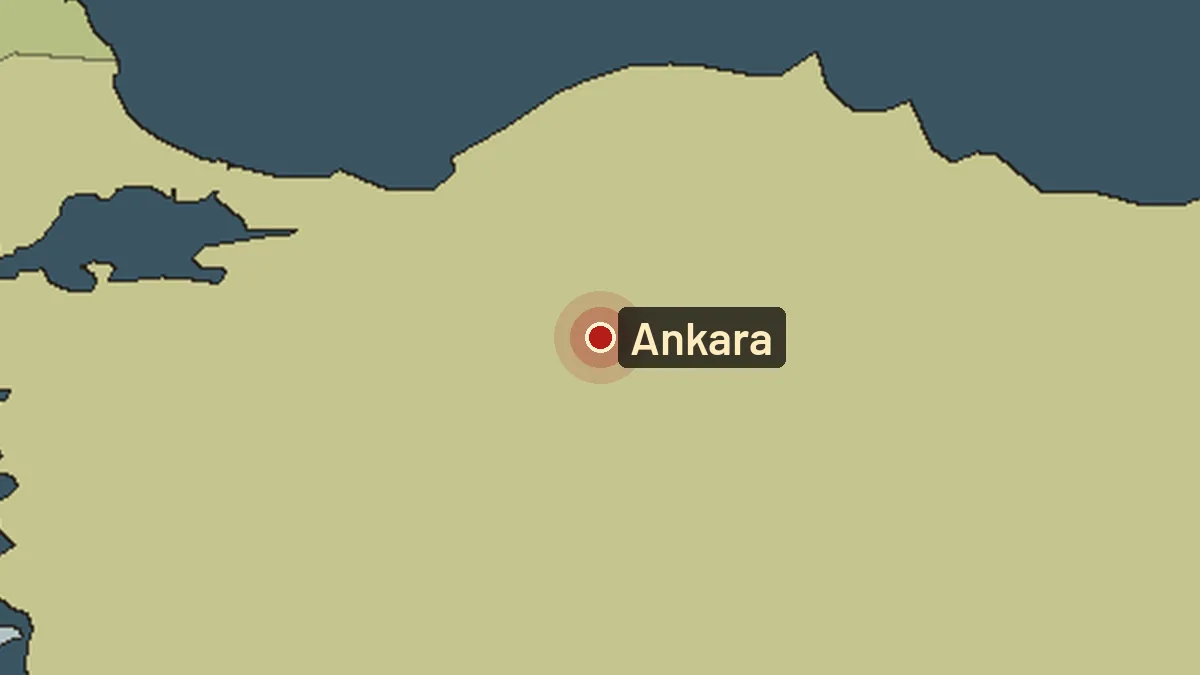
On 23 February 1945 the Turkish Grand National Assembly voted to declare war on Germany and Japan. By then Soviet armies stood on the Oder River and Japan's empire was shrinking by the month. Turkey had spent five and a half years of the Second World War carefully neutral, courted and pressured by both sides. Its late declaration was largely symbolic, and no Turkish soldier fired a shot, but it secured Turkey a seat among the founders of the United Nations and marked the start of its long turn towards the West.
A republic that remembered 1914
The Republic of Turkey had been founded only in 1923, on the ruins of the Ottoman Empire. Its leaders had lived through the empire's entry into the First World War in 1914, a decision taken by a small circle around Enver Pasha that ended in defeat, occupation and the partition plans of the Treaty of Sèvres. İsmet İnönü, who became president after Atatürk's death in November 1938, had served as an Ottoman staff officer in that war and was the Turkish negotiator at Lausanne in 1923. He was determined not to repeat the gamble.
Turkey's position was delicate. It controlled the Bosphorus and the Dardanelles, whose regime had been settled by the Montreux Convention of 1936, and it bordered the Soviet Union. Its army was large but poorly equipped, with few modern tanks or aircraft. A German or Soviet attack could have been catastrophic.
Balancing between the camps
In October 1939 Turkey signed a treaty of mutual assistance with Britain and France, but it included a clause that Turkey would not be obliged to act against the Soviet Union, which had just signed its pact with Nazi Germany. When France fell in 1940 and Italy entered the war, Ankara stayed out, arguing that the circumstances foreseen in the treaty had changed.
By the spring of 1941 German troops had overrun Yugoslavia and Greece and stood on Turkey's border in Thrace. On 18 June 1941, four days before Germany invaded the Soviet Union, Turkey signed a treaty of friendship and non-aggression with Germany. Throughout the war Turkey traded with both sides. Its chromium ore, vital for hardened steel, was eagerly sought by Germany and by the Allies, who bought large quantities to keep it out of German hands.
Neutrality was not cheap. Turkey kept a large army mobilised for years, which drained the economy and caused shortages and inflation. In 1942 the government introduced a controversial capital tax, the Varlık Vergisi, which fell most heavily on non-Muslim citizens; those who could not pay were sent to labour camps. It is now widely remembered as a discriminatory measure.
Allied pressure
After Stalingrad and El Alamein the tide turned, and the Allies wanted Turkey in. Churchill met İnönü at Adana in January 1943, and İnönü met Churchill and Roosevelt in Cairo in December 1943. The British hoped Turkish airfields and entry into the war might open a route into the Balkans. İnönü asked for large deliveries of modern weapons first and was wary of provoking Germany while German forces were still close by. Many in Ankara also feared that Soviet troops might enter the Balkans as "liberators" and never leave.
As Germany weakened, Turkey moved step by step. In April 1944 it stopped chromium exports to Germany. In June 1944 Foreign Minister Numan Menemencioğlu resigned after British protests over German vessels passing through the Straits. On 2 August 1944 Turkey broke off diplomatic relations with Germany, and it cut ties with Japan in early January 1945.
Yalta and the deadline
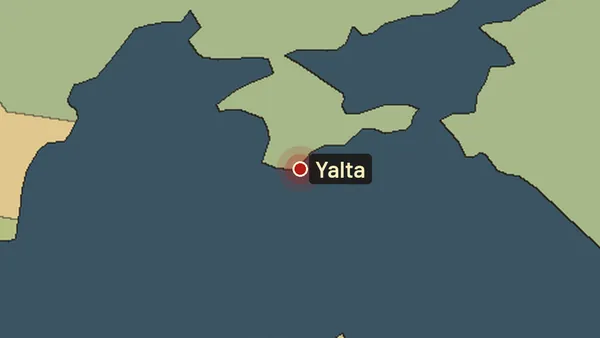
The final push came from the Yalta Conference in February 1945. The Allied leaders agreed that only states which had declared war on the Axis by 1 March 1945 would be invited to the conference in San Francisco that would draft the charter of the United Nations. Several neutral or hesitant countries, including Egypt, Saudi Arabia and Turkey, declared war in the following weeks.
The Turkish declaration on 23 February was therefore a political act. Turkish forces were not sent to any front, and Germany surrendered less than three months later. On 26 June 1945 Turkey signed the UN Charter in San Francisco as one of the founding members.
What it meant
The declaration did not protect Turkey from Soviet pressure. In March 1945 Moscow announced it would not renew the 1925 Soviet-Turkish treaty of friendship, and in 1945–46 it demanded a revision of the Straits regime and raised claims to the provinces of Kars and Ardahan. That pressure pushed Turkey decisively towards the United States. American aid followed under the Truman Doctrine in 1947, and Turkey joined NATO in 1952, after sending a brigade to fight in the Korean War.
For Turkish historians the late entry is usually seen as the success of İnönü's cautious "active neutrality": the country survived the most destructive war in history with its territory intact and without the losses that had ruined the Ottoman Empire a generation earlier. Critics point to the economic hardship and the injustices of the wartime home front.
Did you know?
- When Turkey declared war, Germany no longer had the means to strike back, and Turkish forces never went into action against either Germany or Japan.
- The 1 March deadline set at Yalta produced a small wave of declarations of war in late February 1945, from countries as far apart as Egypt, Uruguay and Saudi Arabia.
- Turkey's wartime president İsmet İnönü had fought in the Ottoman army in the First World War, and many Turkish officers of 1939 were veterans of Gallipoli and the Caucasus.
Turkey's 1945 declaration in World Wars: 1914–20XX
World Wars: 1914–20XX currently covers the First World War, and this event belongs to the game's event database for the planned 1939 scenario. There it becomes a decision: Turkey can make a symbolic declaration of war on Germany and Japan and become a founding member of the United Nations, with a small gain in stability, or it can stay neutral to the end and face rising tension with the Soviet Union.
It is the mirror image of the choice the Ottoman Empire faced in 1914, which you can already play today. In the Historical (1914) scenario you can lead the Ottoman Empire and decide for yourself whether joining a great war was worth the risk, or take any of the other 1914 powers into the war that shaped Turkey's caution a generation later.
▶ Play now Free in your browser, no download needed.
Further reading: Wikipedia (English)