World Wars: 1914–20XX
First World War (1914–1918)
Zeppelin raids on Britain (1915–1918): the first strategic bombing campaign
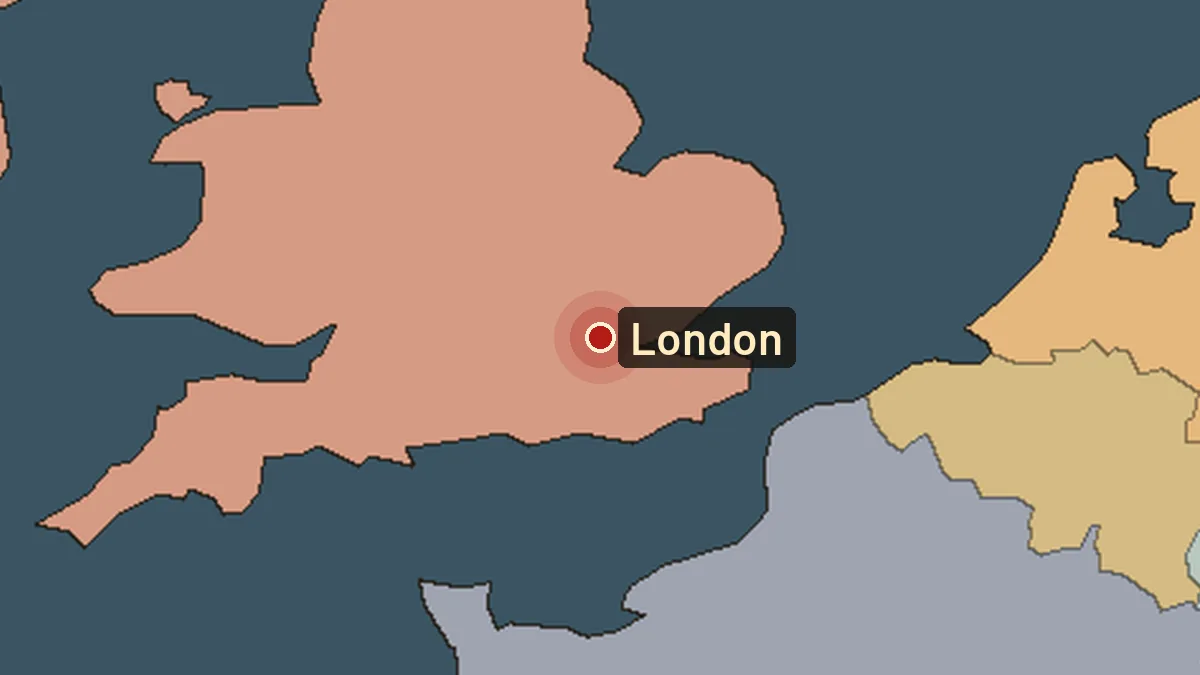
On the night of 31 May 1915 Londoners looked up and saw a vast silver shape drifting over the East End. The German army airship LZ 38 dropped bombs and incendiaries across Stoke Newington, Shoreditch and Whitechapel, killing seven people. For the first time in centuries, the war had come directly to the streets of the British capital. The Zeppelin raids killed relatively few people by the standards of the First World War, but they began something new and terrible: the deliberate bombing of cities far behind the front.
Count Zeppelin's giants
The rigid airship was the life's work of Count Ferdinand von Zeppelin, a retired German general whose first airship, LZ 1, flew over Lake Constance in 1900. A Zeppelin was a long frame of light aluminium girders covered with fabric, holding separate cells filled with hydrogen. By the war years the largest were around 200 metres long, larger than most ships of the time, and could carry several tonnes of bombs. In Britain any German airship came to be called a "Zeppelin", although some were built by the rival firm Schütte-Lanz.
Before 1914 the airships were a source of great national pride in Germany. Both the army and the navy bought them, mainly for scouting. The navy's airships, commanded throughout the war by the energetic Peter Strasser, would carry out most of the raids on Britain.
The raids begin
The first airship bombs of the war fell on Liège and Antwerp in August 1914. The first raid on Britain came on the night of 19–20 January 1915, when two navy airships bombed Great Yarmouth and King's Lynn on the Norfolk coast, killing four people. Kaiser Wilhelm II at first forbade attacks on London, partly because of his family ties to the British royal family, but the restrictions were gradually relaxed, and from May 1915 the capital was a target.
Airships came on dark, moonless nights and navigated by dead reckoning, radio bearings and whatever they could see below. Their bombing was very inaccurate: many crews believed they were over London when they were miles away. The most destructive raid of 1915 came on 8 September, when Heinrich Mathy's L 13 set fires in the City of London that caused damage worth hundreds of thousands of pounds.
Fear on the home front
The physical damage was limited, but the effect on morale was large. Civilians who had thought the sea protected them now faced death from the sky. Britain introduced blackouts, and crowds sheltered in cellars and Underground stations. Public anger at the lack of defence forced the government to keep fighter squadrons, guns and searchlights at home, men and equipment badly wanted in France. That diversion of resources was one of the main achievements of the raids.
How the airships were beaten
At first the defenders had no good answer. Aircraft took a long time to climb to the airships' height, and ordinary bullets simply passed through the gas cells. Everything changed in 1916, when British pilots began using a mix of explosive and incendiary ammunition. On the night of 2–3 September 1916 Lieutenant William Leefe Robinson attacked the army airship SL 11 over Hertfordshire and set it ablaze. The burning wreck fell near Cuffley, watched by many thousands of Londoners. Robinson received the Victoria Cross.
Within weeks several more airships were destroyed, including L 31, whose commander Heinrich Mathy, the most famous airship captain, died when it fell at Potters Bar on 1 October 1916. The Germans built "height climbers" that flew above the reach of most fighters, but at such altitudes the crews suffered from cold and lack of oxygen, and winds scattered their raids. From 1917 the main bombing of England passed to large Gotha bombers, which raided London in daylight on 13 June 1917. The last airship raid came on 5 August 1918, when Strasser himself was killed as his L 70 was shot down off the Norfolk coast.
Over the whole war, airships made about 50 raids on Britain and killed more than 500 people. A high proportion of the airship crews never came home.
Did you know?
- In November 1917 the navy airship L 59 left Jamboli in Bulgaria on an attempt to supply German forces in East Africa. It flew some 6,800 kilometres without landing before it was recalled, a record for its time.
- On 19 July 1918 aircraft flown from the converted British carrier HMS Furious attacked the Zeppelin sheds at Tondern and destroyed two airships, one of the first air strikes ever made from a ship.
- Some airships lowered a small observation car on a long cable below the clouds. An observer sitting in it telephoned directions to the crew, so the airship itself could stay hidden above.
Zeppelins in World Wars: 1914–20XX
The Zeppelin entry in the in-game encyclopedia unlocks on 31 May 1915, the date of the first raid on London. It tells the story of the airship's brief career over Britain's cities and why fighters and incendiary bullets made it obsolete. If you play Britain in the Historical (1914) scenario, you face the same choice as its real government: how much of your strength to keep at home while the war is decided in France.
In the Parallel Fronts scenario, flight matured in the late 1880s, so the slow airships give way to fighter and bomber wings from the very start of the war. Bombers can strike enemy factories behind the front, and fighters must win the skies to stop them. Will you defend your cities, or carry the war to the enemy's?
▶ Play now Free in your browser, no download needed.
Further reading: Wikipedia (English)