World Wars: 1914–20XX
First World War (1914–1918)
Douglas Haig (1861–1928): the Somme, Passchendaele and victory in 1918
No British general has been argued about more than Douglas Haig. He commanded the largest army Britain has ever put into the field, and under his command it suffered its worst single day of losses on the Somme in 1916 and fought through the mud of Passchendaele in 1917. Yet the same army, under the same commander, won a series of great victories in the autumn of 1918 that helped to end the war. For some he is the callous "butcher" of a generation; for others the steady leader who learned the hard lessons of a new kind of war and finally won it.
A cavalry officer's career
Haig was born in Edinburgh in 1861, the youngest son of a wealthy whisky-distilling family. He studied at Oxford and then at the Royal Military College, Sandhurst, and joined the 7th Hussars, a cavalry regiment. Serious and ambitious, he was one of the first officers of his generation to take staff training seriously. He fought in the Sudan in 1898 and in the Boer War of 1899–1902, where he served as a staff officer to the cavalry commander John French.
His most lasting pre-war work was done at the War Office between 1906 and 1909, where he helped the Secretary of State for War, Richard Haldane, reform the army. Their reforms created the British Expeditionary Force (BEF), the small professional army ready to go to the continent, and the Territorial Force behind it.
From corps commander to commander-in-chief
In August 1914 Haig took I Corps of the BEF to France. It fought in the retreat from Mons, on the Marne and the Aisne, and held the line in the desperate First Battle of Ypres in the autumn. In 1915, commanding the First Army, he led the British offensives at Neuve Chapelle, Aubers Ridge and, in September, Loos, where the British used poison gas for the first time. The failure at Loos, and Haig's criticism of how Sir John French had handled the reserves, led to French's removal. On 19 December 1915 Haig became commander-in-chief of the BEF.
The Somme
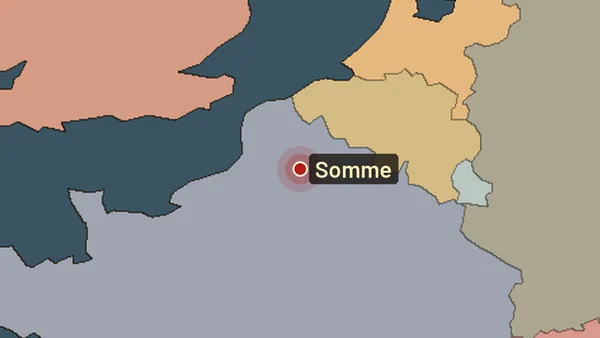
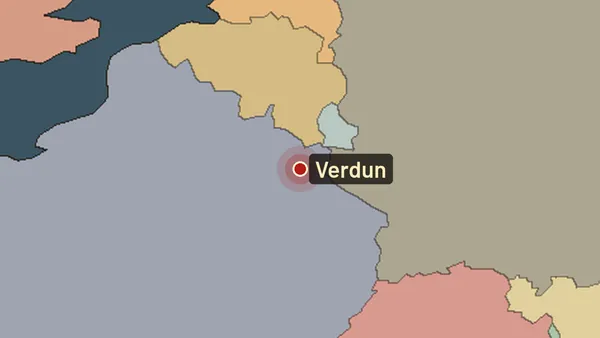
Haig's first great battle was planned with the French to take place astride the river Somme. It took on new urgency when the Germans attacked the French at Verdun in February 1916. After a week-long bombardment, the British infantry attacked on 1 July 1916. The shells had not destroyed the German wire and deep dugouts, and on that first day the British army suffered about 57,000 casualties, around 19,000 of them killed, the bloodiest day in its history.
Haig continued the offensive until November. It relieved pressure on Verdun and wore down the German army, and in September it saw the first use of tanks in war, but the Allies advanced only about ten kilometres at most. British, French and German losses together exceeded one million. Haig was promoted to field marshal at the beginning of 1917.
Passchendaele and 1918
In 1917, after the British offensive at Arras in April and the successful attack on Messines Ridge in June, Haig launched his long-planned offensive in Flanders. The Third Battle of Ypres began on 31 July and ended in November with the capture of the ruined village of Passchendaele. Heavy rain turned the battlefield into a swamp, and the offensive became a symbol of futile slaughter. Haig's relationship with the Prime Minister, David Lloyd George, who distrusted his strategy but felt unable to remove him, grew increasingly bitter.
In March 1918 the German Spring Offensive struck the British Fifth Army and drove it back. Haig supported the appointment of the French general Ferdinand Foch to coordinate the Allied armies, and on 11 April he issued his famous order: "With our backs to the wall and believing in the justice of our cause each one of us must fight on to the end." The line held. From 8 August, at Amiens, the British army opened the Hundred Days offensive, combining artillery, tanks, aircraft and infantry far more effectively than in 1916. At the end of September it broke through the Hindenburg Line. In those last three months the British army took more prisoners and guns than any other Allied army.
Legacy
After the war Haig was made an earl and devoted himself to the welfare of ex-servicemen. He helped found the British Legion in 1921, and the Earl Haig Fund raised money by selling remembrance poppies. At his death in 1928 huge crowds lined the streets for his funeral. His reputation fell sharply in the following decades, as memoirs, histories and plays portrayed the British soldiers of 1914–18 as "lions led by donkeys". Many modern historians take a more balanced view: Haig was slow to learn and too optimistic about breakthroughs, but he also presided over the transformation of the British army into the force that won in 1918.
Did you know?
- Haig's family firm, John Haig & Co., made one of Scotland's best-known whiskies.
- He believed deeply that cavalry would still have a role in exploiting a breakthrough, and he kept large cavalry forces behind the front for most of the war.
Haig in World Wars: 1914–20XX
In the Historical (1914) scenario Haig's most famous battle, the Somme, begins on 1 July 1916. Britain, France and Germany all suffer heavy manpower losses, support for the war in Britain falls, and Britain gains the Mark I tank. Haig's entry unlocks in the in-game encyclopedia that day, together with the entry on the Somme. You can lead the British Empire yourself from 28 June 1914 and decide whether to fight a war of attrition in France or look for victory elsewhere.
In the Parallel Fronts scenario, where engines, radio and aircraft matured decades early, the tools Haig only gained in 1918 (tanks, air power and radio) are there from the start. Can you win faster, and at a lower cost, than he did?
▶ Play now Free in your browser, no download needed.
Further reading: Wikipedia (English)