World Wars: 1914–20XX
First World War (1914–1918)
Mustafa Kemal (Atatürk) in World War I: Gallipoli, the Caucasus and Syria
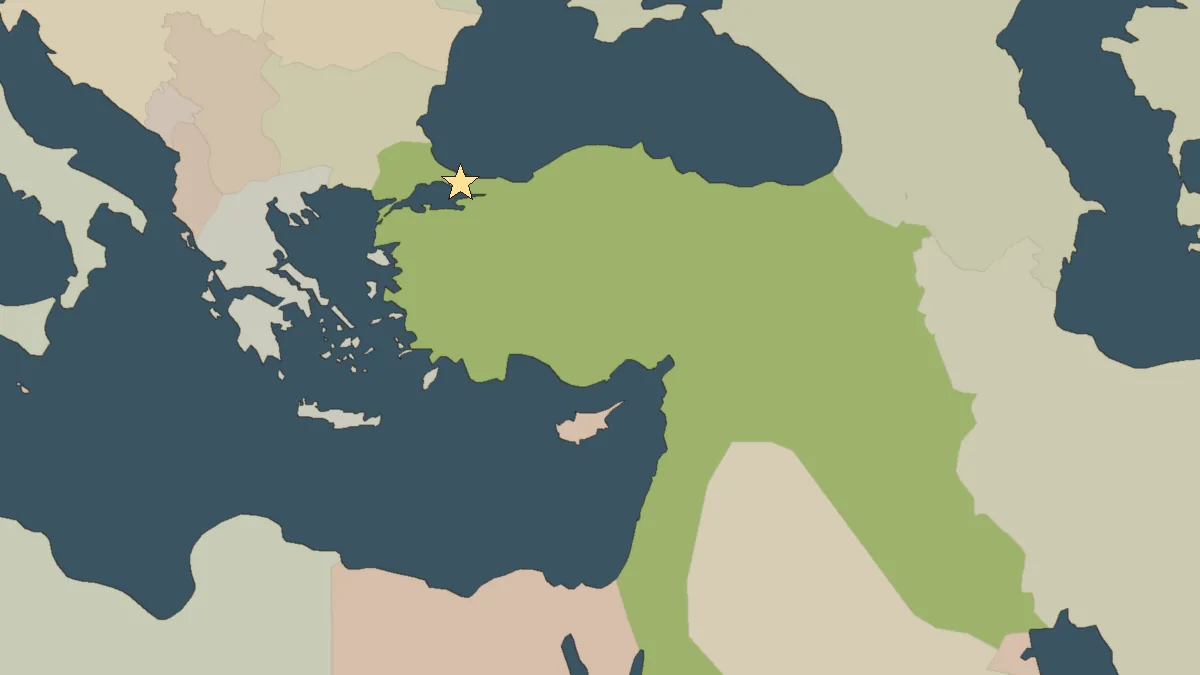
In April 1915 Mustafa Kemal was a 34-year-old lieutenant colonel commanding a reserve division on the Gallipoli peninsula. Three and a half years later, when the Ottoman Empire signed the Armistice of Mudros, he was a general holding the last Ottoman front in Syria. In between he became the best-known Ottoman commander of the First World War. The reputation he won in these years made possible his later role as leader of the Turkish War of Independence and founder of the Republic of Turkey, when he took the surname Atatürk.
An officer of the late empire
Mustafa was born in 1881 in Salonica, then an Ottoman port city, and is said to have received the second name Kemal from a mathematics teacher at military school. He graduated from the War Academy in Istanbul as a staff captain in 1905. Like many young officers of his generation he was drawn to the reformist ideas of the Committee of Union and Progress, though he often clashed with its leaders, especially Enver.
Before 1914 he had already seen war. He fought against the Italians in Libya in 1911–12, served in the Balkan Wars on the Gallipoli peninsula and took part in the recapture of Edirne in 1913. When the world war began he was military attaché in Sofia. He had doubts about the Ottoman entry into the war on Germany's side in late 1914, but he asked for a front-line command.
Gallipoli: Arıburnu
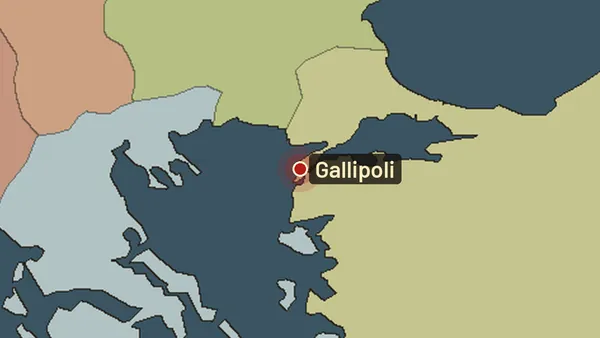
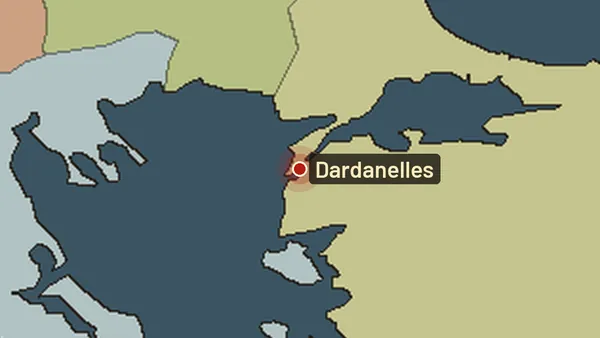
In early 1915 he was given command of the newly formed 19th Division, held in reserve near Maydos (Eceabat) on the peninsula. When the Allied landings began at dawn on 25 April, Australian and New Zealand troops came ashore near Arıburnu and pushed inland towards the heights of the Sarı Bair ridge. Kemal grasped at once that whoever held the high ground at Kocaçimen and Conkbayırı would control that part of the peninsula. Without waiting for orders from above, he led the 57th Infantry Regiment forward and threw it against the advancing Anzacs.
According to his own later account, he told his men: "I don't order you to attack, I order you to die. In the time it takes us to die, other troops and commanders can take our place." The 57th Regiment was almost wiped out, but the Anzacs were held to a narrow strip along the coast, where they remained until the evacuation.
Anafartalar
In August the Allies tried again, attacking from Anzac towards the Sarı Bair heights and landing fresh troops at Suvla Bay (Anafartalar). On 8 August Liman von Sanders, the German commander of the Ottoman Fifth Army, gave Kemal command of the troops facing this threat, which became the Anafartalar Group. In a series of counter-attacks between 9 and 10 August his forces drove the British back at Anafartalar and retook Conkbayırı, which New Zealand troops had briefly captured. According to a famous story, a piece of shrapnel struck his chest during the fighting but was stopped by his pocket watch.
These battles made his name across the empire. He left Gallipoli in December 1915, shortly before the Allies evacuated the peninsula.
The Caucasus and Syria
In 1916 Kemal was sent to the Caucasus front, where the Russians had taken Erzurum. Commanding the XVI Corps, he recaptured Bitlis and Muş in August 1916, one of the few Ottoman successes on that front, and was promoted to brigadier general, with the title of pasha.
In 1917 he was appointed to command the Seventh Army in the new Yıldırım Army Group, formed to retake Baghdad and later sent to defend Palestine under the German general Erich von Falkenhayn. Kemal strongly disagreed with Falkenhayn's plans and with German control over Ottoman armies, warned the government in a frank report about the empire's exhaustion, and resigned. Early in 1918 he accompanied the heir to the throne, Vahdettin, on a visit to Germany, and he spent several months receiving medical treatment in Vienna and Karlsbad.
In August 1918 he returned to the Seventh Army in Palestine. On 19 September the British under General Edmund Allenby broke through at Megiddo, and the Ottoman armies collapsed. Kemal led the retreat north through Damascus to Aleppo and organised a defensive line north of the city. After the Armistice of Mudros on 30 October 1918, he briefly took over the Yıldırım Army Group from Liman von Sanders, before returning to Istanbul in November.
What his war meant
Kemal emerged from the war as one of very few Ottoman commanders with an unbroken record and a popular reputation, and as a sharp critic of the leaders who had taken the empire into the war. When he landed at Samsun on 19 May 1919, he brought with him the authority of Gallipoli. The line he had held north of Aleppo was close to what the Turkish nationalists later claimed as the southern border of their state.
Did you know?
- The heights of Conkbayırı, where Kemal fought in April and August 1915, are today the site of a large New Zealand memorial and a monument to Atatürk standing side by side.
- He wrote down his recollections of the Arıburnu battles, an important source for the first days of the campaign.
Mustafa Kemal in World Wars: 1914–20XX
In the Historical (1914) scenario the Gallipoli campaign begins on 18 March 1915 and opens a new front for about 300 days. Both sides suffer heavy manpower losses, Ottoman morale rises for months, and Mustafa Kemal is named a national hero of the Ottoman Empire. His entry unlocks in the in-game encyclopedia, alongside the entries on the Çanakkale battles and naval mines. Later, at Megiddo in September 1918, the game's history notes recall him leading the Seventh Army's retreat.
You can lead the Ottoman Empire from 28 June 1914 and face his challenges yourself: defend the straits, the Caucasus and Syria at once. In the Parallel Fronts scenario, with aircraft carriers able to support an Allied landing, holding Gallipoli could be even harder. Can you do as well as Kemal did?
▶ Play now Free in your browser, no download needed.
Further reading: Wikipedia (English)
 Naval mines in WWI