World Wars: 1914–20XX
First World War (1914–1918)
Naval mines in World War I: from the Nusret's 26 mines to the North Sea barrage
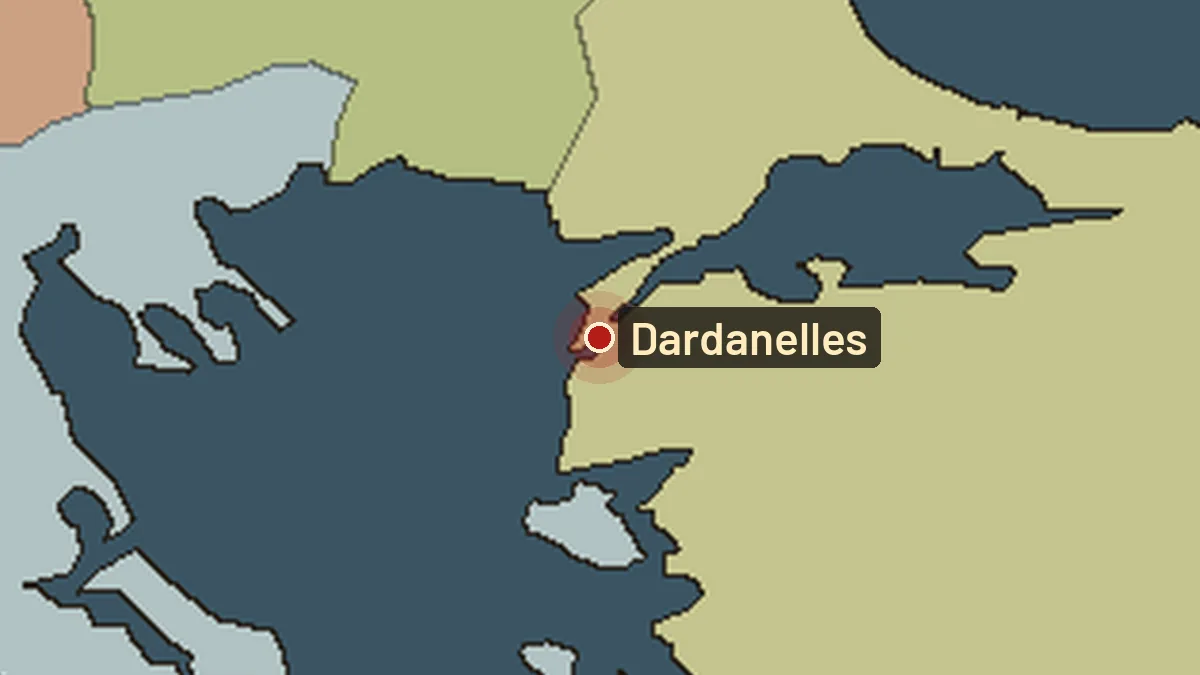
Naval mines were among the least glamorous weapons of the First World War and among the most effective. A mine was cheap, could wait unseen for months, and needed no crew once laid. Mines sank more warships than the great battle fleets did in their rare clashes, closed harbours and straits, and forced navies to build fleets of minesweepers. Their most famous success came at the Dardanelles on 18 March 1915, when a single line laid by a small Ottoman ship turned back the strongest fleet ever sent against the straits.
How a mine worked
The standard mine of 1914 was a moored contact mine: a steel sphere filled with explosive, held at a set depth below the surface by a cable attached to an anchor on the sea bed. On its surface were soft lead "horns", each containing a glass vial of chemical. When a ship's hull bent a horn, the vial broke, the chemical created an electric current, and the charge detonated. Other designs were controlled from the shore by electric cable, or floated free, which the Hague Convention of 1907 tried to restrict because drifting mines endangered neutral shipping.
Minefields could be laid in the open sea by fast surface ships, close to enemy harbours by submarines specially built for the purpose, or across channels and straits as part of a coastal defence system covered by guns. To clear them, navies used minesweepers, often converted fishing trawlers, which dragged a cable between two ships to cut mines loose so they could be destroyed on the surface.
Early shocks
The war at sea began with mines. On 5 August 1914 the German auxiliary minelayer Königin Luise was laying mines off the Thames estuary when British warships sank her; the next day the British cruiser Amphion struck one of her mines and sank. In October 1914 the brand-new British dreadnought HMS Audacious hit a mine laid by a German auxiliary cruiser off the north coast of Ireland and sank. The Admiralty tried for years to keep the loss secret.
Mines claimed one of the war's best-known victims in June 1916. The cruiser HMS Hampshire, carrying the war minister Lord Kitchener on a mission to Russia, struck a mine laid by a German submarine off the Orkney Islands. Kitchener and most of the crew died.
The Nusret and 18 March 1915
The defences of the Dardanelles combined forts, mobile howitzers hidden in the hills, searchlights and several lines of mines across the narrow strait. In February and early March 1915 British and French ships bombarded the outer forts, while minesweeping trawlers with civilian crews tried, mostly in vain, to clear the minefields under fire.
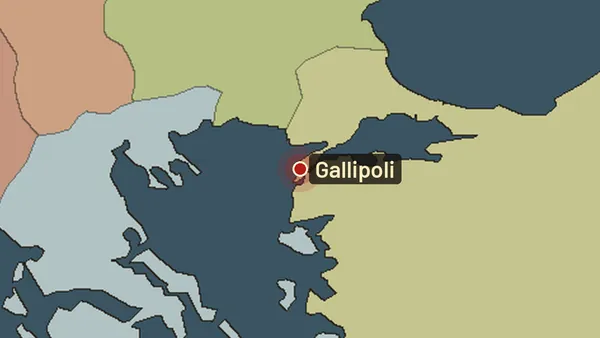
On the night of 7–8 March the small Ottoman minelayer Nusret laid a line of 26 mines in Erenköy Bay, parallel to the Asian shore, in waters where Allied battleships had been turning during their bombardments. The new line was not detected. On 18 March, during the great naval attack on the Narrows, the French battleship Bouvet struck a mine and sank within minutes with most of her crew. Later that day the British battleships Irresistible and Ocean were also lost, and the battlecruiser Inflexible was badly damaged. The Allied commander, Vice Admiral John de Robeck, broke off the attack. The decision to land troops on the Gallipoli peninsula instead followed, and the straits were never forced. In Turkey 18 March is remembered as the day of the Çanakkale naval victory.
Closing the seas
As the war went on, mines became a tool of blockade on a huge scale. Britain laid great fields in the Heligoland Bight and across the Strait of Dover to trap German submarines; Russia mined the approaches to the Gulf of Finland; Germany laid mines off British ports from its UC-class submarines; the Black Sea and the Adriatic were sown with them. Navies developed new defences, such as the paravane, a towed device that deflected mine cables away from a ship's bow and cut them.
The largest field of all was the North Sea Mine Barrage of 1918, laid mainly by the United States Navy with British help between Orkney and Norway to stop U-boats reaching the Atlantic. Around 70,000 mines were laid, and new antenna mines were used for the first time. After the armistice, clearing the mines of the war took years and cost more lives.
Did you know?
- A full-size replica of the Nusret is displayed in Çanakkale, and the minelayer remains one of the best-known symbols of the 1915 campaign in Turkey.
- Minesweeping was so dangerous and needed so many ships that the Royal Navy turned hundreds of fishing trawlers, and the fishermen who sailed them, into a wartime minesweeping service.
Naval mines in World Wars: 1914–20XX
In the Historical (1914) scenario the Naval mine entry unlocks in the in-game encyclopedia when the Gallipoli Campaign arrives on 18 March 1915, together with the Çanakkale and Mustafa Kemal entries. The event opens a new Gallipoli front for about 300 days, both sides lose heavy manpower, and Ottoman morale rises for months. Earlier, when the Ottoman Empire enters the war, the straits close; they reopen only with the armistice of Mudros.
In the Parallel Fronts scenario aircraft carriers can spot minefields and support a landing from the air, so the battle for the straits may turn out very differently. Can you force the Dardanelles, or will you hold them as the Nusret did?
▶ Play now Free in your browser, no download needed.
Further reading: Wikipedia (English)
 Mustafa Kemal in World War I