World Wars: 1914–20XX
First World War (1914–1918)
Trench warfare in World War I: how the Western Front dug in
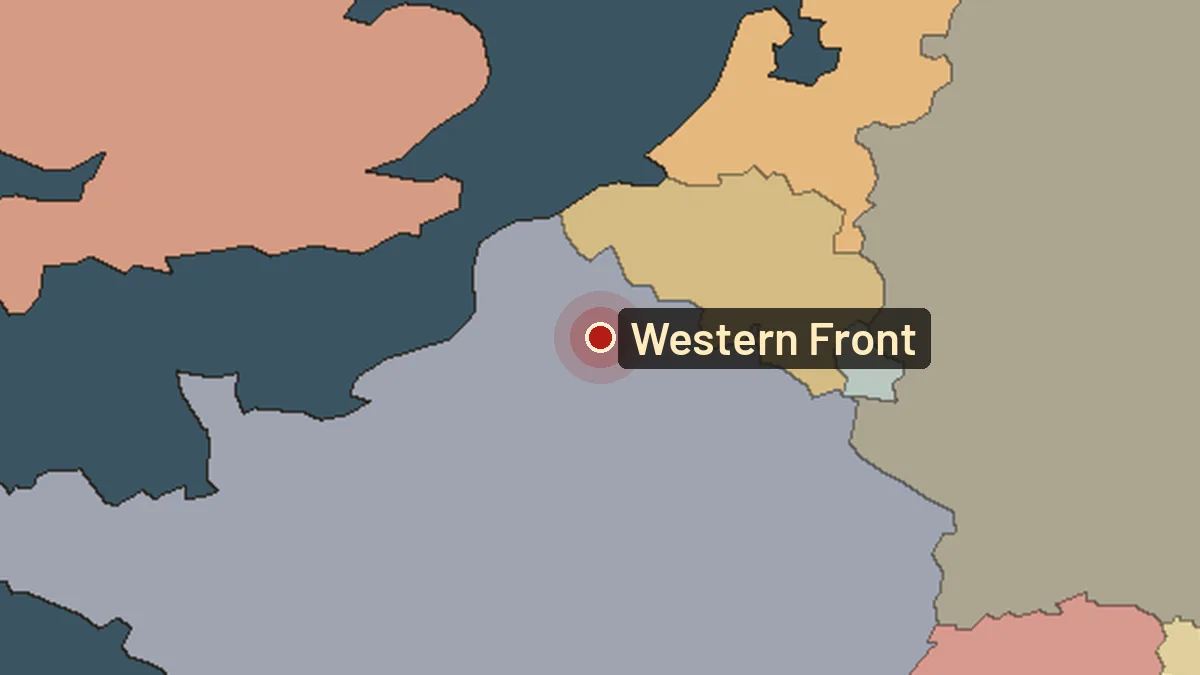
For most of the First World War, the front in France and Belgium was not a line of armies but a strip of earth scarred by two facing networks of ditches. From the autumn of 1914 until the spring of 1918, millions of men lived in these trenches, sometimes only a few dozen metres from the enemy. Trench warfare has become the defining image of the war: mud, wire, rats, and attacks that cost tens of thousands of lives to gain a few hundred metres. Understanding why it happened, and how it was finally overcome, is the key to understanding the whole conflict.
Why the armies dug in
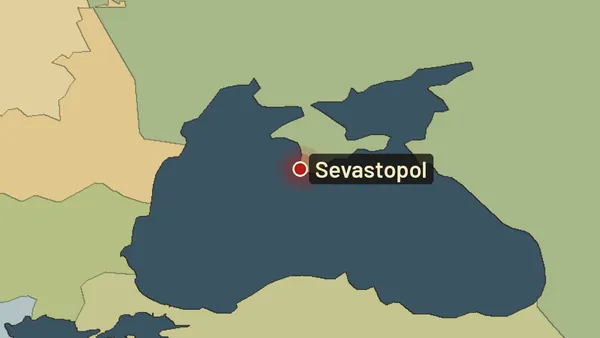
Trenches were not new in 1914. Soldiers had dug them at the siege of Sevastopol in the 1850s, at Petersburg in the American Civil War and in the Russo-Japanese War of 1904–05. What was new was the scale. By 1914 every major army had magazine rifles, machine guns that could fire hundreds of rounds a minute and quick-firing artillery. Men standing or advancing in the open were cut down; men lying in a hole in the ground were much safer.
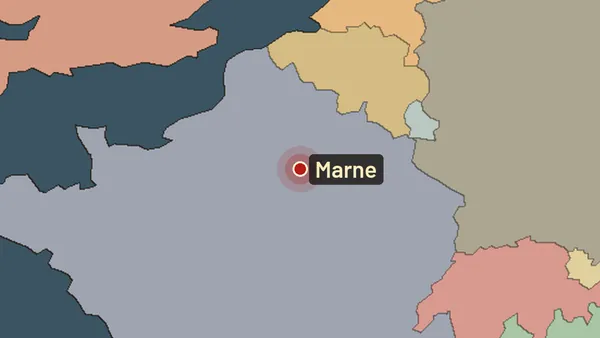
The war began as a war of movement, but after the First Battle of the Marne in September 1914 the retreating German armies dug in on the heights above the river Aisne, and Allied attacks failed against them. Each side then tried to get round the other's open northern flank in the "Race to the Sea". By November 1914 a continuous line ran from the North Sea coast of Belgium to the Swiss frontier, about 700 kilometres long. With no flank left to turn, the only way forward was straight through.
How a trench system worked
A typical trench system had several parallel lines. The front-line or fire trench faced the enemy; behind it lay a support trench and, further back, a reserve line. Communication trenches linked them, so that men, food, ammunition and the wounded could move without crossing open ground. Trenches were dug in a zigzag or with regular "traverses", so that a shell or an enemy who got into the trench could not sweep along its whole length.
The front was protected by belts of barbed wire. Soldiers stood on a fire step to shoot over the sandbagged parapet, and slept in holes cut into the trench wall or in deeper dugouts. German positions on the Somme had dugouts many metres underground, which is one reason the week-long British bombardment of July 1916 failed to destroy the defenders. Between the two lines lay "no man's land", a wilderness of shell holes, wire and unburied dead.
Life in the line
Most soldiers did not stay in the front line for long at a time. Units rotated between the front, the support lines and rest areas behind the lines, often spending only a few days at a time in the most exposed trench. The day began and ended with "stand-to", when everyone manned the parapet at dawn and dusk, the favourite times for attack. Most work was done at night: repairing wire, digging, carrying supplies and sending out patrols and raiding parties into no man's land.
Conditions were often wretched. In Flanders the water table was so high that trenches flooded, and standing in cold water for days caused "trench foot". Lice, rats and the smell of the dead were constant. Even on quiet days, snipers and shellfire killed and wounded a steady stream of men. At the same time, quiet sectors sometimes developed an unspoken "live and let live" restraint, and at Christmas 1914 soldiers in several places met in no man's land in an unofficial truce.
Breaking the deadlock
Generals on both sides spent four years trying to break through. Long artillery bombardments were meant to cut the wire and destroy the defenders, but they also warned the enemy and churned the ground into mud. Poison gas was used from 1915, tunnellers dug mines under enemy positions (at Messines in June 1917 the British set off 19 huge mines at once), and the British introduced the tank in September 1916. Defenders adapted too: from 1916–17 the Germans built defence in depth, holding the front lightly and counter-attacking with reserves.
What finally broke the deadlock in 1918 was not one weapon but the combination of many. The Germans used short, sudden bombardments and storm troops that infiltrated past strongpoints. The Allies combined artillery firing by map without warning, creeping barrages, tanks, aircraft and infantry using light machine guns and rifle grenades. From August 1918 the Allied armies advanced steadily, and the war of movement returned.
Did you know?
- Trenches were not only a Western Front phenomenon. At Gallipoli the Ottoman and Allied lines were in places only a few metres apart, and the Italian front in the Alps saw trenches cut into rock and ice.
- If every trench dug on the Western Front were laid end to end, some estimates put the total at tens of thousands of kilometres.
- The "trench coat" takes its name from the long waterproof coats worn by British officers in the trenches.
Trench warfare in World Wars: 1914–20XX
In the Historical (1914) scenario the age of trenches begins with the First Battle of the Marne on 5 September 1914. French morale rises, German morale falls, both sides lose heavy manpower, and the Western Front switches to trench warfare. The Trench entry unlocks in the in-game encyclopedia, and it describes what happens on the map: infantry that stays in place digs in and becomes much stronger in defence, so attacking a dug-in line is costly.
In the Parallel Fronts scenario, where engines, radio and flight matured in the late 1880s, armoured divisions and bomber wings give attackers the tools the generals of 1915 lacked. Will your war bog down in the mud, or can you keep it moving?
▶ Play now Free in your browser, no download needed.
Further reading: Wikipedia (English)
 Joseph Joffre