World Wars: 1914–20XX
First World War (1914–1918)
U-boats in World War I: Germany's submarine war (1914–1918)
Before 1914 few admirals thought the submarine would matter much. It was small, slow and fragile, useful perhaps for scouting or coastal defence. By 1917 German U-boats (from Unterseeboot, "undersea boat") were sinking so many merchant ships that Britain's leaders feared the country would run out of food. The submarine war came close to winning the war for Germany, and it did more than anything else to bring the United States into the war on the other side.
A new weapon proves itself
Germany entered the war with only a few dozen U-boats, while Britain had the largest surface fleet in the world. The first weeks showed what the new weapon could do. On 22 September 1914 the small, elderly U-9 under Lieutenant Otto Weddigen sank three British armoured cruisers, Aboukir, Hogue and Cressy, off the Dutch coast in about an hour. Some 1,400 British sailors died. Admirals on both sides suddenly took the submarine seriously.
Meanwhile Britain was enforcing a tight naval blockade of Germany, cutting off food and raw materials. Germany's surface fleet was too weak to break it, so the navy turned to the U-boat as a weapon of counter-blockade. In February 1915 Germany declared the waters around the British Isles a war zone in which enemy merchant ships could be sunk without warning.
The rules of war and the Lusitania
The old "cruiser rules" of naval warfare said that a warship should stop a merchant ship, check its cargo and let the crew take to the boats before sinking it. For a submarine this was dangerous: on the surface it was small and fragile, and armed merchant ships or disguised "Q-ships" could sink it with a single shell. Sinking without warning was much safer for the U-boat, and much deadlier for everyone else.
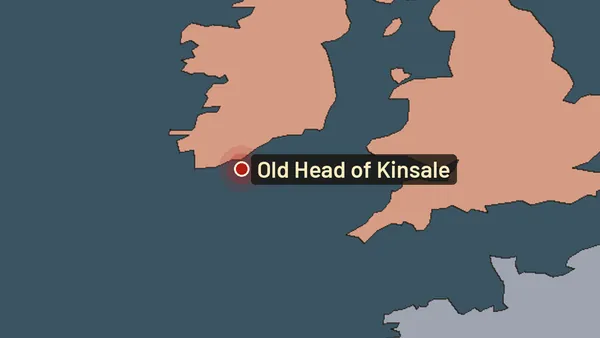
On 7 May 1915 the U-20 under Captain Walther Schwieger torpedoed the British liner Lusitania off the south coast of Ireland. The ship sank in about 18 minutes, and 1,198 people died, among them 128 Americans. The sinking caused fury in the United States. After further incidents, including the sinking of the liner Arabic in August 1915 and the torpedoing of the cross-Channel ferry Sussex in March 1916, Germany promised to restrict its attacks on passenger and merchant ships. The U-boats did not stop, but they were held back.
1917: the great gamble
By the end of 1916 the German army and navy leadership believed the war could be won at sea. The chief of the Admiralty Staff, Admiral Henning von Holtzendorff, argued that sinking a fixed tonnage of shipping each month would force Britain to make peace within about six months, before American troops could make a difference. On 1 February 1917 Germany declared unrestricted submarine warfare: every ship in the war zone, enemy or neutral, could be sunk without warning.
At first the plan seemed to work. In April 1917 U-boats sank more than 800,000 tons of Allied and neutral shipping, the worst month of the war. But the decision had a price. The United States broke off diplomatic relations on 3 February, and after the publication of the Zimmermann Telegram, in which Germany offered Mexico an alliance against the United States, Congress declared war on Germany in April 1917.
How the U-boats were beaten
The answer was the convoy. Instead of sailing alone, merchant ships gathered in large groups escorted by destroyers and other warships. The British Admiralty had long resisted the idea, but from the late spring of 1917 convoys were introduced on the main routes. The effect was dramatic: a U-boat that met a convoy could attack only a few ships before the escorts drove it off, and most of the time it found nothing at all in an empty ocean.
Other measures helped. Depth charges, hydrophones for listening underwater, minefields across the Strait of Dover and the North Sea, aircraft and airships on patrol, and the code-breakers of the Admiralty's Room 40 all made the U-boat's life harder. Losses of merchant shipping fell, while U-boat losses rose. In the end Germany lost roughly half of the submarines it put into service, and thousands of their crewmen died. Britain did not starve, and American troops crossed the Atlantic almost without loss.
Did you know?
- U-boats also fought far from Britain. The U-21 under Otto Hersing sailed to the eastern Mediterranean and in May 1915 sank the British battleships Triumph and Majestic off Gallipoli.
- In 1916 Germany sent an unarmed cargo submarine, the Deutschland, across the Atlantic to the neutral United States to carry valuable goods through the British blockade.
- Walther Schwieger, who sank the Lusitania, was killed in 1917 when his later boat, U-88, was lost in the North Sea, probably on a mine.
U-boats in World Wars: 1914–20XX
In the Historical (1914) scenario the submarine war enters the headlines with the sinking of the Lusitania on 7 May 1915. Tension between the United States and Germany rises sharply, and support for the war grows in America and Britain. The Submarine (U-boat) entry unlocks in the in-game encyclopedia that day. Later, on 1 February 1917, Germany faces the great decision itself: unleash unrestricted submarine warfare to strangle British supply and risk American entry, or keep the U-boats restrained while the blockade squeezes your own people.
In the Parallel Fronts scenario, where engines, radio and flight matured decades early, the war at sea is fought with aircraft carriers and air power as well. Will you starve Britain, or keep America out of the war?
▶ Play now Free in your browser, no download needed.
Further reading: Wikipedia (English)