 World Wars: 1914–20XX
First World War (1914–1918)
Battle of Galicia (1914): Russia takes Lemberg
In this article
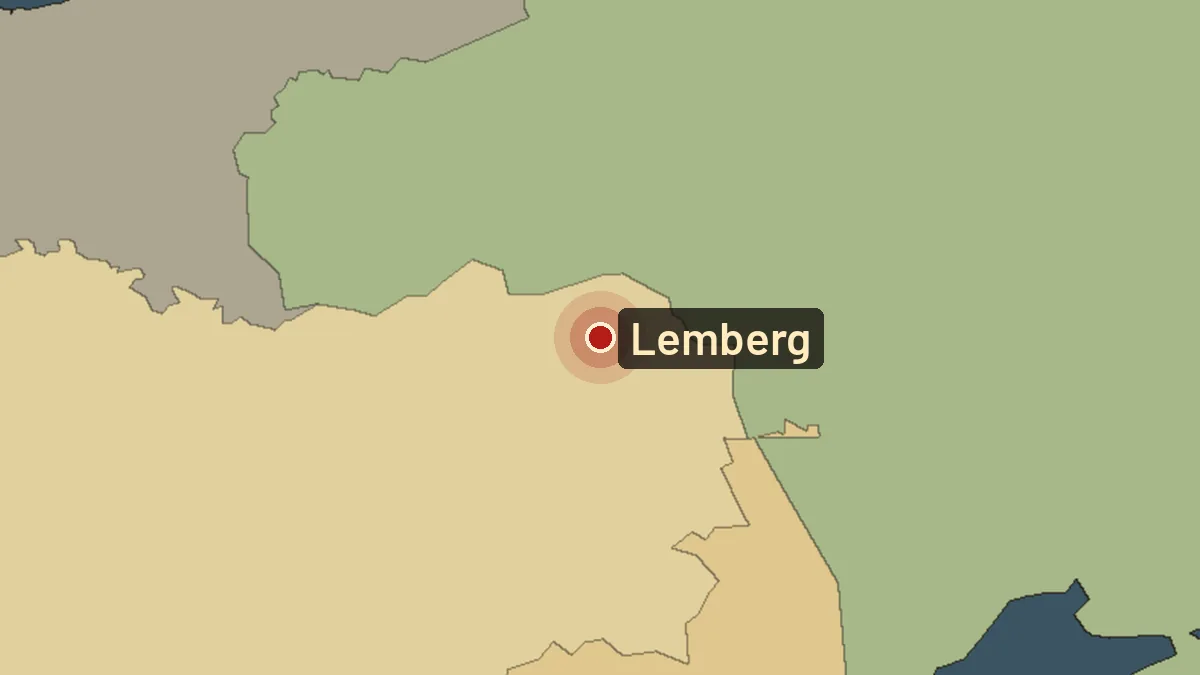
The Battle of Galicia, also called the Battle of Lemberg, was a series of battles between Russia and Austria-Hungary in the first weeks of the First World War. More than a million soldiers on each side fought across a front of several hundred kilometres. The battle ended with the Austro-Hungarian armies retreating behind the San river and towards the Carpathian mountains, and with the loss of a large part of the army that Austria-Hungary had trained before the war.
Conrad's dilemma
Franz Conrad von Hötzendorf, chief of the Austro-Hungarian General Staff, had to fight on two fronts at once: against Serbia, whose defeat had been the original aim of the war, and against Russia. His plans relied on a reserve group of armies that could be sent either south or north. In August 1914 part of this reserve was first sent towards Serbia and then redirected to Galicia, arriving late. Conrad decided to attack northwards into Russian Poland, while Russia, keeping its promise to France, attacked both East Prussia and Galicia.
Early success in the north
The first clashes favoured Austria-Hungary. At Kraśnik, from 23 to 25 August, the Austro-Hungarian First Army defeated the Russian Fourth Army, and at Komarów, from 26 August to 2 September, the Fourth Army under Moritz von Auffenberg pushed back the Russian Fifth Army. But these advances took the Austro-Hungarian forces away from the eastern part of Galicia, where the main Russian blow was falling.
The fall of Lemberg
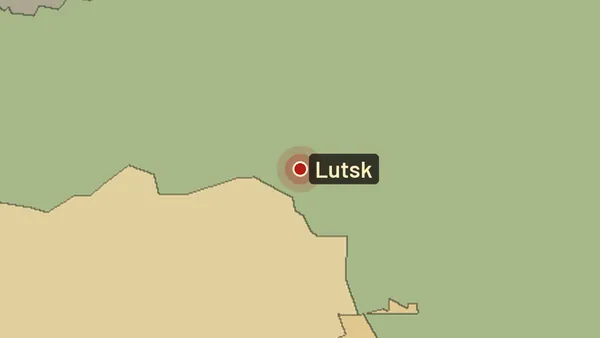
In the east, the Russian Third Army under Nikolai Ruzsky and the Eighth Army under Aleksei Brusilov advanced into Galicia and defeated the weaker Austro-Hungarian forces on the Zlota Lipa and Gnila Lipa rivers at the end of August. The Austro-Hungarian army abandoned Lemberg, the capital of Galicia, and Russian troops entered the city on 3 September. Conrad then attempted a new attack around Rawa Ruska and Gródek from 3 to 11 September, but the Russian armies threatened to cut off his forces from the north. On 11 September he ordered a general retreat.
Retreat and siege
The Austro-Hungarian armies fell back about 150 kilometres, to the San and then to the Dunajec river and the Carpathian passes. The fortress of Przemyśl, with a garrison of more than 100,000 men, was left behind and besieged by the Russians from late September. It was relieved briefly in October, surrounded again in November and surrendered on 22 March 1915. Germany had to send troops to support its ally, and from then on German and Austro-Hungarian operations in the east were increasingly coordinated.
Why it mattered
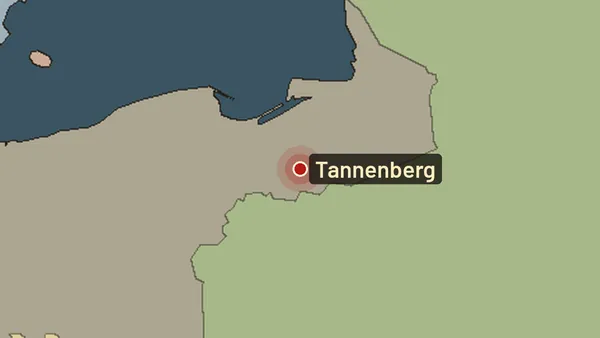
Galicia cost Austria-Hungary a large share of its trained officers and experienced soldiers in the first month of the war. Historians such as Holger Herwig and Norman Stone see the battle as a blow from which the Austro-Hungarian army never fully recovered, and as one reason it became increasingly dependent on German support. For Russia, the victory in Galicia balanced the defeat at Tannenberg in the same weeks.
Did you know?
- Conrad von Hötzendorf's son Herbert, a cavalry officer, was killed in Galicia in September 1914.
- Russia governed occupied Lemberg and much of Galicia for about nine months, until the Gorlice–Tarnów offensive of 1915 forced its armies out.
- The surrender of Przemyśl in March 1915 put about 117,000 Austro-Hungarian soldiers into captivity, one of the largest surrenders of the war.
Galicia in World Wars: 1914–20XX
In the game's Historical (1914) scenario Galicia is one of the first fronts to open between Austria-Hungary and Russia. If you lead Austria-Hungary, you face Conrad's choice between Serbia and Russia; if you lead Russia, you decide whether to concentrate against Austria-Hungary or against Germany in East Prussia. In the Parallel Fronts scenario, faster communications and armoured forces change how such a wide front can be held.
▶ Play now Free in your browser, no download needed.
Sources and further reading
Figures and dates in this article follow these works; where historians disagree, the range of estimates is given.
- Prit Buttar, Collision of Empires: The War on the Eastern Front in 1914 (2014)
- Holger H. Herwig, The First World War: Germany and Austria-Hungary 1914–1918 (1997)
- Norman Stone, The Eastern Front 1914–1917 (1975)
- Wikipedia (English)
 Aleksei Brusilov