 World Wars: 1914–20XX
First World War (1914–1918)
Battle of the Frontiers (1914): the opening clashes in the west
In this article
The Battle of the Frontiers is the name given to a series of battles fought in August 1914 along the borders of France, Belgium and Germany. Both sides went to war with offensive plans. In a few weeks the French offensive into Lorraine and the Ardennes failed, while the German armies that had marched through Belgium pushed the French and British back. The Allied retreat that followed ended only at the Marne in early September.
Two plans meet
The German plan, drawn up by Alfred von Schlieffen and modified by Helmuth von Moltke the Younger, placed most of the army on the right wing. It would march through Belgium and northern France and envelop the French armies before Russia had fully mobilised. The French Plan XVII, prepared under Joseph Joffre, put the main effort into attacks in Lorraine and the Ardennes, aimed at the centre of the German line. French doctrine stressed the offensive and the morale of the attacking infantry.
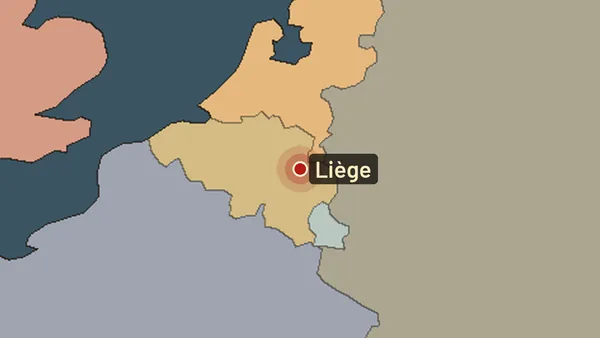
The German army attacked the Belgian fortress of Liège on 5 August; its last forts fell on 16 August after bombardment by heavy siege howitzers. Meanwhile French troops entered Alsace and briefly took Mulhouse on 8 August, but were forced back.
Lorraine and the Ardennes
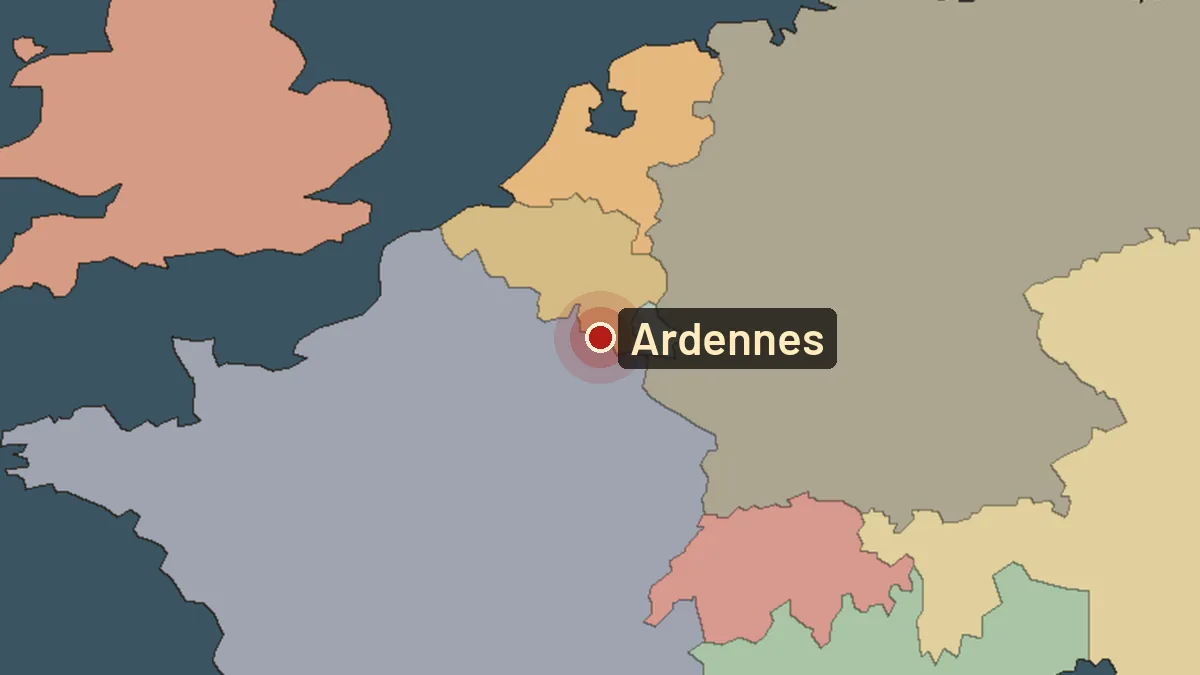
The main French offensive into Lorraine began on 14 August. On 20 August the German Sixth and Seventh Armies under Crown Prince Rupprecht of Bavaria counter-attacked at Morhange and Sarrebourg, and the French withdrew towards Nancy. On 21 and 22 August the French Third and Fourth Armies advanced into the wooded Ardennes, expecting weak opposition. They met German armies moving in the opposite direction, and the encounter battles at Rossignol, Virton, Neufchâteau and elsewhere were costly for the attackers. Historians estimate that about 27,000 French soldiers were killed on 22 August 1914 alone, the highest number of French soldiers killed on a single day in the country's history.
Charleroi and Mons
In the north, the French Fifth Army under Charles Lanrezac fought the German Second and Third Armies on the Sambre around Charleroi from 21 to 23 August. On its left, the British Expeditionary Force under Sir John French held the line of the canal at Mons on 23 August against the German First Army under Alexander von Kluck. The British infantry's rapid rifle fire caused heavy German losses, but with the French withdrawing on their right, the British also had to retreat. On 26 August the British II Corps fought a delaying battle at Le Cateau.
The Great Retreat
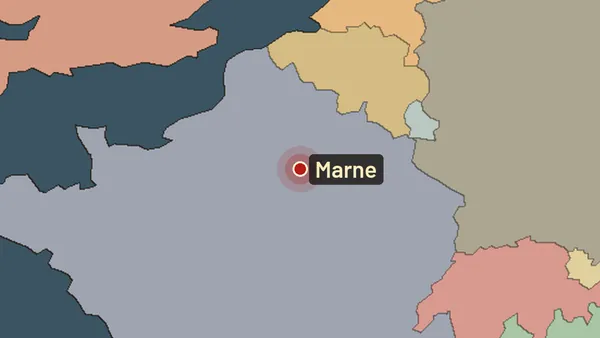
By the end of August the French and British armies were in full retreat towards Paris. Joffre dismissed a large number of generals he judged to have failed and moved divisions from Lorraine to the west, forming a new Sixth Army near Paris. The German armies, tired after weeks of marching and weakened by detaching troops to Belgium and to East Prussia, followed. Their advance created the conditions for the Allied counter-offensive on the Marne, which began on 5 September.
Why it mattered
The Battle of the Frontiers showed the destructive power of modern rifles, machine guns and quick-firing artillery against troops attacking in the open. The French army's losses in August 1914 were among its heaviest of the war, and its tactics and uniforms changed in the following year. The failure of both war plans, Plan XVII at once and the German plan at the Marne, set the stage for the trench warfare that followed.
Did you know?
- In August 1914 French infantry still wore red trousers and dark blue coats. The less visible "horizon blue" uniform was introduced from 1915.
- Generals dismissed by Joffre were often posted to the city of Limoges, which gave French the verb "limoger", meaning to dismiss someone from a post.
- Mons was the first major battle fought by the British army in western Europe since Waterloo in 1815, about 50 kilometres away.
The Battle of the Frontiers in World Wars: 1914–20XX
In the game's Historical (1914) scenario the war in the west starts in August 1914, with the same frontiers and the same alliances. If you lead Germany, you decide how much weight to put on the march through Belgium; if you lead France, you can choose whether to attack in Lorraine as Plan XVII intended or to wait and defend. In the Parallel Fronts scenario, where engines, radio and flight matured decades early, armoured divisions and air reconnaissance make the first weeks of the war very different.
▶ Play now Free in your browser, no download needed.
Sources and further reading
Figures and dates in this article follow these works; where historians disagree, the range of estimates is given.
- Holger H. Herwig, The Marne, 1914 (2009)
- Robert A. Doughty, Pyrrhic Victory: French Strategy and Operations in the Great War (2005)
- Hew Strachan, The First World War (2003)
- Wikipedia (English)
 Joseph Joffre