World Wars: 1914–20XX
First World War (1914–1918)
Gaza and Beersheba (1917): the battles for southern Palestine
In this article
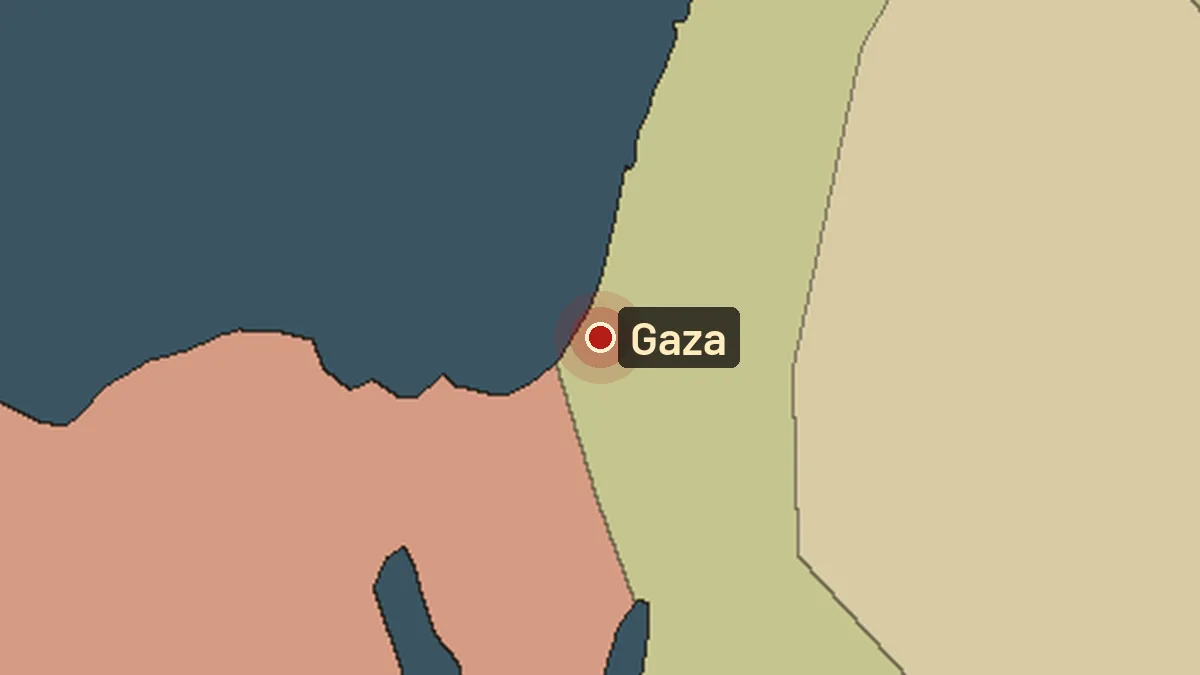
In 1917 the line between the coastal town of Gaza and the desert town of Beersheba, about 40 kilometres inland, blocked the way from Egypt into Palestine. British Empire forces attacked it three times. In March and April Ottoman forces held the line. In the autumn, under a new commander, Edmund Allenby, the British took Beersheba and broke through, opening the road to Jerusalem.
Across the Sinai
After Ottoman attacks on the Suez Canal in 1915 and at Romani in August 1916 were repulsed, British forces advanced across the Sinai peninsula during 1916. They built a railway and a water pipeline behind them, which allowed a large army to operate in the desert. By early 1917 they had reached the border of Palestine.
The first two battles of Gaza
On 26 March 1917 British infantry and mounted troops attacked Gaza and came close to taking it, but confusion in communications and fears about water for the horses led to a withdrawal. On 17–19 April a second, frontal attack, supported by a small number of tanks and gas shells, failed against the strengthened Ottoman defences under Friedrich Kress von Kressenstein. The British commander, Archibald Murray, was replaced in June by Edmund Allenby.
Beersheba, 31 October
Allenby received reinforcements and planned to attack the Ottoman line at its eastern end, at Beersheba, while making the defenders believe the main blow would fall at Gaza. Deception measures included false documents deliberately lost near the Ottoman lines. On 31 October infantry attacked Beersheba from the south-west, and late in the day the Australian 4th Light Horse Brigade charged the town and captured its wells, which were vital for the mounted troops. The Ottoman forces had to give up the eastern end of their line.
Third Gaza and Jerusalem
Over the next week the British attacked along the line, and Ottoman forces withdrew from Gaza on the night of 6–7 November. The Yıldırım Army Group under Erich von Falkenhayn, which had been formed to retake Baghdad, was drawn into the defence of Palestine. The British advanced north, and Jerusalem surrendered on 9 December 1917. The Palestine front then remained fairly stable until the Battle of Megiddo in September 1918.
Did you know?
- The charge of about 800 Australian horsemen at Beersheba is often described as one of the last successful large mounted charges in history.
- The water pipeline across the Sinai carried Nile water from the Suez Canal area over more than 200 kilometres.
- In the first two battles of Gaza, the defence included German and Austro-Hungarian artillery and machine-gun units serving with the Ottoman army.
Gaza and Beersheba in World Wars: 1914–20XX
In the game's Historical (1914) scenario Palestine and Sinai form one of the Ottoman Empire's southern fronts, linked to the Suez Canal. If you lead the Ottoman Empire, you have to defend a long desert line with limited forces; if you lead Britain, you decide when to attack and how to supply your army. In the Parallel Fronts scenario, motor vehicles and aircraft make desert warfare much faster.
▶ Play now Free in your browser, no download needed.
Sources and further reading
Figures and dates in this article follow these works; where historians disagree, the range of estimates is given.
- David R. Woodward, Hell in the Holy Land: World War I in the Middle East (2006)
- Edward J. Erickson, Ordered to Die: A History of the Ottoman Army in the First World War (2001)
- Wikipedia (English)