World Wars: 1914–20XX
First World War (1914–1918)
The Second Battle of the Marne (1918): the turning point of the last year
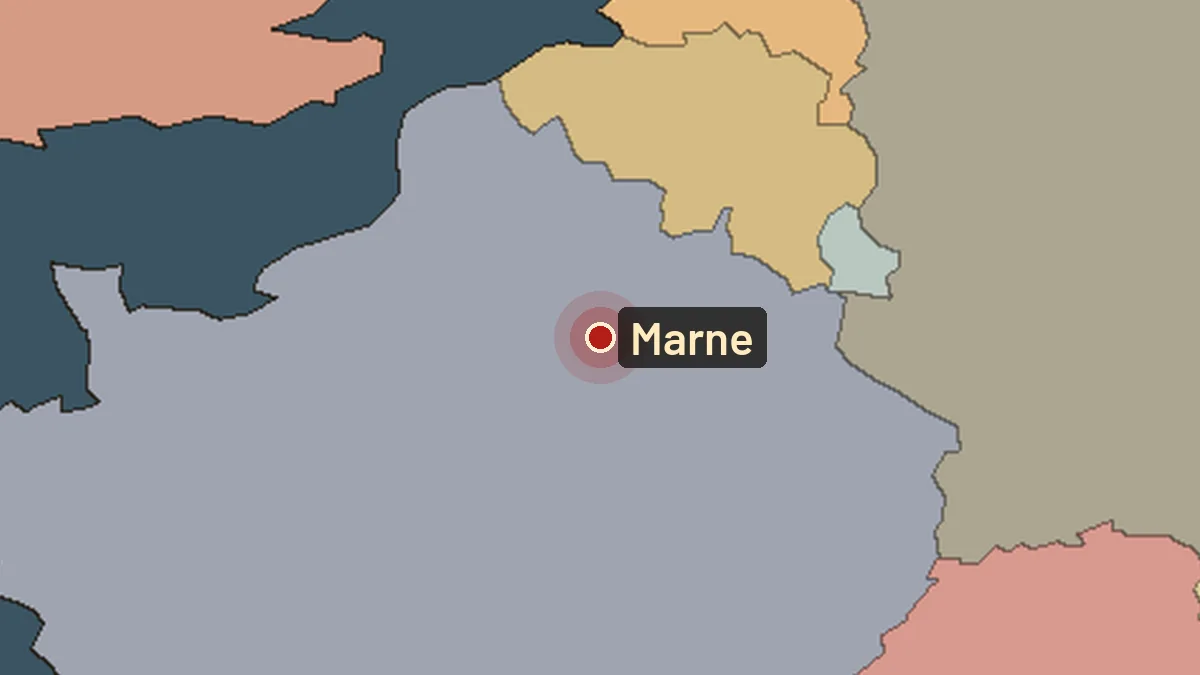
The Second Battle of the Marne began as the last German offensive of the war on the Western Front and ended as the first great Allied counter-offensive of 1918. On 15 July German armies attacked on both sides of Reims. East of the city the attack was stopped on the first day; to the west German troops crossed the Marne. On 18 July French and American divisions struck the flank of the German salient near Soissons, and by early August the German army had fallen back. From then until the armistice the Allies kept the initiative.
The last German attack
Between March and June 1918 the German Spring Offensive had pushed the front forward several times, and at the end of May it had reached the Marne at Château-Thierry. Erich Ludendorff, who directed German operations, planned another attack around Reims to draw French reserves south before a decisive blow against the British in Flanders. The attack, prepared by three German armies, was set for 15 July.
Gouraud's defence
East of Reims, the French Fourth Army under Henri Gouraud had learned of the time of the attack, partly from prisoners taken in raids. Gouraud left only small outposts in his front positions and held his main line further back. The German bombardment fell largely on near-empty trenches, and the attacking infantry, having outrun its artillery support, was stopped in front of the main French line. West of Reims the Germans crossed the Marne near Dormans and gained a few kilometres, but they could not widen the bridgehead. American troops of the 3rd Division held the south bank of the river near Château-Thierry, and Italian troops of the II Corps fought in the hills south-west of Reims.
18 July
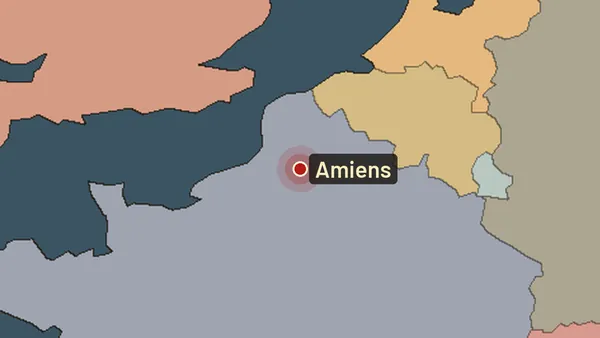
Ferdinand Foch, the Allied commander-in-chief, had prepared a counter-attack against the western side of the German salient between the Aisne and the Marne. On 18 July the French Tenth Army under Charles Mangin and the Sixth Army under Jean Degoutte attacked from the forest of Villers-Cotterêts without a long preliminary bombardment, with several hundred tanks, many of them the new light Renault FT, and with American divisions in the front line. The German positions were broken in several places. Over the following days British divisions joined the attacks, and Ludendorff ordered a step-by-step withdrawal. By 6 August the German army stood behind the Vesle river.
Why it mattered
The battle ended Germany's hopes of winning the war in the west. Ludendorff cancelled the planned offensive in Flanders, and the German army never again attacked on a large scale. Foch was made a Marshal of France on 6 August. Two days later the British attack at Amiens opened the Hundred Days Offensive. Historians such as Elizabeth Greenhalgh stress the role of the French army and of Allied coordination under Foch, while David Zabecki shows how the German offensives had exhausted the German army before July.
Did you know?
- The US 3rd Division's stand on the river on 15 July gave it the nickname "Rock of the Marne", which it still uses today.
- The Italian military cemetery at Bligny, near Reims, holds over 3,000 Italian soldiers who died in France, most of them in the fighting of 1918.
- Château-Thierry and the villages along the Marne had already seen fighting in September 1914, during the First Battle of the Marne, which was fought partly in the same area.
The Second Marne in World Wars: 1914–20XX
In the game's Historical (1914) scenario 1918 is the year when time runs short for Germany: Russia may be out of the war, but American forces are arriving. If you lead Germany, you decide how far to push before your reserves run out; if you lead France, you choose when to stop defending and start counter-attacking. In the Parallel Fronts scenario, motorised forces make counter-attacks against an exposed salient faster and deadlier.
▶ Play now Free in your browser, no download needed.
Sources and further reading
Figures and dates in this article follow these works; where historians disagree, the range of estimates is given.
- Elizabeth Greenhalgh, Foch in Command: The Forging of a First World War General (2011)
- David T. Zabecki, The German 1918 Offensives: A Case Study in the Operational Level of War (2006)
- Wikipedia (English)
 Ferdinand Foch