 World Wars: 1914–20XX
First World War (1914–1918)
The Second Battle of the Piave (1918): the Battle of the Solstice
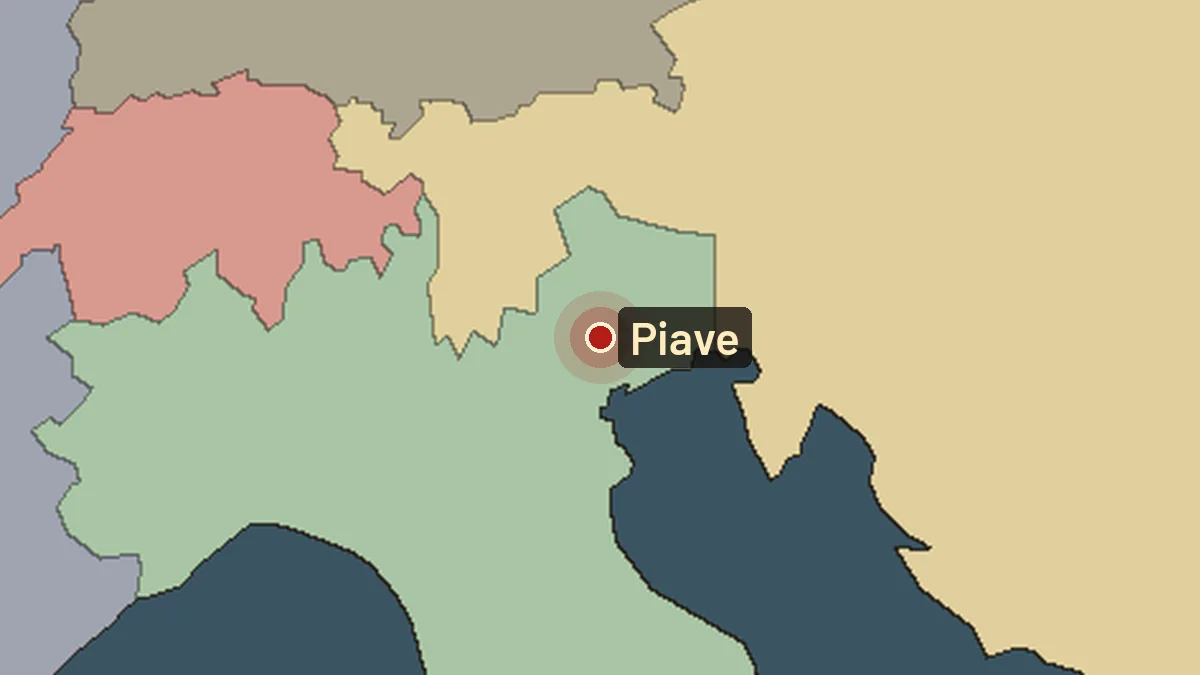
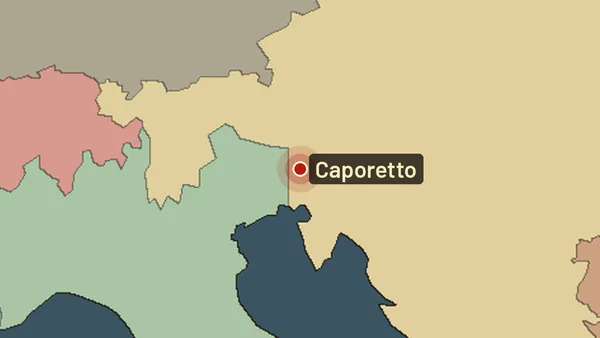
The Second Battle of the Piave, called in Italy the Battle of the Solstice because it began close to midsummer, was the last major offensive of the Austro-Hungarian army. On 15 June 1918 it attacked the Italian front both in the mountains and on the Piave river, the line the Italian army had held since the retreat from Caporetto in November 1917. The attacks gained ground in places but were stopped, and within a week the Austro-Hungarian troops that had crossed the river were withdrawn.
A two-pronged plan
After Caporetto the Italian army, now commanded by Armando Diaz, had been rebuilt and reinforced, and British and French divisions had come to Italy. Austria-Hungary was under pressure from its German ally to attack again. Its commanders could not agree on one main effort, and the plan divided the forces: Franz Conrad von Hötzendorf would attack from the mountains on the Asiago plateau and Monte Grappa, while Svetozar Boroević would cross the Piave and attack across the plain. The Austro-Hungarian army also suffered from shortages of food and equipment.
The attack
The offensive began early on 15 June. In the mountains the attacks made little progress against Italian, British and French defenders, who had learned the timing of the attack and opened artillery fire on the assembly areas. On the Piave, Austro-Hungarian troops crossed the river in several places and took much of the Montello hill and ground near the river mouth. Italian aircraft attacked the bridges, and rising water after heavy rain swept many of them away, making it hard to bring up supplies and reinforcements.
The withdrawal
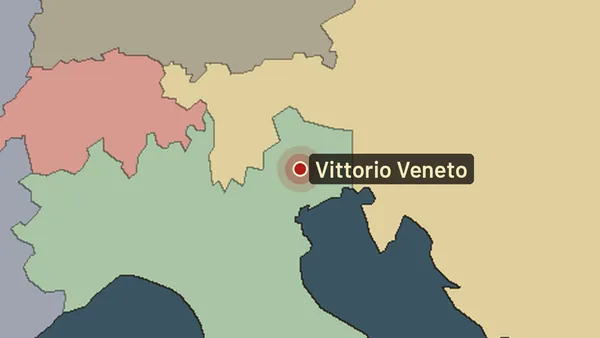
Italian counter-attacks pressed against the bridgeheads. On 20 June the Austro-Hungarian high command, with the approval of Emperor Karl, ordered a withdrawal across the river, which was completed by 23 June. The Italian army did not follow up immediately. Historians such as Mark Thompson note that Diaz preferred to wait until the army was ready for a large, well-prepared offensive, which came in October at Vittorio Veneto.
Why it mattered
The failure of the offensive was a turning point for Austria-Hungary. Alexander Watson describes how the losses and the shortages that followed weakened an army already strained by four years of war and by unrest at home. In Italy the battle restored confidence after Caporetto. On 24 October 1918 the Italian army launched the offensive at Vittorio Veneto, and Austria-Hungary signed the armistice of Villa Giusti on 3 November.
Did you know?
- The Italian fighter pilot Francesco Baracca, the country's top-scoring ace, was killed over the Montello on 19 June 1918, during the battle.
- Italian soldiers born in 1899, called the "Ragazzi del '99" (the boys of '99), served in the front line on the Piave at the age of 18 or 19.
- A few weeks after the battle, in July 1918, the American volunteer ambulance driver Ernest Hemingway was wounded near Fossalta di Piave.
The Piave in World Wars: 1914–20XX
In the game's Historical (1914) scenario the Italian front runs along the Alps and the rivers of the Veneto. If you lead Austria-Hungary, you have to decide whether to spend scarce forces on one more offensive; if you lead Italy, you choose when to hold and when to strike back. In the Parallel Fronts scenario, air power plays an even greater role in cutting the bridges an attacker depends on.
▶ Play now Free in your browser, no download needed.
Sources and further reading
Figures and dates in this article follow these works; where historians disagree, the range of estimates is given.
- Mark Thompson, The White War: Life and Death on the Italian Front 1915–1919 (2008)
- Alexander Watson, Ring of Steel: Germany and Austria-Hungary at War, 1914–1918 (2014)
- Wikipedia (English)
 Italy in WWI