 World Wars: 1914–20XX
First World War (1914–1918)
The Battle of Cambrai (1917): tanks, surprise and counter-attack
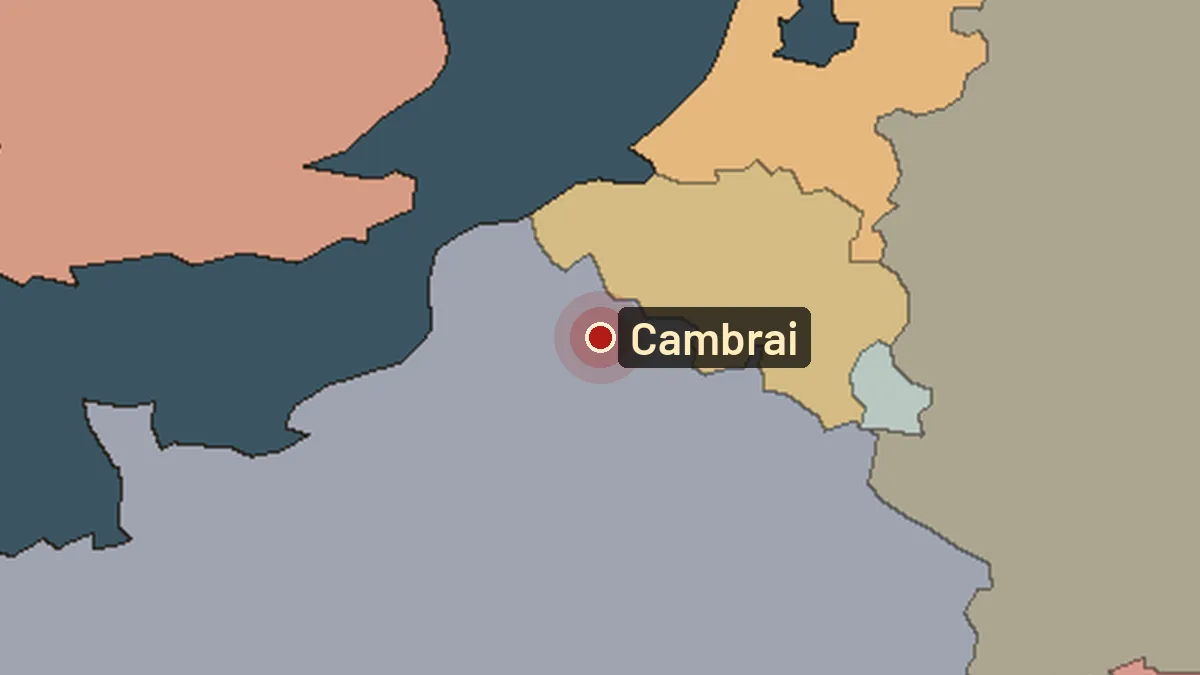
At Cambrai in November 1917 the British Third Army attacked one of the strongest sectors of the German Hindenburg Line. It used about 470 tanks together with infantry, aircraft and a new method of opening artillery fire without warning. On the first day it advanced further than any British attack on the Western Front since 1914. Ten days later a German counter-attack, using new infiltration tactics, retook most of the lost ground.
A new kind of attack
Earlier offensives had usually begun with bombardments lasting days, which destroyed barbed wire but also warned the enemy and churned up the ground. At Cambrai, British gunners used surveying, maps and calculations of weather and gun wear to fire accurately without first firing ranging shots. The bombardment could begin at the moment of the attack. Tanks of the Tank Corps would crush the wire and cross the wide German trenches carrying bundles of brushwood, called fascines, to drop into them.
20 November
The attack began at dawn on 20 November. Surprise was almost complete. In most sectors the tanks and infantry broke through several German lines and advanced up to about 8 kilometres. At Flesquières, in the centre, German artillery destroyed a number of tanks and slowed the advance. The British cavalry, held ready to exploit the breakthrough, could not get through in strength, and the bridges over the St Quentin canal were damaged. Many tanks broke down or were lost, and in the following days the advance slowed. Bourlon Wood, on high ground west of Cambrai, was fought over for a week.
The German counter-attack
On 30 November the German Second Army under Georg von der Marwitz counter-attacked against both sides of the British salient. After a short, intense bombardment with gas and smoke, small groups of infantry moved forward quickly, bypassing strong points. They retook much of the ground, and in some places pushed beyond the original British line. By 7 December the battle was over, with both sides holding roughly the same amount of ground as before.
What it showed
Cambrai is often called the first great tank battle, but historians such as Bryn Hammond stress that its success came from the combination of tanks with infantry, aircraft and above all the new artillery methods. The German counter-attack, for its part, showed the infiltration tactics that the German army would use on a larger scale in its spring offensives of 1918. Both sides drew lessons from the battle for the campaigns of the following year.
Did you know?
- After the first day's success, church bells were rung in Britain to celebrate a victory for the first time in the war. The German counter-attack ten days later made the celebration seem premature.
- A British tank lost at Flesquières, D51 "Deborah", was found buried in 1998 and is now displayed in a museum near the battlefield.
- The fascines carried by the tanks weighed about one and a half tonnes each.
Cambrai in World Wars: 1914–20XX
In the game's Historical (1914) scenario tanks become available from 15 September 1916, the date of their first use in history. If you lead Britain, you decide how to combine them with artillery and infantry; if you lead Germany, you must find an answer to them. In the Parallel Fronts scenario, armoured forces exist much earlier and the battles of 1917 look very different.
▶ Play now Free in your browser, no download needed.
Sources and further reading
Figures and dates in this article follow these works; where historians disagree, the range of estimates is given.
- Bryn Hammond, Cambrai 1917: The Myth of the First Great Tank Battle (2008)
- Gary Sheffield, The Chief: Douglas Haig and the British Army (2011)
- Wikipedia (English)
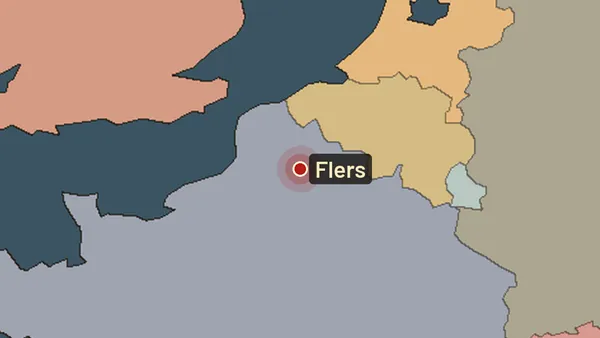 The first tanks (Flers–Courcelette)
 Douglas Haig