World Wars: 1914–20XX
First World War (1914–1918)
The Battle of Ctesiphon (1915): the advance on Baghdad is stopped
In this article
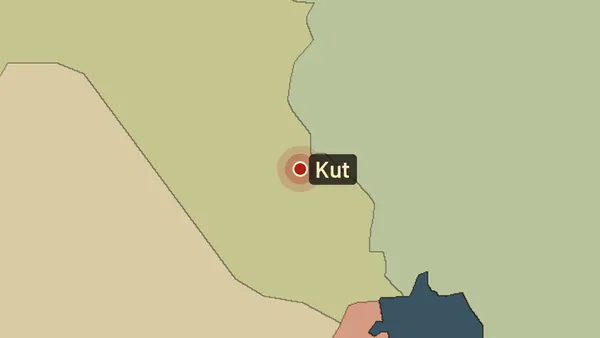
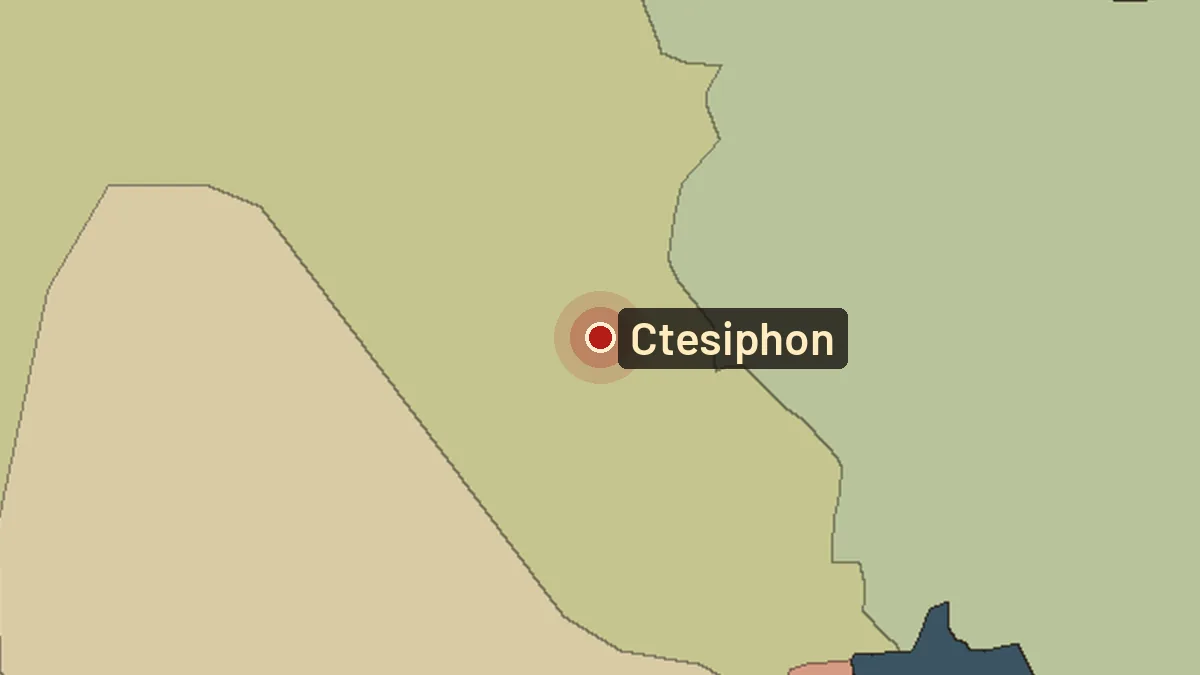
At Ctesiphon, in late November 1915, a British and Indian division under Major-General Charles Townshend attacked Ottoman defensive lines blocking the road to Baghdad. After four days of fighting both sides were exhausted, and Townshend withdrew down the Tigris to Kut al-Amara, where he was soon besieged. The battle ended the first British attempt to take Baghdad.
The Mesopotamian campaign
British and Indian troops landed at the head of the Persian Gulf in November 1914, soon after the Ottoman Empire entered the war, to protect the oil installations of the Anglo-Persian Oil Company at Abadan. They took Basra on 22 November 1914 and advanced up the Tigris and Euphrates during 1915. On 28 September 1915 Townshend's 6th (Poona) Division defeated the Ottoman forces at Kut. Encouraged by these successes and hoping for a political victory after the setbacks at Gallipoli, the British government approved an advance on Baghdad, although Townshend's force was small and far from its base.
The Ottoman position
The Ottoman forces in Iraq, commanded by Nureddin Pasha, prepared two lines of trenches near the ancient city of Ctesiphon, close to the great brick arch of a Sasanian palace. They were reinforced by experienced troops, including the newly arrived 51st Division. In early December the German field marshal Colmar von der Goltz arrived to take overall command of the Ottoman Sixth Army.
Four days of fighting
Townshend attacked on 22 November. His troops captured much of the first Ottoman line, but suffered heavy losses and could not break the second. Ottoman counter-attacks followed on 23 and 24 November. Townshend, having lost about a third of his force and short of water and transport for the wounded, decided to withdraw. Nureddin's forces followed, and after a difficult retreat the British and Indian division reached Kut on 3 December.
The road to Kut
On 7 December 1915 the Ottoman forces completed the encirclement of Kut. Repeated British relief attempts in early 1916 failed, and Townshend surrendered on 29 April 1916 with about 13,000 men. British forces resumed the advance under a new commander, Frederick Stanley Maude, in December 1916 and took Baghdad on 11 March 1917.
Did you know?
- In Turkish the battle is called Selman-ı Pak Muharebesi, after the nearby tomb of Salman the Persian, a companion of the Prophet Muhammad. The town is still called Salman Pak.
- The Taq Kasra, the arch of the Sasanian palace at Ctesiphon, built in the 6th century, is one of the largest single-span brick vaults in the world.
- Colmar von der Goltz died of typhus in Baghdad on 19 April 1916, ten days before the surrender of Kut.
Ctesiphon in World Wars: 1914–20XX
In the game's Historical (1914) scenario Mesopotamia is one of the Ottoman Empire's fronts, together with the Caucasus, the Straits and Palestine. If you lead the Ottoman Empire, you decide where to send your limited reserves; if you lead Britain, you choose how far to push up the rivers with long supply lines. In the Parallel Fronts scenario, motor transport and aircraft make it possible to supply and scout a desert campaign far more easily.
▶ Play now Free in your browser, no download needed.
Sources and further reading
Figures and dates in this article follow these works; where historians disagree, the range of estimates is given.
- A. J. Barker, The Bastard War: The Mesopotamian Campaign of 1914–1918 (1967)
- Edward J. Erickson, Ordered to Die: A History of the Ottoman Army in the First World War (2001)
- Wikipedia (English)