 World Wars: 1914–20XX
Second World War (1939–1945)
The Battle of the Atlantic (1939–1945): convoys against U-boats
In this article
The Battle of the Atlantic lasted from the first day of the war in Europe to the last. Britain depended on imports of food, fuel and raw materials, and the Allied armies in Europe depended on supplies from North America. Germany's aim was to sink ships faster than they could be built.
1939–1941: the U-boat threat
The liner Athenia was sunk by a U-boat on 3 September 1939. After the fall of France, German submarines operated from bases on the French Atlantic coast, much closer to the convoy routes. Attacking at night on the surface in groups, the so-called wolf packs, they caused heavy losses in 1940 and 1941. Britain organised merchant ships into escorted convoys and, from March 1941, received help from the United States under Lend-Lease.
1942: the American coast
After Germany declared war on the United States in December 1941, U-boats attacked shipping off the American east coast, where convoys and blackouts were not yet organised. Losses in the first half of 1942 were among the highest of the war.
1943: the turn
By spring 1943 the Allies had more escort ships, escort carriers, long-range patrol aircraft that closed the "air gap" in the mid-Atlantic, better radar, and intelligence from breaking German naval codes. In May 1943 Germany lost more than 40 U-boats in a single month, and Admiral Karl Dönitz withdrew them from the North Atlantic. The U-boats continued to fight until 1945, but never again threatened the convoy routes seriously.
The cost
Around 3,500 Allied merchant ships were sunk in the Atlantic campaign, with the loss of tens of thousands of merchant sailors. Germany lost about 780 U-boats, and around 30,000 of the roughly 40,000 men who served in them died.
Did you know?
- The Allies built new merchant ships so quickly that, from 1943, more tonnage was being launched every month than was sunk.
- Winston Churchill later wrote that the U-boat threat was the only thing that really frightened him during the war.
Play this moment
Free in your browser, no download needed.
Sources and further reading
Figures and dates in this article follow these works; where historians disagree, the range of estimates is given.
- Gerhard L. Weinberg, A World at Arms: A Global History of World War II (1994)
- Richard Overy, Why the Allies Won (1995)
- Wikipedia (English)
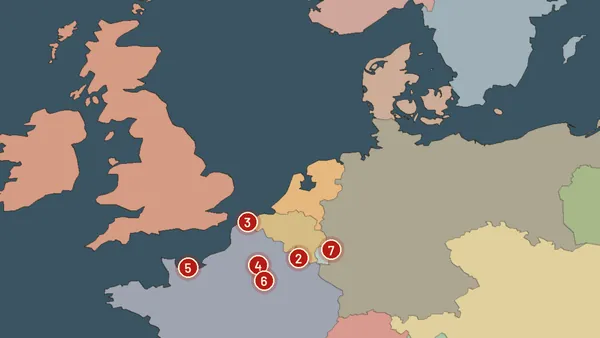 Western Europe, 1939–1945
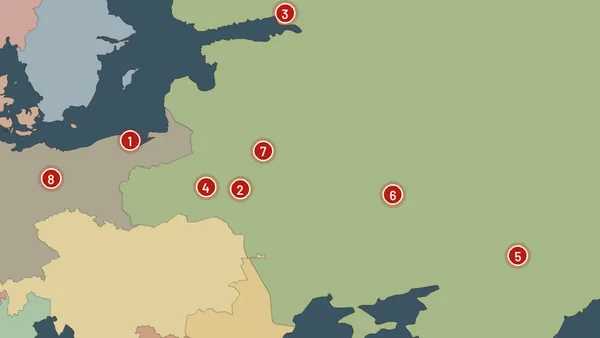 Eastern Front, 1939–1945
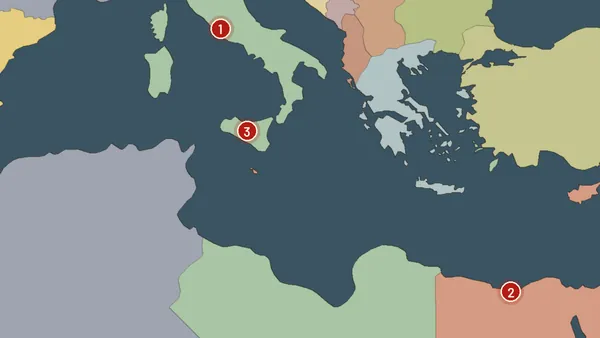 Mediterranean and North Africa
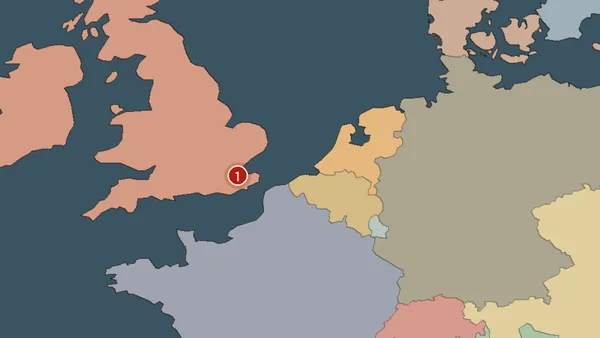 Air war, 1939–1945