 World Wars: 1914–20XX
Second World War (1939–1945)
The Mediterranean (1940–1945): North Africa, the Balkans and Italy
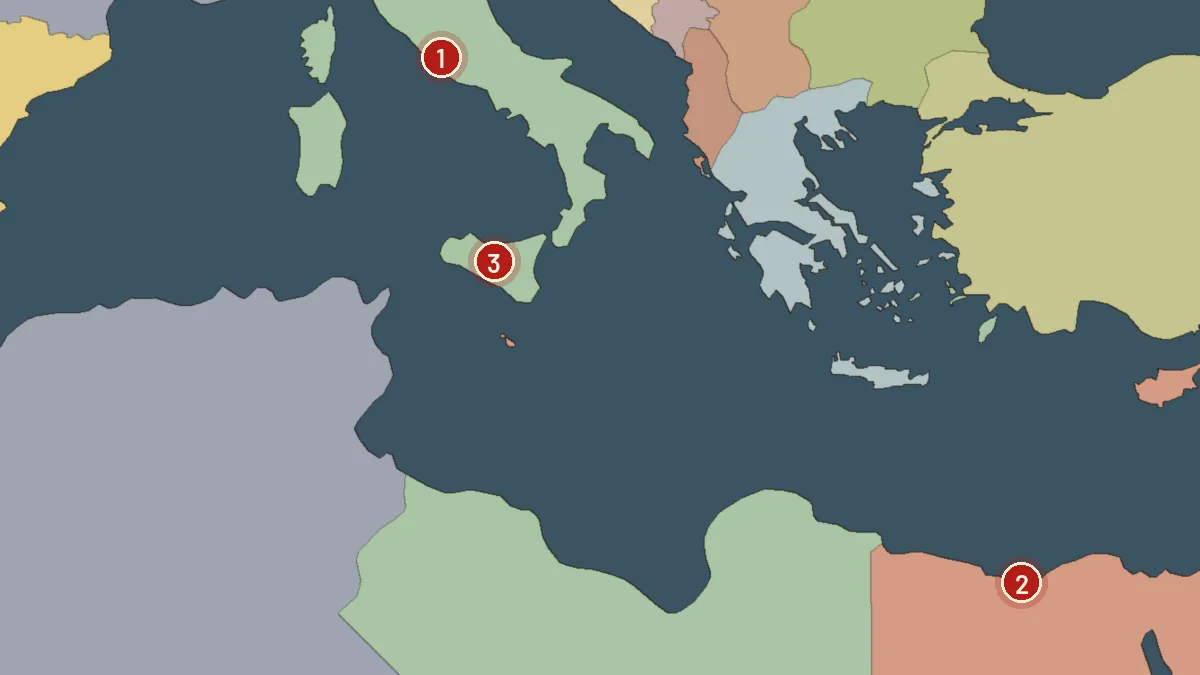
In this article
The Mediterranean was the main theatre where British and later American ground forces fought the Axis between 1940 and 1944. It began as Italy's war, turned into a contest between Britain and the German Afrika Korps in the desert, and ended with a long, slow campaign up the Italian peninsula.
1940–1941: Italy's war
Italy declared war on Britain and France on 10 June 1940. In September Italian forces advanced into Egypt, but a British counter-offensive, Operation Compass, from December 1940 destroyed the Italian Tenth Army and took around 130,000 prisoners. In October 1940 Italy also attacked Greece, where it was pushed back into Albania. In spring 1941 Germany intervened: it conquered Yugoslavia and Greece, took Crete in an airborne assault, and sent troops under Erwin Rommel to Libya.
1941–1942: the desert war
The war in the desert moved back and forth along the coast road between Libya and Egypt. Supply was decisive: every advance stretched the attacker's lines, and the island of Malta, under siege, threatened Axis convoys. Rommel took Tobruk in June 1942 and advanced into Egypt, but was stopped at El Alamein in July. In October and November 1942 the British Eighth Army under Bernard Montgomery won the Second Battle of El Alamein.
1942–1943: Torch and Tunisia
On 8 November 1942 American and British troops landed in Morocco and Algeria, French North Africa. Axis forces were squeezed into Tunisia, where they surrendered in May 1943; the number of prisoners is estimated at about 230,000 to 275,000.
1943–1945: Italy
The Allies landed in Sicily on 10 July 1943. Mussolini was removed from power on 25 July, and the armistice between Italy and the Allies was announced on 8 September. Germany occupied most of Italy. The Allied advance up the peninsula was slowed by mountains, rivers and strong German defensive lines, especially at Monte Cassino. Rome was entered on 4 June 1944. German forces in Italy surrendered on 2 May 1945.
Did you know?
- Malta was bombed so heavily in 1942 that the whole island was awarded Britain's George Cross for civilian gallantry.
- At El Alamein, both sides laid hundreds of thousands of mines; the British called the German minefields "devil's gardens".
Key events on this front
- Italy enters World War IIOn 10 June 1940, with France collapsing, Mussolini declared war on France and Britain. Why Italy waited, the failed Alpine offensive and the new fronts in Africa.
- Second Battle of El AlameinIn October and November 1942 Montgomery's Eighth Army broke Rommel's German-Italian army at El Alamein in Egypt. How the battle was fought and why it turned the desert war.
- Sicily and the Italian armisticeIn July 1943 the Allies landed in Sicily, Mussolini fell within weeks, and on 8 September Italy announced an armistice. How Italy left the Axis and why Germany occupied the country.
Play this moment
Free in your browser, no download needed.
Sources and further reading
Figures and dates in this article follow these works; where historians disagree, the range of estimates is given.
- Niall Barr, Pendulum of War: The Three Battles of El Alamein (2004)
- Rick Atkinson, The Day of Battle: The War in Sicily and Italy, 1943–1944 (2007)
- Gerhard L. Weinberg, A World at Arms: A Global History of World War II (1994)
- Wikipedia (English)
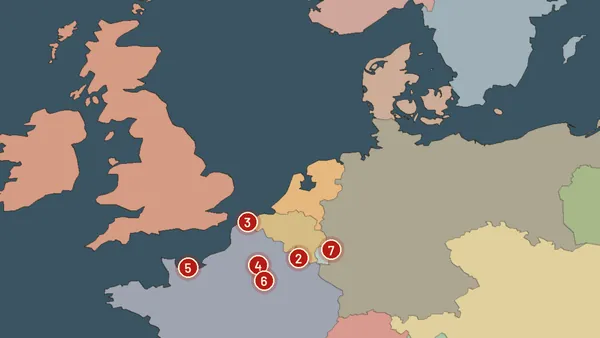 Western Europe, 1939–1945
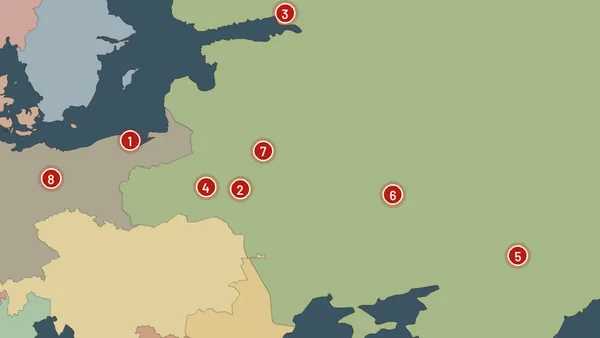 Eastern Front, 1939–1945
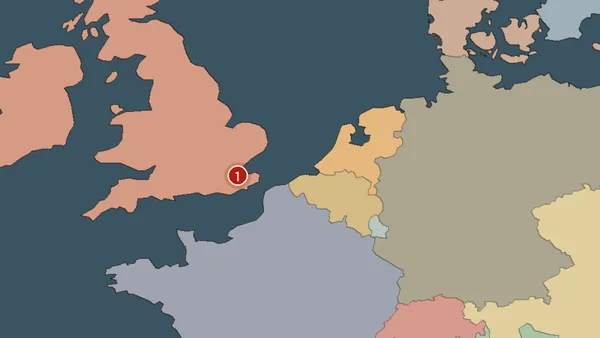 Air war, 1939–1945