 World Wars: 1914–20XX
Second World War (1939–1945)
The air war (1939–1945): from the Battle of Britain to the bombing of Germany and Japan
In this article
In the Second World War air power was part of almost every campaign. Aircraft supported armies, hunted submarines, sank warships and attacked cities. Control of the air became a condition for success on land and at sea.
The Battle of Britain
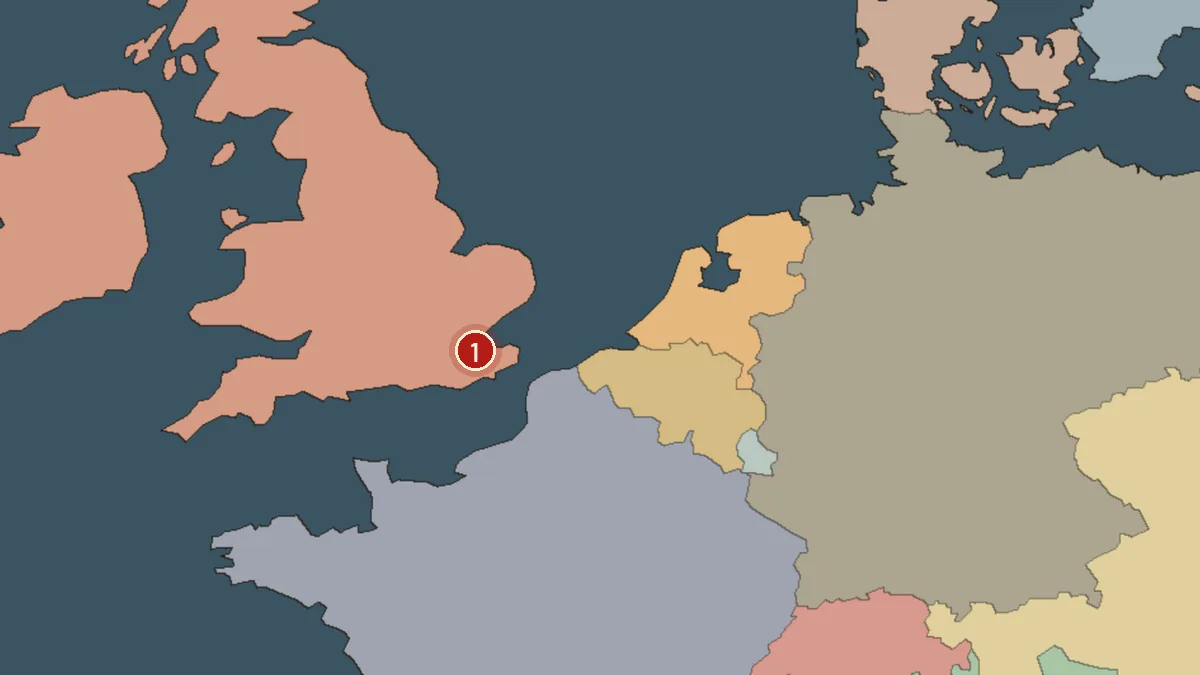
After the fall of France, Germany needed air superiority over southern England before any invasion. From July to October 1940 the Luftwaffe attacked convoys, airfields and later cities. The Royal Air Force, using a radar warning network linked to a ground control system, kept its fighter force in being. The Luftwaffe failed to gain air superiority, and the invasion plan was postponed indefinitely.
The Blitz and the bombing of Germany
From September 1940 to May 1941 German bombers attacked London and other British cities at night, the Blitz. About 60,000 British civilians were killed by German air attacks during the war. RAF Bomber Command began bombing Germany in 1940 and from 1942 concentrated on area bombing of cities at night; the US Army Air Forces bombed by day from 1942–1943. Raids such as those on Hamburg in July 1943 and Dresden in February 1945 caused very heavy civilian losses. Estimates of German civilian deaths from bombing range from about 350,000 to 600,000. Historians continue to debate the military effectiveness and the morality of area bombing.
Air superiority
In 1944 American long-range fighters, escorting the bombers, destroyed much of the German fighter force. By the time of the Normandy landings the Allies had overwhelming control of the air, which allowed them to attack German reinforcements on the move. On the Eastern Front the Soviet air force grew from its heavy losses in 1941 to dominate the skies by 1944.
Japan
From late 1944 American B-29 bombers attacked Japan from the Mariana Islands. A firebombing raid on Tokyo on 9–10 March 1945 killed around 80,000 to 100,000 people. The atomic bombings of Hiroshima and Nagasaki in August 1945 were the last great air attacks of the war.
Did you know?
- Radar, still secret in 1940, allowed the RAF to send fighters only when and where they were needed instead of keeping them on constant patrol.
- The first jet fighter to see combat, the German Messerschmitt Me 262, entered service in 1944.
Key events on this front
Play this moment
Free in your browser, no download needed.
Sources and further reading
Figures and dates in this article follow these works; where historians disagree, the range of estimates is given.
- Stephen Bungay, The Most Dangerous Enemy: A History of the Battle of Britain (2000)
- Richard Overy, Why the Allies Won (1995)
- Wikipedia (English)
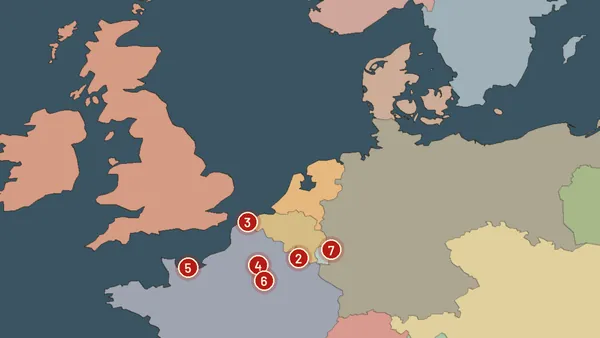 Western Europe, 1939–1945
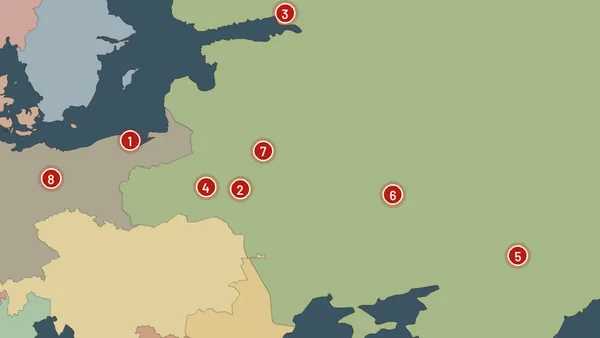 Eastern Front, 1939–1945
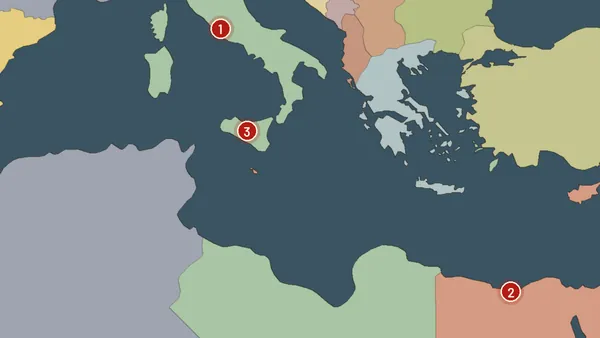 Mediterranean and North Africa