 World Wars: 1914–20XX
Second World War (1939–1945)
The Eastern Front (1941–1945): the largest land war in history
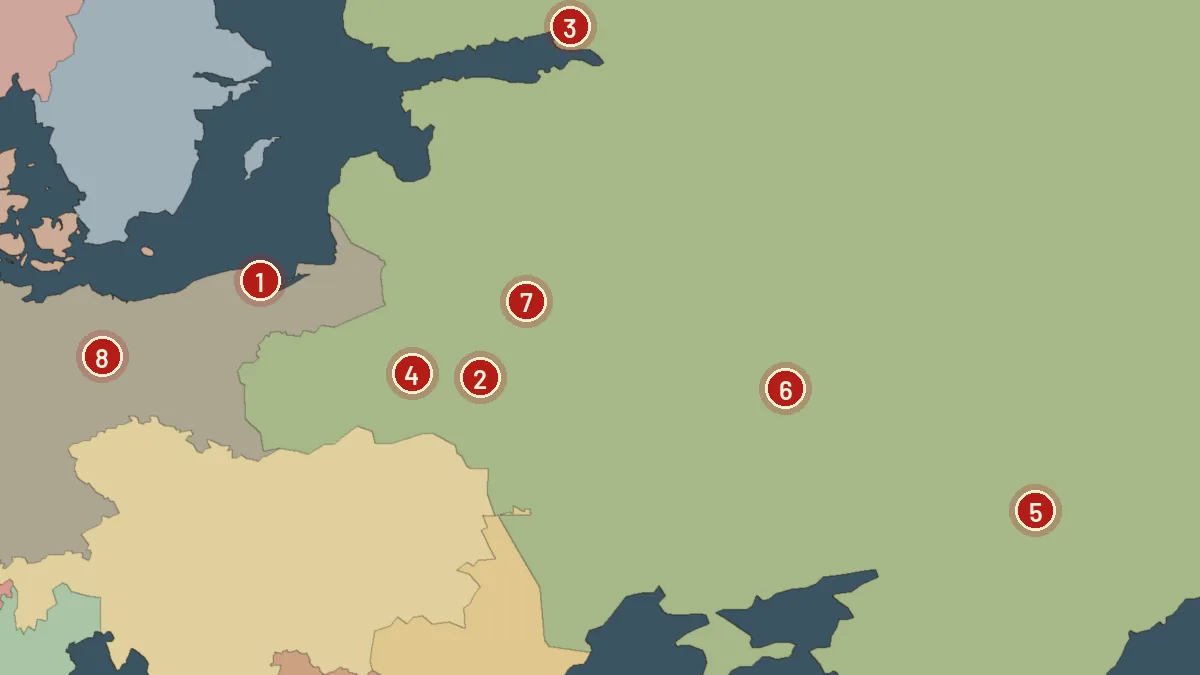
In this article
The war between Germany and the Soviet Union was the largest and most destructive land campaign in history. Most of Germany's military losses in the Second World War occurred here, and the Soviet Union suffered the greatest loss of life of any country in the war.
Prelude, 1939–1941
Germany invaded Poland on 1 September 1939; under the secret protocol of the Molotov-Ribbentrop Pact, the Soviet Union invaded from the east on 17 September, and Poland was divided. In November 1939 the Soviet Union attacked Finland. In the Winter War the Finnish army resisted for more than three months before Finland signed a peace in March 1940 that gave up territory. In June 1940 the Soviet Union occupied the Baltic states.
1941: Barbarossa
On 22 June 1941 Germany and its allies invaded the Soviet Union with about three million German soldiers. In the first months the German armies encircled and captured whole Soviet armies, took most of Ukraine, besieged Leningrad and approached Moscow. The Soviet state survived: it moved factories east, mobilised new armies and, in December 1941, counter-attacked before Moscow and pushed the German army back.
1942–1943: Stalingrad and Kursk
In 1942 Germany attacked in the south towards the Volga and the Caucasus oil fields. At Stalingrad, from August 1942, the fighting became a battle for every street and building. In November the Red Army encircled the German Sixth Army, which surrendered on 2 February 1943. In July 1943 Germany's last major offensive in the east, at Kursk, was stopped, and from then on the initiative stayed with the Red Army.
1944–1945: to Berlin
In June 1944 Operation Bagration destroyed the German Army Group Centre in Belarus. Over the following months Romania and Bulgaria changed sides, Finland made peace and the Red Army reached the Vistula and the borders of Germany. In January 1945 it advanced to the Oder, and in April it attacked Berlin, which surrendered on 2 May. The German surrender was signed in Berlin on the night of 8–9 May 1945.
The human cost
Estimates of Soviet military deaths range from about 8.7 million to more than 11 million, and total Soviet deaths, civilian and military, are usually estimated at about 24 to 27 million. Most of Germany's roughly 5.3 million military deaths, as estimated by the historian Rüdiger Overmans, occurred in the east. The war was also accompanied by the mass murder of civilians in the occupied territories, including the Holocaust.
Did you know?
- About 3 million of the roughly 5.7 million Soviet soldiers captured by Germany died in captivity.
- The siege of Leningrad lasted almost 900 days, from September 1941 to January 1944.
Key events on this front
- Invasion of PolandOn 1 September 1939 Germany attacked Poland and Britain and France declared war. Westerplatte, the Bzura, the fall of Warsaw and the Soviet attack, explained.
- Soviet invasion of PolandOn 17 September 1939 the Red Army invaded eastern Poland under the secret Nazi-Soviet protocol. The partition, the deportations and the Katyn massacre, explained.
- Winter WarIn November 1939 the Soviet Union attacked Finland, expecting a quick win. The Mannerheim Line, Suomussalmi, the Molotov cocktail and the hard peace of 1940.
- Operation BarbarossaOn 22 June 1941 Germany invaded the Soviet Union in the largest land offensive in history. The great encirclements, Leningrad, Kiev and the stall before Moscow.
- Battle of StalingradFrom August 1942 to February 1943 German and Soviet armies fought for Stalingrad on the Volga. How the city battle began and how the Red Army trapped the German 6th Army.
- Battle of KurskIn July 1943 Germany attacked the Kursk salient with new Tiger and Panther tanks and ran into deep Soviet defences. How Operation Citadel failed and the initiative passed east.
- Operation BagrationIn June 1944 the Red Army attacked in Belarus and within weeks destroyed most of Army Group Centre, advancing hundreds of kilometres to the Vistula. How it worked and why it mattered.
- Battle of BerlinIn April 1945 the Red Army stormed the Seelow Heights, encircled Berlin and fought street by street to the Reichstag. How Europe's last great battle was fought.
Play this moment
Free in your browser, no download needed.
Sources and further reading
Figures and dates in this article follow these works; where historians disagree, the range of estimates is given.
- David M. Glantz, Jonathan M. House, When Titans Clashed: How the Red Army Stopped Hitler (1995)
- Gerhard L. Weinberg, A World at Arms: A Global History of World War II (1994)
- Richard J. Evans, The Third Reich at War (2008)
- Wikipedia (English)
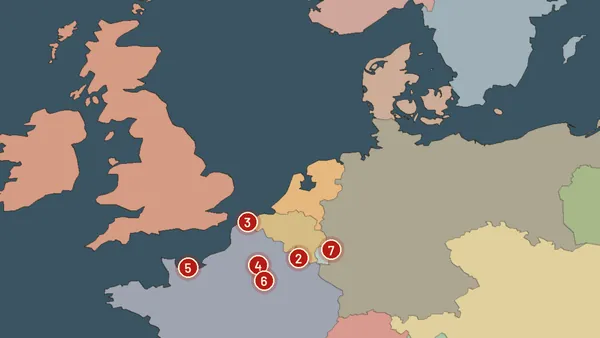 Western Europe, 1939–1945
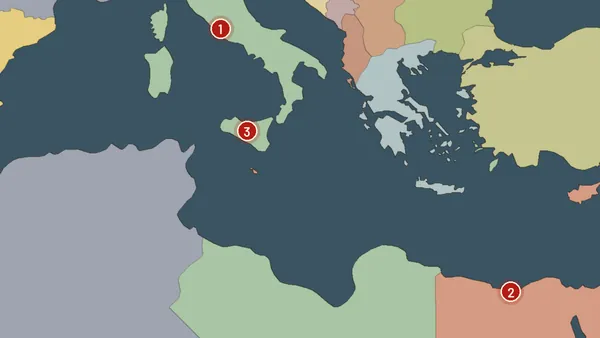 Mediterranean and North Africa
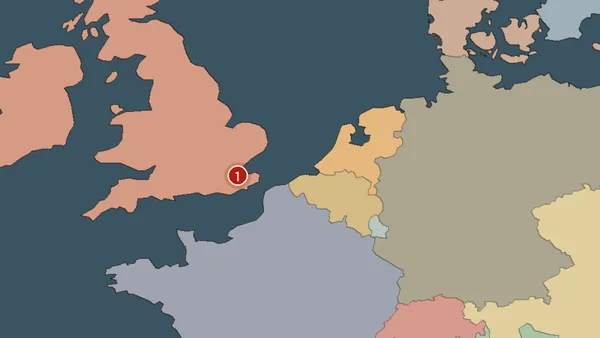 Air war, 1939–1945