 World Wars: 1914–20XX
First World War (1914–1918)
The Gorlice–Tarnów Offensive (1915): the breakthrough in the east
In this article
The Gorlice–Tarnów offensive was one of the most successful operations of the First World War. In early May 1915 German and Austro-Hungarian forces broke through the Russian line on a narrow front in western Galicia. Within seven weeks they had retaken most of the territory Austria-Hungary had lost in 1914, and in the summer the Russian army withdrew from Poland and Lithuania in what became known as the Great Retreat.
Why Germany turned east
By the spring of 1915 Austria-Hungary was in serious difficulty. Its winter offensives in the Carpathian mountains had failed with heavy losses, the fortress of Przemyśl had surrendered in March, and Italy was about to enter the war against it. Erich von Falkenhayn, chief of the German General Staff, decided that a major operation in the east was needed to keep Germany's ally in the war. A new German Eleventh Army was formed under August von Mackensen, with Hans von Seeckt as chief of staff, and placed alongside the Austro-Hungarian Fourth Army opposite the Russian Third Army.
The breakthrough
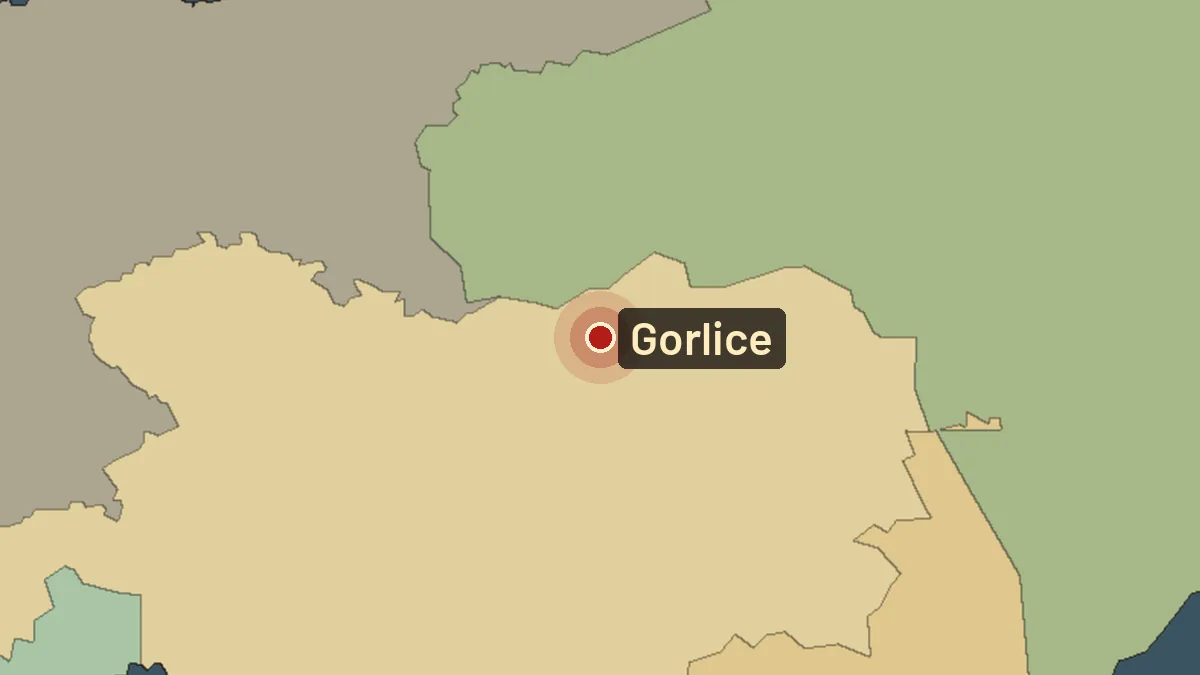
The attackers concentrated a large number of heavy guns and mortars on a front of about 40 kilometres between Gorlice and Tarnów. On 2 May, after a bombardment of several hours, the infantry attacked. The Russian Third Army under Radko Dimitriev held shallow trenches and was short of artillery shells, and its line gave way. Mackensen's forces advanced steadily rather than spectacularly, moving their artillery forward before each new attack so that the Russians could not form a new line. By mid-May they had reached the San river.
Przemyśl and Lemberg
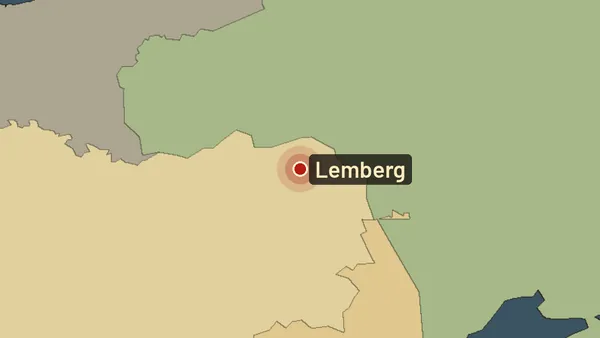
Austro-Hungarian and German troops retook the fortress of Przemyśl on 3 June and entered Lemberg, the capital of Galicia, on 22 June. The Russian armies, still short of ammunition and rifles, fell back.
The Great Retreat
In July the Central Powers attacked northwards and eastwards from Galicia and East Prussia. The Russian high command decided to give up the salient of Russian Poland rather than risk the encirclement of its armies. Warsaw fell on 5 August, the fortress of Novogeorgievsk later the same month, and Brest-Litovsk on 26 August. By September, when the front stabilised, Russia had lost Poland, Lithuania and parts of Latvia and Belarus. Large numbers of civilians fled or were evacuated eastwards with the retreating army.
Why it mattered
The offensive saved Austria-Hungary from collapse in 1915 and showed how a breakthrough could be achieved and exploited in trench warfare when artillery was concentrated and moved forward methodically. For Russia, the losses in men and territory were severe. In September 1915 Tsar Nicholas II took personal command of the army, a decision that tied him directly to its fortunes. The Russian army recovered enough to launch the Brusilov offensive a year later.
Did you know?
- Radko Dimitriev, commander of the Russian Third Army, was a Bulgarian general and former Bulgarian minister to Russia who joined the Russian army in 1914.
- Hans von Seeckt, Mackensen's chief of staff, later headed the German army, the Reichswehr, from 1920 to 1926.
- Mackensen was made a field marshal after the battle. He later led the campaigns against Serbia in 1915 and Romania in 1916.
Gorlice–Tarnów in World Wars: 1914–20XX
In the game's Historical (1914) scenario the Eastern Front runs through Galicia, the Carpathians and Russian Poland. If you lead Germany, you decide whether to move forces east to support Austria-Hungary, as Falkenhayn did; if you lead Russia, you must keep your armies supplied along a very long front. In the Parallel Fronts scenario, motorised artillery and aircraft change how quickly a breakthrough can be exploited.
▶ Play now Free in your browser, no download needed.
Sources and further reading
Figures and dates in this article follow these works; where historians disagree, the range of estimates is given.
- Richard L. DiNardo, Breakthrough: The Gorlice-Tarnow Campaign, 1915 (2010)
- Norman Stone, The Eastern Front 1914–1917 (1975)
- Alexander Watson, Ring of Steel: Germany and Austria-Hungary at War, 1914–1918 (2014)
- Wikipedia (English)
 Tsar Nicholas II