 World Wars: 1914–20XX
Second World War (1939–1945)
How many people died in the Second World War?
Short answer
The Second World War was the deadliest conflict in history. Most estimates put the total number of deaths between about 60 and 85 million people, of whom more than half were civilians. The Soviet Union and China suffered the largest losses, with roughly 24 million and 20 million dead respectively according to commonly used figures.
Military and civilian deaths
Unlike in the First World War, civilians made up the majority of the dead. Civilians died in bombing, massacres, deportations and the Holocaust, in which about six million Jews were murdered, as well as from famine and disease in occupied and war-torn regions. Military deaths are usually estimated at around 20 to 25 million. The National WWII Museum, whose figures we use on our statistics page, gives about 15 million battle deaths and 45 million civilian deaths.
Which countries lost the most
The Soviet Union lost about 24 million people, including 8.8 to 10.7 million soldiers. China's losses are often estimated at around 20 million, although figures vary greatly. Germany lost about 6.6 to 8.8 million people, Poland about 5.6 million, around 16 percent of its pre-war population, and Japan about 2.6 to 3.1 million. Yugoslavia, the Dutch East Indies, India and many other countries and territories also suffered heavy losses.
Why the estimates vary
Records were destroyed, borders changed, and in many regions no one counted the dead. Historians also disagree about what to include, for example deaths from famines linked to the war or from disease among refugees. For this reason serious sources give ranges rather than a single number, and the figures for China and the Soviet Union in particular remain debated.
Read more
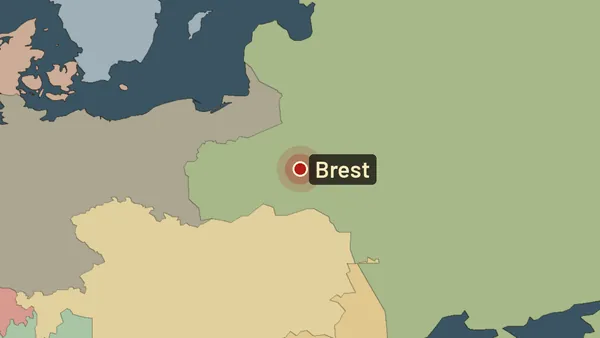 Operation BarbarossaOn 22 June 1941 Germany invaded the Soviet Union in the largest land offensive in history. The great encirclements, Leningrad, Kiev and the stall before Moscow.
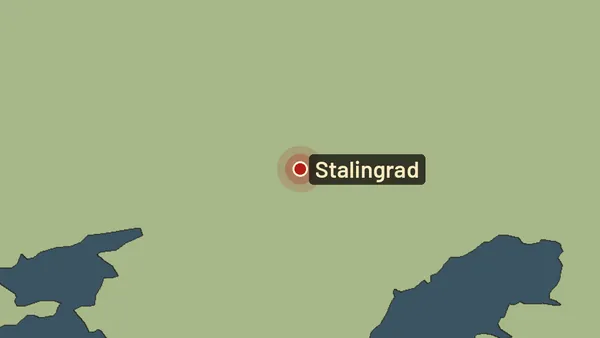 Battle of StalingradFrom August 1942 to February 1943 German and Soviet armies fought for Stalingrad on the Volga. How the city battle began and how the Red Army trapped the German 6th Army.Hiroshima and NagasakiOn 6 and 9 August 1945 the United States dropped atomic bombs on Hiroshima and Nagasaki. How the bombs were built, what they did to both cities, and the debate since.
More questions
- Why did the Second World War start?
- When did the Second World War start and end?
- Which countries were the Allies and the Axis in the Second World War?
- Why did Germany invade the Soviet Union in 1941?
- Why did Japan attack Pearl Harbor?
- Why was Stalingrad a turning point in the Second World War?
- What was D-Day?
- Did Turkey fight in the Second World War?
- Which countries were neutral in the Second World War?
- Why were atomic bombs dropped on Japan?
- How did the Second World War end?
Play this moment
Free in your browser, no download needed.
Sources and further reading
Figures and dates in this article follow these works; where historians disagree, the range of estimates is given.
- Gerhard L. Weinberg, A World at Arms: A Global History of World War II (1994)
- Richard Overy, Why the Allies Won (1995)