 World Wars: 1914–20XX
Second World War (1939–1945)
Why did the Second World War start?
Short answer
The war in Europe began when Germany invaded Poland on 1 September 1939, and Britain and France declared war on Germany two days later. It followed years in which Germany under Adolf Hitler rearmed and expanded its territory, and a week after the Nazi-Soviet Pact removed the risk of Soviet opposition. In Asia, Japan had been at war with China since 1937.
German expansion in the 1930s
Hitler's government aimed to overturn the Treaty of Versailles and to gain territory in eastern Europe. Germany left the League of Nations in 1933, rearmed openly from 1935, reoccupied the demilitarised Rhineland in 1936 and annexed Austria in March 1938. At the Munich conference in September 1938, Britain and France agreed that Germany could take the Sudetenland from Czechoslovakia, hoping to preserve peace. In March 1939 Germany occupied the rest of the Czech lands, and Britain and France then guaranteed Poland's independence.
The Nazi-Soviet Pact and Poland
Germany demanded the Free City of Danzig and a route across the Polish Corridor, which Poland refused. On 23 August 1939 Germany and the Soviet Union signed a non-aggression pact, with a secret protocol dividing eastern Europe into spheres of influence. On 1 September German forces invaded Poland. Britain and France declared war on 3 September, and on 17 September Soviet forces entered eastern Poland.
The war in Asia
In East Asia, conflict had begun earlier. Japan occupied Manchuria in 1931 and began a full-scale war against China in July 1937. The European and Asian wars merged into a single world war in December 1941, when Japan attacked the United States and the British Empire, and Germany declared war on the United States. Historians such as Zara Steiner and Gerhard Weinberg stress the central role of the German and Japanese decisions for war, while also examining why the other powers failed to prevent them.
Read more
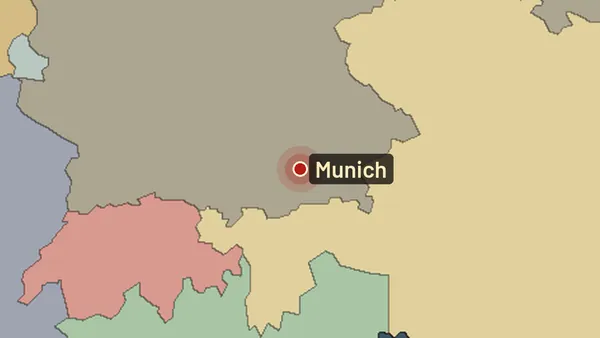 The Munich AgreementIn September 1938 Britain, France, Italy and Germany agreed that Czechoslovakia must give the Sudetenland to Hitler. How the crisis unfolded and why appeasement failed.
 The Molotov–Ribbentrop PactOn 23 August 1939 Germany and the Soviet Union signed a non-aggression pact whose secret protocol divided Eastern Europe. Why the enemies made a deal, and what followed.
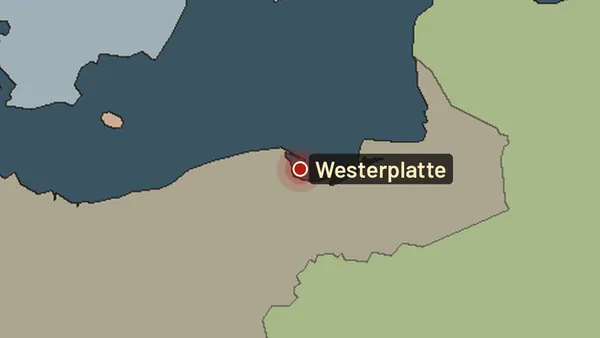 Invasion of PolandOn 1 September 1939 Germany attacked Poland and Britain and France declared war. Westerplatte, the Bzura, the fall of Warsaw and the Soviet attack, explained.
More questions
- When did the Second World War start and end?
- How many people died in the Second World War?
- Which countries were the Allies and the Axis in the Second World War?
- Why did Germany invade the Soviet Union in 1941?
- Why did Japan attack Pearl Harbor?
- Why was Stalingrad a turning point in the Second World War?
- What was D-Day?
- Did Turkey fight in the Second World War?
- Which countries were neutral in the Second World War?
- Why were atomic bombs dropped on Japan?
- How did the Second World War end?
Play this moment
Free in your browser, no download needed.
Sources and further reading
Figures and dates in this article follow these works; where historians disagree, the range of estimates is given.
- Zara Steiner, The Triumph of the Dark: European International History 1933–1939 (2011)
- Gerhard L. Weinberg, A World at Arms: A Global History of World War II (1994)