 World Wars: 1914–20XX
Second World War (1939–1945)
What was D-Day?
Short answer
D-Day was 6 June 1944, the day Allied forces landed on the coast of Normandy in northern France in Operation Overlord. About 156,000 American, British, Canadian and other Allied soldiers came ashore by sea and air on the first day, opening the long-awaited second front in western Europe against Germany.
In this article
The plan
The Allies had prepared the invasion for more than a year. Under the supreme commander, US General Dwight D. Eisenhower, the plan called for landings on five beaches, code-named Utah and Omaha (American), Gold and Sword (British) and Juno (Canadian), with airborne troops dropped inland to protect the flanks. A large deception operation, code-named Fortitude, persuaded German commanders that the main landing would come at the Pas-de-Calais, closer to Britain.
The landings
Bad weather delayed the operation by one day. In the early hours of 6 June paratroopers and glider troops landed, and at dawn the naval and air bombardment began, followed by the seaborne landings. Nearly 7,000 ships and landing craft and more than 11,000 aircraft took part. At Omaha Beach strong German defences caused heavy American losses, but by evening all five beaches were in Allied hands. Allied casualties on D-Day are estimated at about 10,000, including around 4,400 dead.
What followed
The battle for Normandy lasted until late August 1944. The Allies built artificial harbours and landed hundreds of thousands of men and vehicles, while German reinforcements were slowed by Allied air attacks and sabotage by the French Resistance. In August the German front collapsed, Paris was liberated on 25 August, and Allied forces advanced towards the German border. Together with the Soviet offensive in Belarus, Operation Bagration, which began two weeks later, D-Day put Germany under pressure from both east and west.
Read more
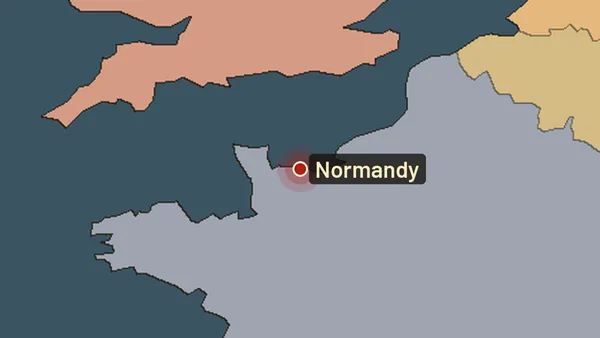 D-Day (Normandy landings)On 6 June 1944 Allied armies landed on five Normandy beaches in the largest seaborne invasion in history. How Overlord was planned, what happened on D-Day and how Normandy was won.
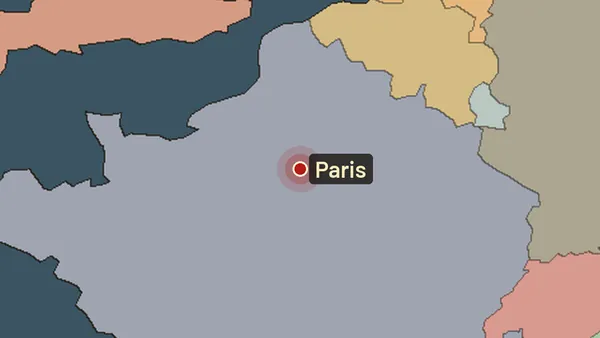 Liberation of ParisIn August 1944 the Paris Resistance rose against the German garrison and French and American troops entered the city. How Paris was freed after four years, and why it was spared.
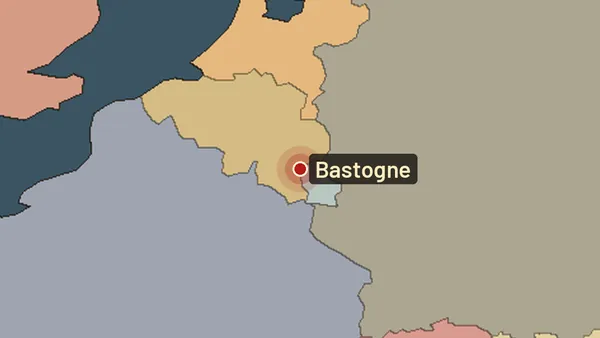 Battle of the BulgeIn December 1944 Germany launched a surprise offensive through the snowy Ardennes towards Antwerp. How it broke through, why Bastogne held, and how it spent the last reserves.
More questions
- Why did the Second World War start?
- When did the Second World War start and end?
- How many people died in the Second World War?
- Which countries were the Allies and the Axis in the Second World War?
- Why did Germany invade the Soviet Union in 1941?
- Why did Japan attack Pearl Harbor?
- Why was Stalingrad a turning point in the Second World War?
- Did Turkey fight in the Second World War?
- Which countries were neutral in the Second World War?
- Why were atomic bombs dropped on Japan?
- How did the Second World War end?
Play this moment
Free in your browser, no download needed.
Sources and further reading
Figures and dates in this article follow these works; where historians disagree, the range of estimates is given.
- Antony Beevor, D-Day: The Battle for Normandy (2009)
- Rick Atkinson, The Guns at Last Light: The War in Western Europe, 1944–1945 (2013)