 World Wars: 1914–20XX
First World War (1914–1918)
The Caucasus Front (1914–1918): war in the mountains of eastern Anatolia
In this article
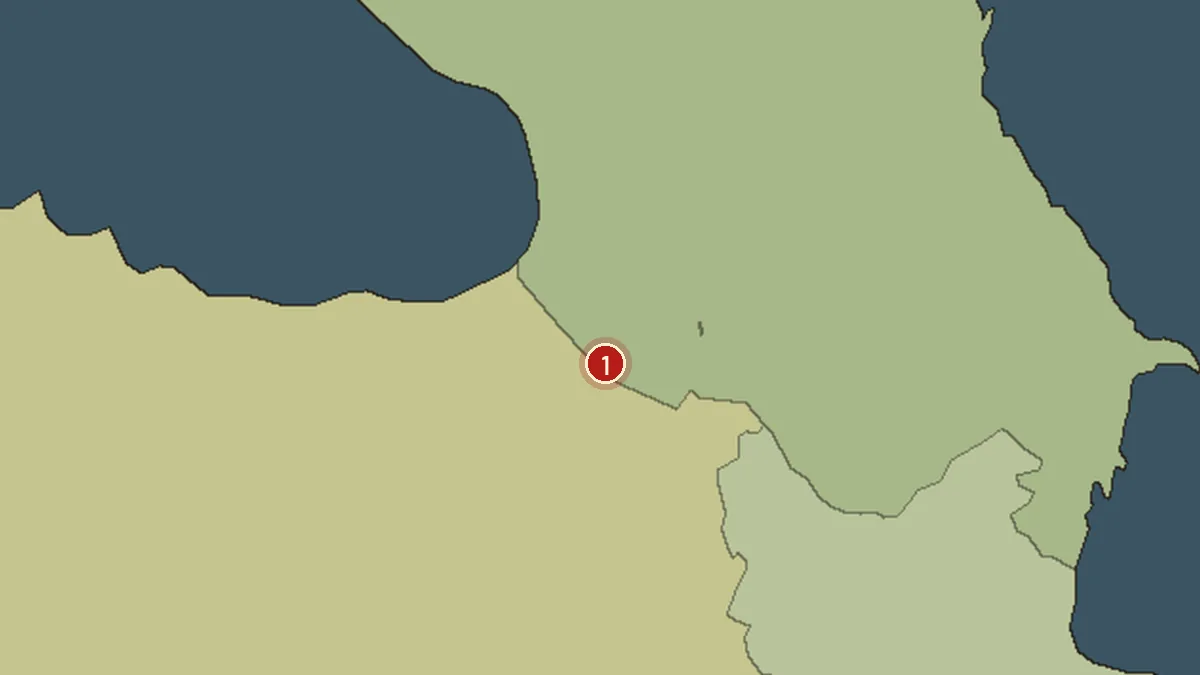
The Caucasus Front was one of the harshest theatres of the war. Armies fought at altitudes of 2,000 to 3,000 metres, in winters with deep snow and temperatures far below zero, with few roads and no railways on the Ottoman side. Cold, hunger and disease caused more deaths than combat.
1914–1915: Sarıkamış
In December 1914 Enver Pasha, the Ottoman Minister of War, personally led the Third Army in an ambitious offensive to encircle the Russian forces at Sarıkamış. The plan required marches through mountain passes in deep snow. Many units lost large numbers of men to the cold before reaching the battlefield, and the Russian defenders held. By mid-January 1915 the Third Army had lost most of its strength; estimates of its losses range widely, from about 60,000 to 90,000 men. In 1915 fighting continued around Lake Van and Malazgirt.
1916: the Russian advance
Under General Nikolai Yudenich, the Russian Caucasus Army attacked in January 1916 and took the fortress city of Erzurum in February. Russian forces then took Trabzon on the Black Sea coast in April and Erzincan in July. An Ottoman counter-offensive, with divisions brought from Gallipoli, was halted. By the end of 1916 Russia held a large part of northeastern Anatolia.
1917–1918: collapse and reversal
After the Russian revolutions of 1917 the Russian army on this front gradually dissolved. An armistice was signed at Erzincan in December 1917. In early 1918 Ottoman forces advanced again, retook Erzincan, Trabzon and Erzurum, and the Treaty of Brest-Litovsk returned Kars, Ardahan and Batum to the Ottoman Empire. The newly declared states of the South Caucasus became involved in the fighting, and in September 1918 an Ottoman force, the Army of Islam, took Baku after British troops withdrew. The armistice of Mudros on 30 October 1918 required the Ottoman Empire to withdraw from the region.
Did you know?
- A Russian railway ran from Kars to Sarıkamış itself, while the nearest Ottoman railhead was hundreds of kilometres away, so Ottoman supplies came mostly by road and pack animals.
- Erzurum's ring of forts, built in the 19th century, was considered one of the strongest positions in the region before its capture in 1916.
Key events on this front
Play this moment
Free in your browser, no download needed.
Sources and further reading
Figures and dates in this article follow these works; where historians disagree, the range of estimates is given.
- Edward J. Erickson, Ordered to Die: A History of the Ottoman Army in the First World War (2001)
- Michael A. Reynolds, Shattering Empires: The Clash and Collapse of the Ottoman and Russian Empires 1908–1918 (2011)
- Wikipedia (English)
 Western Front, 1914–1918
 Eastern Front, 1914–1918
 Italian Front, 1915–1918
 Balkan and Salonika fronts
 Dardanelles and Gallipoli
 Middle East fronts, 1914–1918
 War at sea, 1914–1918
 War in the air, 1914–1918