 World Wars: 1914–20XX
First World War (1914–1918)
Mesopotamia, Sinai and Palestine (1914–1918): the war in the Middle East
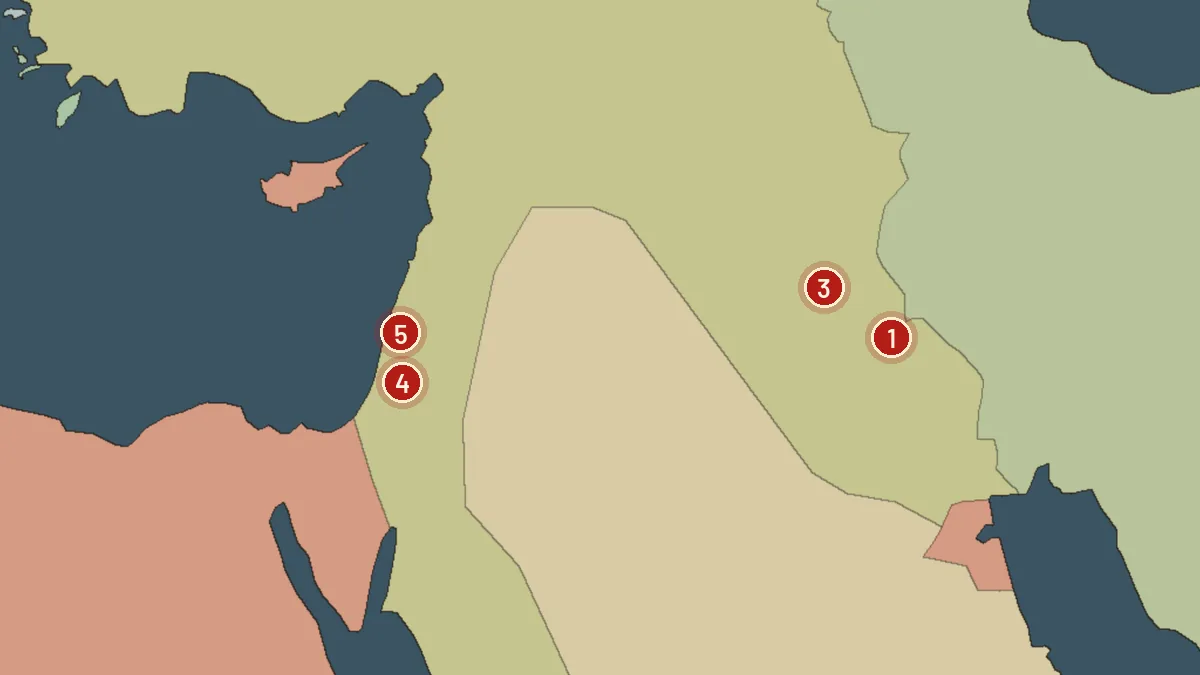
The Middle East saw two long campaigns between the British Empire and the Ottoman Empire: one along the Tigris and Euphrates in Mesopotamia, the other from Egypt across Sinai into Palestine and Syria. In both, the decisive problems were water, supply and disease, and in both the Ottoman army won important early victories before being pushed back in 1917 and 1918.
Mesopotamia
A British-Indian force landed at the head of the Persian Gulf in November 1914 to protect oil installations and took Basra. In 1915 it advanced up the Tigris towards Baghdad, but was stopped at Ctesiphon in November and fell back to Kut. After a siege of almost five months, General Charles Townshend surrendered at Kut on 29 April 1916 with about 13,000 men, one of the largest surrenders in British military history. Reorganised under General Frederick Stanley Maude, with better supply, British forces advanced again and entered Baghdad on 11 March 1917.
Sinai and Palestine
In February 1915 an Ottoman force crossed Sinai and attacked the Suez Canal but was repulsed. British forces then built a railway and water pipeline across Sinai and reached the border of Palestine. Two attacks on Gaza in March and April 1917 failed. Under General Edmund Allenby the British attacked again in October 1917, taking Beersheba and then Gaza, and entered Jerusalem on 9 December 1917.
The Arab Revolt
In June 1916 Sharif Hussein of Mecca began a revolt against Ottoman rule, supported by Britain with money, weapons and advisers, among them T. E. Lawrence. Arab forces took Aqaba in 1917 and operated against the Hejaz Railway. The revolt is remembered very differently in Arab countries, in Turkey and in Britain, and the secret Sykes-Picot agreement between Britain and France on dividing the region remains a subject of debate.
Megiddo and the end
On 19 September 1918 Allenby attacked on the coastal plain at Megiddo. The Ottoman front broke, cavalry advanced rapidly, and Damascus was entered on 1 October. With Bulgaria out of the war and its own forces in retreat, the Ottoman Empire signed the armistice of Mudros on 30 October 1918.
Did you know?
- The Sinai railway and pipeline built by the British in 1916 carried water from the Nile across the desert.
- More soldiers of the Mesopotamian campaign were treated for disease than for wounds.
Key events on this front
- Siege of KutA British-Indian division that failed to reach Baghdad was besieged at Kut for 147 days and surrendered on 29 April 1916. The advance, the siege and the prisoners' fate.
- Arab RevoltIn June 1916 Sharif Hussein of Mecca rose against the Ottomans with British support. The promises behind it, the Hejaz Railway raids, Aqaba, Medina and the aftermath.
- Fall of BaghdadOn 11 March 1917 British and Indian troops under General Maude entered Baghdad. How Britain recovered from the disaster at Kut and took the great Ottoman city.
- Capture of JerusalemOn 9 December 1917 Jerusalem surrendered to Allenby's British forces. How Britain broke the Gaza–Beersheba line, why the city was spared, and what its fall meant.
- Battle of MegiddoOn 19 September 1918 Allenby's army broke the Ottoman front in Palestine and sent its cavalry deep behind the lines. Within weeks Damascus and Aleppo fell.
Play this moment
Free in your browser, no download needed.
Sources and further reading
Figures and dates in this article follow these works; where historians disagree, the range of estimates is given.
- David R. Woodward, Hell in the Holy Land: World War I in the Middle East (2006)
- Edward J. Erickson, Ordered to Die: A History of the Ottoman Army in the First World War (2001)
- Wikipedia (English)
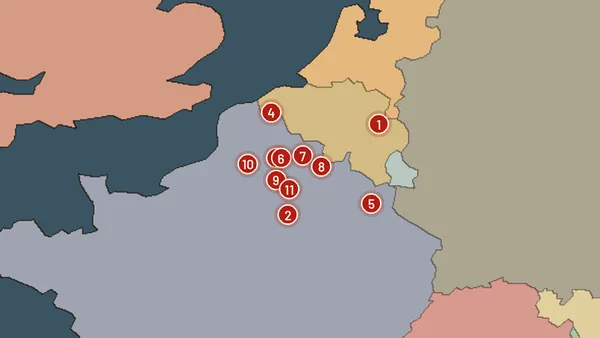 Western Front, 1914–1918
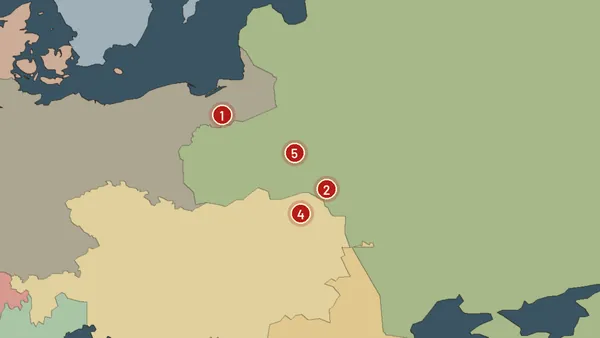 Eastern Front, 1914–1918
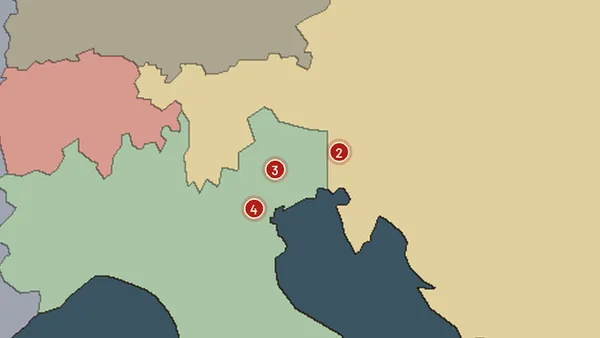 Italian Front, 1915–1918
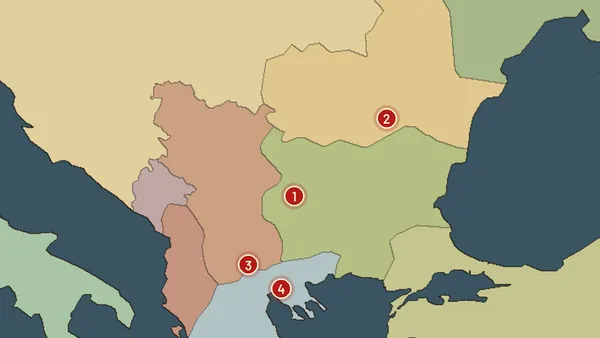 Balkan and Salonika fronts
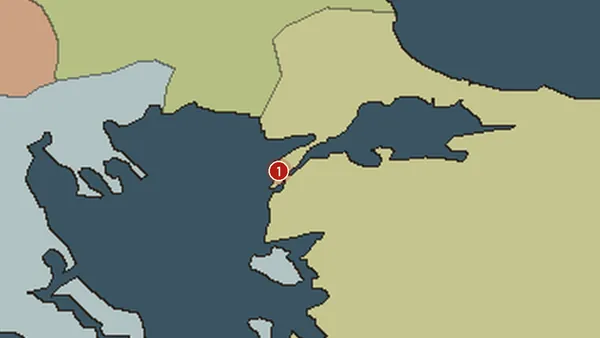 Dardanelles and Gallipoli
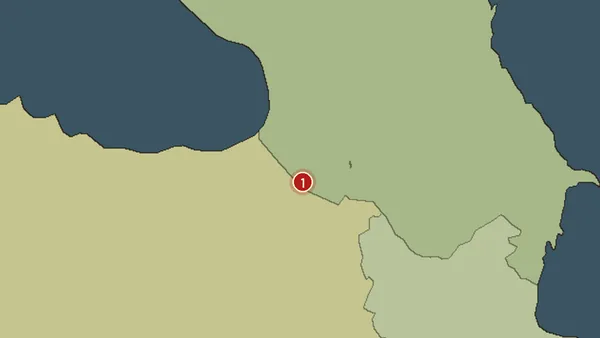 Caucasus Front, 1914–1918
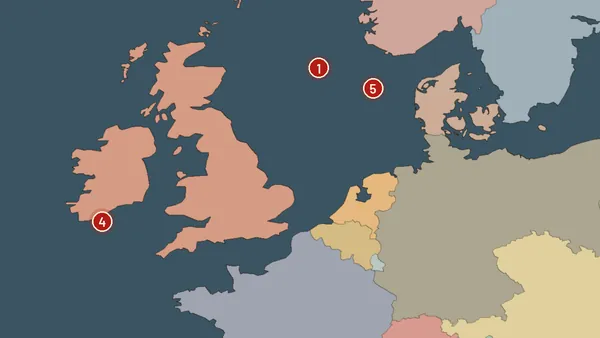 War at sea, 1914–1918
 War in the air, 1914–1918