 World Wars: 1914–20XX
First World War (1914–1918)
Why did the United States enter the First World War?
Short answer
The United States declared war on Germany on 6 April 1917, mainly because Germany resumed unrestricted submarine warfare on 1 February 1917, sinking American ships and threatening trade with Britain and France. The Zimmermann Telegram, in which Germany proposed an alliance with Mexico against the United States, also turned American opinion towards war.
In this article
Neutrality from 1914 to 1917
When the war began, President Woodrow Wilson declared the United States neutral, and most Americans wanted to stay out of the conflict. American trade with Britain and France grew rapidly, while the British blockade limited trade with Germany. In May 1915 a German submarine sank the British liner Lusitania, killing nearly 1,200 people, among them 128 Americans. After American protests Germany limited its submarine attacks, and Wilson was re-elected in 1916 partly on the slogan "He kept us out of war".
The decisions of early 1917
In January 1917 the German leadership decided to resume unrestricted submarine warfare, expecting to force Britain to make peace before American troops could arrive in large numbers. In the same month the German foreign secretary, Arthur Zimmermann, sent a coded telegram offering Mexico an alliance and the return of territory lost to the United States in the 1840s if the United States entered the war. British intelligence intercepted and decoded it, and it was published in the United States on 1 March 1917. After several American ships were sunk, Wilson asked Congress to declare war, and it did so on 6 April.
What the United States brought
Wilson presented the war as a fight for a more just international order, which he later described in his Fourteen Points. The United States brought money, ships and food to the Allies, and by the summer of 1918 American soldiers were arriving in France at a rate of more than 200,000 a month. More than two million American troops served in France by the end of the war.
Read more
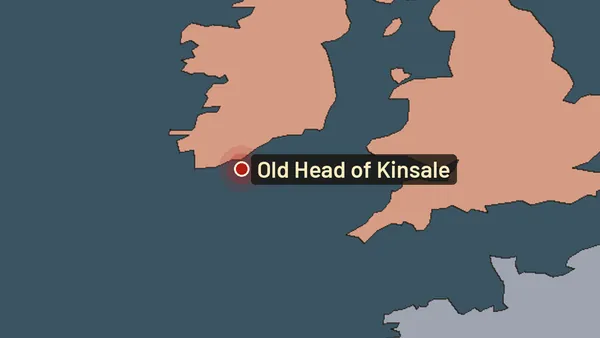 Sinking of the LusitaniaOn 7 May 1915 the German submarine U-20 torpedoed the British liner Lusitania off Ireland. Nearly 1,200 people died, 128 of them American. What happened, what she carried, and why it mattered.U-boats and the Zimmermann TelegramIn 1917 Germany bet that unrestricted U-boat warfare could starve Britain, and secretly offered Mexico an alliance. How both drew the United States into the war.United States enters the warOn 6 April 1917 the United States declared war on Germany. Why Wilson gave up neutrality, how a small army grew into millions, and what American entry meant for the war.
More questions
- Why did the First World War start?
- When did the First World War start and end?
- How many people died in the First World War?
- Who won the First World War?
- Which countries fought in the First World War?
- Why did the Ottoman Empire enter the First World War?
- What was the Schlieffen Plan?
- What new weapons were used in the First World War?
- Why did the Western Front become a stalemate?
- How did the First World War end?
- How did the First World War lead to the Second?
Play this moment
Free in your browser, no download needed.
Sources and further reading
Figures and dates in this article follow these works; where historians disagree, the range of estimates is given.
- John Milton Cooper Jr., Woodrow Wilson: A Biography (2009)
- Thomas Boghardt, The Zimmermann Telegram: Intelligence, Diplomacy, and America's Entry into World War I (2012)