 World Wars: 1914–20XX
First World War (1914–1918)
How did the First World War lead to the Second?
Short answer
The First World War did not make a second war inevitable, but it left conditions that made one more likely: peace treaties that the defeated rejected, new borders with disputed minorities, economic upheaval and the rise of governments in Germany, Italy and Japan that set out to overturn the post-war order by force. The League of Nations and the victors failed to stop them in the 1930s.
In this article
The peace settlement
The Paris peace treaties of 1919–1920 redrew the map of Europe and the Middle East. Germany lost territory, had to accept limits on its army and pay reparations, and was declared responsible for the war in Article 231 of the Treaty of Versailles. Many Germans saw the treaty as unjust, and opposition to it became a powerful political force. Margaret MacMillan and other historians argue that the treaty was less harsh than often claimed, but that it was neither fully enforced nor revised in a way that won German acceptance.
Crisis and new regimes
The war had weakened economies and societies across Europe. Inflation in the early 1920s and the Great Depression after 1929 brought mass unemployment. In Italy, Benito Mussolini came to power in 1922; in Germany, Adolf Hitler's National Socialists won growing support during the Depression, and Hitler became chancellor in January 1933. In Japan, the army gained increasing influence and occupied Manchuria in 1931.
The road to 1939
In the 1930s Germany rearmed, reoccupied the Rhineland in 1936, annexed Austria in March 1938 and took the Sudetenland after the Munich Agreement in September 1938. Britain and France, still marked by the losses of 1914–1918, hoped to avoid another war through negotiation. The League of Nations could not stop Japan in China or Italy in Ethiopia. When Germany invaded Poland on 1 September 1939, Britain and France declared war, twenty-one years after the armistice of 1918.
Read more
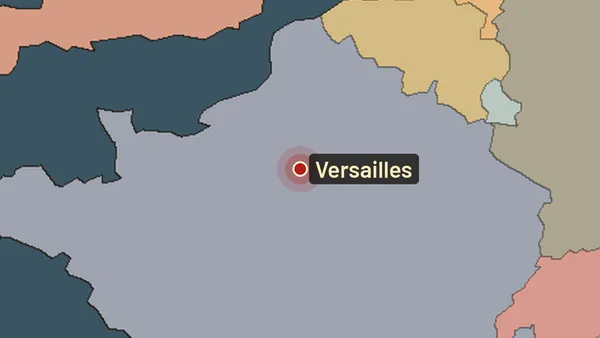 Treaty of VersaillesOn 28 June 1919 Germany signed the Treaty of Versailles. Its terms on territory, reparations, disarmament and war guilt, and why historians still argue about it.
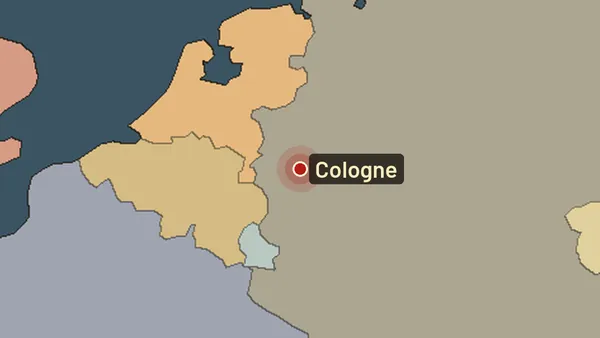 Remilitarization of the RhinelandOn 7 March 1936 German troops entered the demilitarized Rhineland, breaking Versailles and Locarno. Why France and Britain did not respond, and why it mattered.
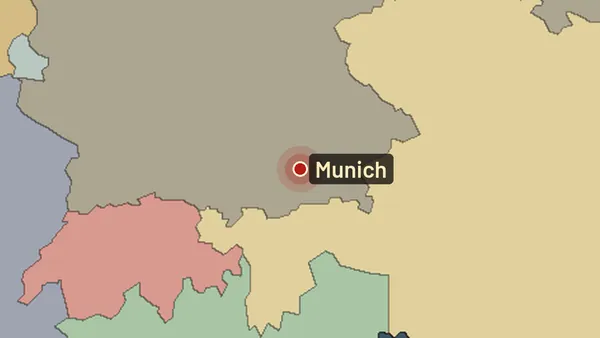 The Munich AgreementIn September 1938 Britain, France, Italy and Germany agreed that Czechoslovakia must give the Sudetenland to Hitler. How the crisis unfolded and why appeasement failed.
More questions
- Why did the First World War start?
- When did the First World War start and end?
- How many people died in the First World War?
- Who won the First World War?
- Which countries fought in the First World War?
- Why did the Ottoman Empire enter the First World War?
- What was the Schlieffen Plan?
- Why did the United States enter the First World War?
- What new weapons were used in the First World War?
- Why did the Western Front become a stalemate?
- How did the First World War end?
Play this moment
Free in your browser, no download needed.
Sources and further reading
Figures and dates in this article follow these works; where historians disagree, the range of estimates is given.
- Margaret MacMillan, Paris 1919: Six Months That Changed the World (2002)
- Zara Steiner, The Triumph of the Dark: European International History 1933–1939 (2011)