 World Wars: 1914–20XX
First World War (1914–1918)
What new weapons were used in the First World War?
Short answer
The First World War saw the first large-scale use of poison gas, tanks, military aircraft, submarines against merchant shipping and flamethrowers. Some weapons, such as machine guns and quick-firing artillery, already existed, but the war was the first time they were used in such numbers, and artillery caused more casualties than any other weapon.
Artillery and machine guns
Quick-firing artillery and machine guns had been developed before 1914, but no army expected how deadly they would be in a long war. Artillery was the greatest killer of the war, and armies fired millions of shells in a single battle. Machine guns allowed a few defenders to stop large infantry attacks. Together they helped create the deadlock of trench warfare on the Western Front.
Gas, tanks and flamethrowers
The German army released chlorine gas near Ypres on 22 April 1915, the first large-scale gas attack, and both sides soon used gas regularly, later including phosgene and mustard gas. The German army also introduced flamethrowers in 1915. British tanks went into action for the first time at Flers-Courcelette on the Somme on 15 September 1916, and France and Germany built tanks too. By 1918 tanks were used in hundreds alongside infantry and artillery.
In the air and under the sea
Aircraft were first used for reconnaissance, then for artillery spotting, air combat and bombing. German Zeppelin airships and later Gotha bombers attacked British cities. At sea, submarines proved far more important than expected: German U-boats sank thousands of merchant ships, and the struggle against them led to the convoy system and new anti-submarine weapons such as depth charges.
Read more
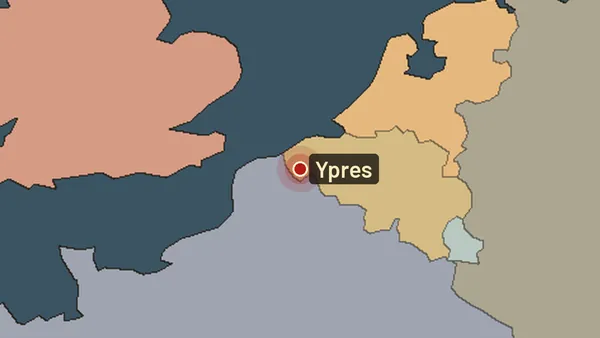 Poison gas in World War IFrom 1915 both sides used poison gas. How chlorine, phosgene and mustard gas worked, how gas masks answered them, what gas achieved and why it was banned in 1925.
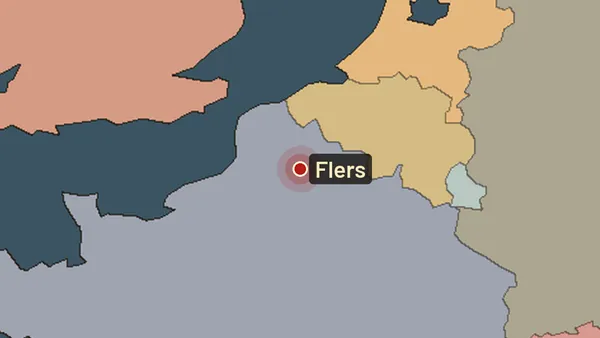 The first tanks (Flers–Courcelette)On 15 September 1916, during the Battle of the Somme, British Mark I tanks went into action for the first time. How the "landships" were invented, why they were called tanks, and what they achieved.Aircraft in WWIIn 1914 aircraft were fragile scouts; by 1918 thousands of fighters and bombers fought over the front. Reconnaissance, the Fokker scourge, the aces and bombing.
More questions
- Why did the First World War start?
- When did the First World War start and end?
- How many people died in the First World War?
- Who won the First World War?
- Which countries fought in the First World War?
- Why did the Ottoman Empire enter the First World War?
- What was the Schlieffen Plan?
- Why did the United States enter the First World War?
- Why did the Western Front become a stalemate?
- How did the First World War end?
- How did the First World War lead to the Second?
Play this moment
Free in your browser, no download needed.
Sources and further reading
Figures and dates in this article follow these works; where historians disagree, the range of estimates is given.
- L. F. Haber, The Poisonous Cloud: Chemical Warfare in the First World War (1986)
- John H. Morrow Jr., The Great War in the Air: Military Aviation from 1909 to 1921 (1993)