 World Wars: 1914–20XX
First World War (1914–1918)
What was the Schlieffen Plan?
Short answer
The Schlieffen Plan was Germany's plan for a war against France and Russia at the same time. It called for most of the German army to march through neutral Belgium and defeat France within about six weeks, before turning east against Russia. It was put into action in August 1914 but was stopped at the Battle of the Marne in September.
In this article
The idea
Alfred von Schlieffen, chief of the German General Staff from 1891 to 1906, faced the problem of a possible war on two fronts. He assumed that Russia would need weeks to mobilise its huge army. Germany would therefore leave only small forces in the east and send most of its army west. To avoid the French fortresses along the border, the German right wing would sweep through Belgium and northern France and encircle the French armies.
Changes under Moltke
Schlieffen's successor, Helmuth von Moltke the Younger, kept the basic idea but changed the details. He strengthened the left wing in Alsace and Lorraine and decided not to march through the Netherlands. Historians still discuss how far the 1914 plan was really Schlieffen's; Terence Zuber has even argued that a fixed "Schlieffen Plan" never existed, a view that other historians reject. What is certain is that Germany had only one main war plan in 1914, and that it required the invasion of Belgium.
Why it failed
In August 1914 the German armies advanced quickly through Belgium and won the Battle of the Frontiers. But Belgian resistance, the British Expeditionary Force and the French army's ability to move troops by rail slowed them. Russia attacked East Prussia earlier than expected, and German soldiers were exhausted by long marches. In early September a gap opened between two German armies near the Marne, the French and British counter-attacked, and the Germans withdrew to the Aisne. The quick victory had failed, and the war in the west became a war of trenches.
Read more
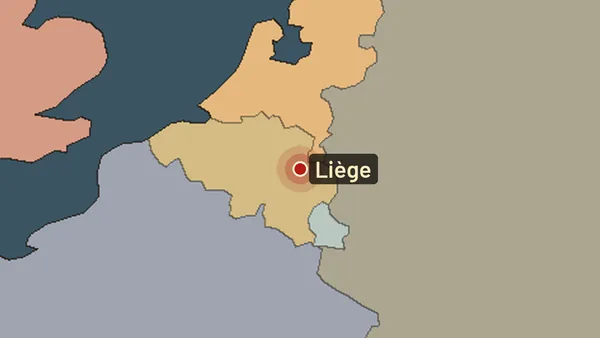 Invasion of BelgiumOn 4 August 1914 Germany invaded neutral Belgium to reach France, and Britain declared war. The ultimatum, the siege of Liège, the burning of Leuven and why Belgium's resistance mattered.
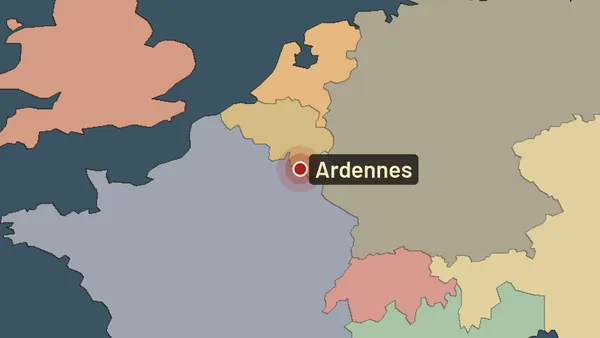 Battle of the FrontiersIn August 1914 French, British and Belgian armies met the German invasion along the frontiers of France and Belgium. Plan XVII, the Ardennes, Charleroi, Mons and the deadliest day in French military history.
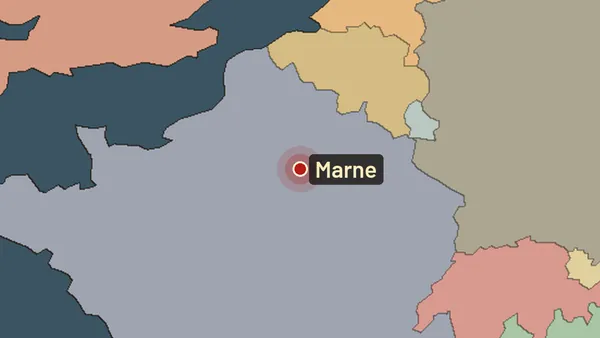 First Battle of the MarneIn September 1914 the French and British stopped the German advance on Paris at the Marne. Why the Schlieffen Plan failed, the "taxis of the Marne", and how four years of trench warfare began.
More questions
- Why did the First World War start?
- When did the First World War start and end?
- How many people died in the First World War?
- Who won the First World War?
- Which countries fought in the First World War?
- Why did the Ottoman Empire enter the First World War?
- Why did the United States enter the First World War?
- What new weapons were used in the First World War?
- Why did the Western Front become a stalemate?
- How did the First World War end?
- How did the First World War lead to the Second?
Play this moment
Free in your browser, no download needed.
Sources and further reading
Figures and dates in this article follow these works; where historians disagree, the range of estimates is given.
- Holger H. Herwig, The Marne, 1914 (2009)
- Hew Strachan, The First World War (2003)