 World Wars: 1914–20XX
First World War (1914–1918)
Why did the Ottoman Empire enter the First World War?
Short answer
The Ottoman Empire signed a secret alliance with Germany on 2 August 1914 and entered the war in late October 1914, when its fleet, including two former German warships, attacked Russian ports on the Black Sea. Its leaders sought security against Russia, an end to their diplomatic isolation and the recovery of lost territory and independence.
The secret alliance
After the Balkan Wars of 1912–1913 the Ottoman Empire had lost most of its European territory and feared further losses, especially to Russia. Its government, led by the Committee of Union and Progress, had tried to find an ally among the great powers. Only Germany agreed. The alliance was signed on 2 August 1914, but the empire did not enter the war immediately; it mobilised and continued negotiating.
The warships and the Black Sea raid
In August 1914 two German warships, the Goeben and the Breslau, escaped British ships in the Mediterranean and reached Istanbul. They were officially transferred to the Ottoman navy as Yavuz Sultan Selim and Midilli, while keeping their German crews. Britain had earlier taken over two battleships being built for the Ottoman navy in British yards, which caused anger in Istanbul. On 29 October 1914 the Ottoman fleet under its German admiral attacked Russian ports and ships. Russia declared war on 2 November, and Britain and France followed.
The debate
Historians such as Mustafa Aksakal argue that Ottoman leaders, including Enver Pasha, chose war deliberately, seeing it as the best chance to secure the empire's future against Russia and to end foreign privileges. Others place more weight on German pressure and on the actions of the German admiral. Most agree that the decision was taken by a small group of leaders, and that it led the empire into fighting on several fronts at once: the Caucasus, the Dardanelles, Mesopotamia and Palestine.
Read more
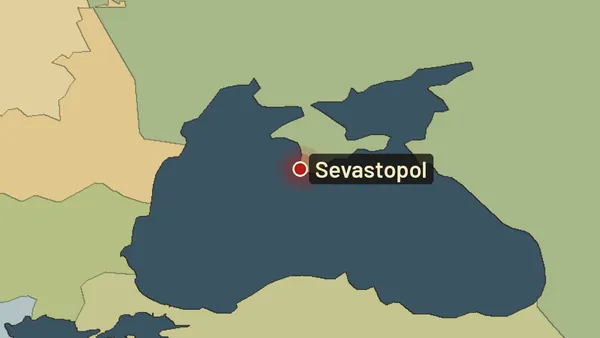 Ottoman entry into World War IIn autumn 1914 the Ottoman Empire went from secret alliance to open war. The German treaty, the seized battleships, the Goeben and Breslau, the Black Sea raid of 29 October and what followed.
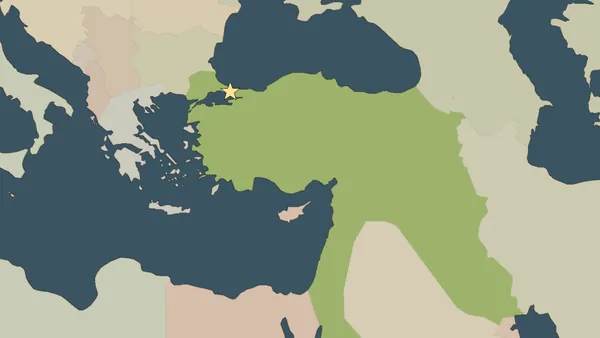 Enver PashaEnver Pasha, hero of the 1908 revolution and Ottoman war minister, took the empire into World War I. His rise, Sarıkamış, his flight in 1918 and death in Central Asia.
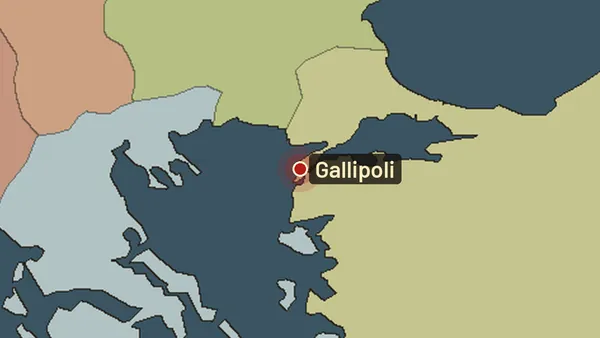 Gallipoli CampaignIn 1915 Britain and France tried to force the Dardanelles and take Constantinople. The naval defeat of 18 March, the landings of 25 April, Mustafa Kemal, Anzac Cove and the evacuation, explained.
More questions
- Why did the First World War start?
- When did the First World War start and end?
- How many people died in the First World War?
- Who won the First World War?
- Which countries fought in the First World War?
- What was the Schlieffen Plan?
- Why did the United States enter the First World War?
- What new weapons were used in the First World War?
- Why did the Western Front become a stalemate?
- How did the First World War end?
- How did the First World War lead to the Second?
Play this moment
Free in your browser, no download needed.
Sources and further reading
Figures and dates in this article follow these works; where historians disagree, the range of estimates is given.
- Mustafa Aksakal, The Ottoman Road to War in 1914 (2008)
- Edward J. Erickson, Ordered to Die: A History of the Ottoman Army in the First World War (2001)