 World Wars: 1914–20XX
Overview
The Second World War (1939–1945): causes, course and consequences
In this article
The Second World War was the largest war in history. It was fought between the Allies and the Axis powers from 1939 to 1945 in Europe, North Africa, the Middle East, Asia and on all the oceans, and drew in most of the world's states. More people died in it than in any other conflict, and the majority of the dead were civilians.
The road to war
The settlement after the First World War left many disputes unresolved, and the Great Depression that began in 1929 weakened democratic governments across Europe. In Germany, Adolf Hitler became chancellor on 30 January 1933 and established a dictatorship that rejected the Treaty of Versailles. Japan occupied Manchuria in 1931 and began a full-scale war against China in July 1937. Italy, under Benito Mussolini, invaded Ethiopia in 1935.
Germany rearmed, annexed Austria in March 1938 and, under the Munich Agreement of September 1938, the Sudetenland of Czechoslovakia. Britain and France accepted this in the hope of avoiding war, a policy known as appeasement. In March 1939 Germany occupied the rest of the Czech lands, and Britain and France gave guarantees to Poland. On 23 August 1939 Germany and the Soviet Union signed a non-aggression pact, with a secret protocol dividing Eastern Europe into spheres of influence.
1939–1940: Germany's early victories
Germany invaded Poland on 1 September 1939, and Britain and France declared war on 3 September. The Soviet Union invaded eastern Poland on 17 September, and Poland was divided between the two. In the winter of 1939–1940 the Soviet Union fought Finland in the Winter War. In April 1940 Germany occupied Denmark and Norway, and on 10 May it attacked the Netherlands, Belgium and France. German armoured forces broke through in the Ardennes and reached the Channel; more than 330,000 British and French soldiers were evacuated from Dunkirk. Italy entered the war on 10 June, and France signed an armistice on 22 June. In the Battle of Britain, from July to October 1940, the Royal Air Force prevented Germany from gaining the air superiority needed for an invasion.
1941: the war becomes global
In spring 1941 Germany and its allies occupied Yugoslavia and Greece, and German forces arrived in North Africa to support Italy. On 22 June 1941 Germany and its allies invaded the Soviet Union in Operation Barbarossa. They advanced deep into Soviet territory and took millions of prisoners, but were stopped before Moscow, where the Red Army counter-attacked on 5 December. On 7 December Japan attacked the US fleet at Pearl Harbor and launched offensives across Southeast Asia and the Pacific. Germany and Italy declared war on the United States on 11 December. The war in Europe and the war in Asia had become a single world war.
1942–1943: the turning points
In the first half of 1942 Japan took Malaya, Singapore, the Philippines, the Dutch East Indies and Burma. The US Navy's victory at Midway in June 1942, where Japan lost four aircraft carriers, ended Japanese expansion in the Pacific, and the long struggle for Guadalcanal followed. In North Africa, the British Eighth Army defeated German and Italian forces at El Alamein in October and November 1942, and American and British troops landed in Morocco and Algeria. At Stalingrad, the German Sixth Army was encircled and surrendered on 2 February 1943. In July 1943 the German offensive at Kursk was halted, and from then on the Soviet army held the initiative in the east. The Allies landed in Sicily in July 1943, Mussolini was deposed, and Italy signed an armistice with the Allies, announced on 8 September. In the Atlantic, Allied escorts and aircraft gained the upper hand over German submarines in May 1943.
1944–1945: the end of the war
On 6 June 1944 the Western Allies landed in Normandy, and on 22 June the Soviet army launched Operation Bagration, which destroyed a large part of the German Army Group Centre. Paris was liberated in August. A last German offensive in the Ardennes in December 1944 failed. In 1945 Soviet forces advanced to Berlin and the Western Allies crossed the Rhine. Hitler killed himself on 30 April, and Germany surrendered unconditionally on 7 and 8 May 1945. In the Pacific, American forces took Iwo Jima and Okinawa after heavy fighting. The United States dropped atomic bombs on Hiroshima on 6 August and Nagasaki on 9 August, and the Soviet Union declared war on Japan on 8 August. Japan announced its surrender on 15 August and signed the instrument of surrender on 2 September 1945.
Civilians and the Holocaust
Civilians suffered on a scale never seen before: in bombing raids on cities, under occupation, through forced labour, hunger and mass reprisals, and in the expulsion of populations. Nazi Germany carried out the systematic murder of about six million European Jews, known as the Holocaust, together with the killing of Roma, disabled people, Soviet prisoners of war and other groups. The Soviet Union, China and Poland had the highest death tolls in absolute numbers; estimates for each country differ between sources.
Consequences
The United Nations was founded in 1945, with its Charter coming into force on 24 October. Germany and Austria were divided into Allied occupation zones, and leading German and Japanese officials were tried for war crimes at Nuremberg and Tokyo. Europe was soon split between a Soviet-dominated east and a western bloc, the beginning of the Cold War. The United States and the Soviet Union emerged as the two leading powers, the European colonial empires began to break up, and the use of the atomic bomb began the nuclear age.
Did you know?
- Turkey stayed neutral for most of the war, signed a treaty of alliance with Britain and France in October 1939, and declared war on Germany and Japan on 23 February 1945, which allowed it to take part in the founding conference of the United Nations.
- The German surrender was signed twice: at Reims on 7 May 1945 and in Berlin late on 8 May. Because of the time difference, Victory Day is marked on 9 May in Russia and several other countries.
- Switzerland, Sweden, Portugal and Ireland remained officially neutral throughout the war; Spain, which declared itself "non-belligerent" from 1940 to 1943, sent a volunteer division to fight against the Soviet Union.
- Japanese soldier Hiroo Onoda, who had not received orders to surrender, continued to hold out in the Philippines until 1974.
Key events, year by year
1936
1938
1939
- Occupation of Czechoslovakia
- The Molotov–Ribbentrop Pact
- Invasion of Poland
- Soviet invasion of Poland
- Winter War
1940
- Operation Weserübung
- Battle of France
- Dunkirk evacuation
- Italy enters World War II
- Armistice of 22 June 1940
- Battle of Britain
- Tripartite Pact
1941
1942
1943
1944
1945
Play this moment
Free in your browser, no download needed.
Sources and further reading
Figures and dates in this article follow these works; where historians disagree, the range of estimates is given.
- Gerhard L. Weinberg, A World at Arms: A Global History of World War II (1994)
- Richard Overy, Why the Allies Won (1995)
- Richard J. Evans, The Third Reich at War (2008)
- Zara Steiner, The Triumph of the Dark: European International History 1933–1939 (2011)
- David M. Glantz, Jonathan M. House, When Titans Clashed: How the Red Army Stopped Hitler (1995)
- Ronald H. Spector, Eagle Against the Sun: The American War with Japan (1985)
- Wikipedia (English)
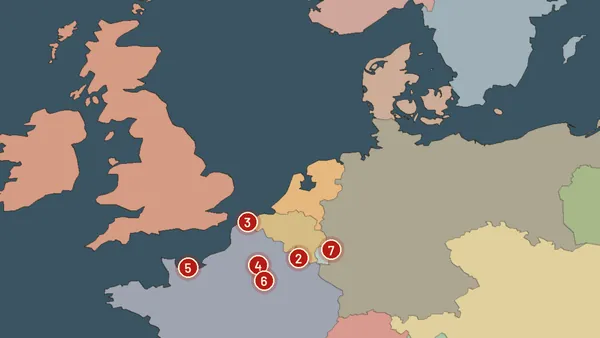 Western Europe, 1939–1945
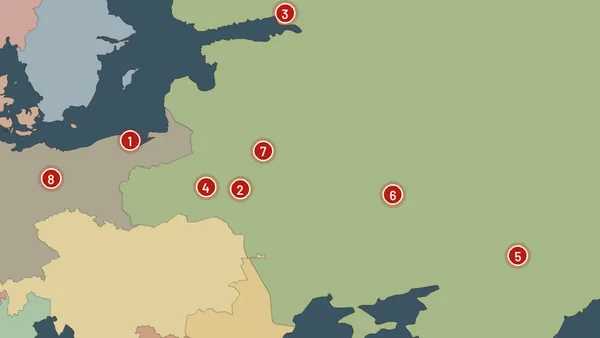 Eastern Front, 1939–1945
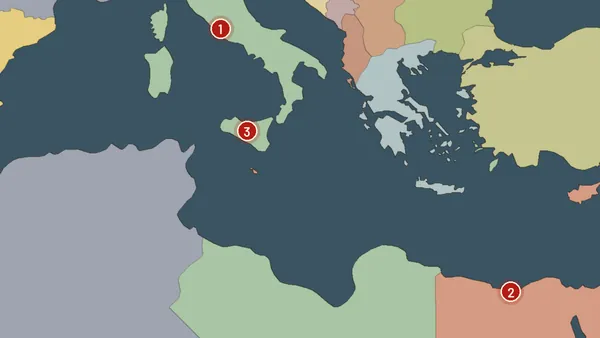 Mediterranean and North Africa
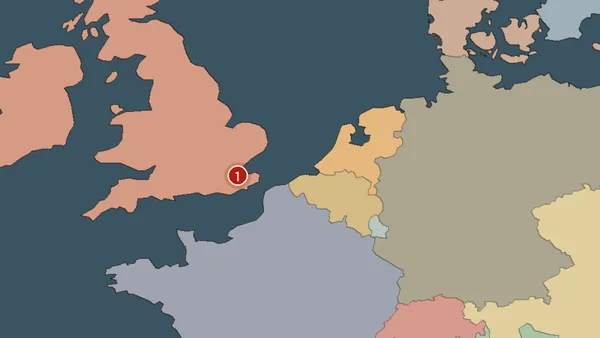 Air war, 1939–1945