 World Wars: 1914–20XX
Overview
The First World War (1914–1918): causes, course and consequences
In this article
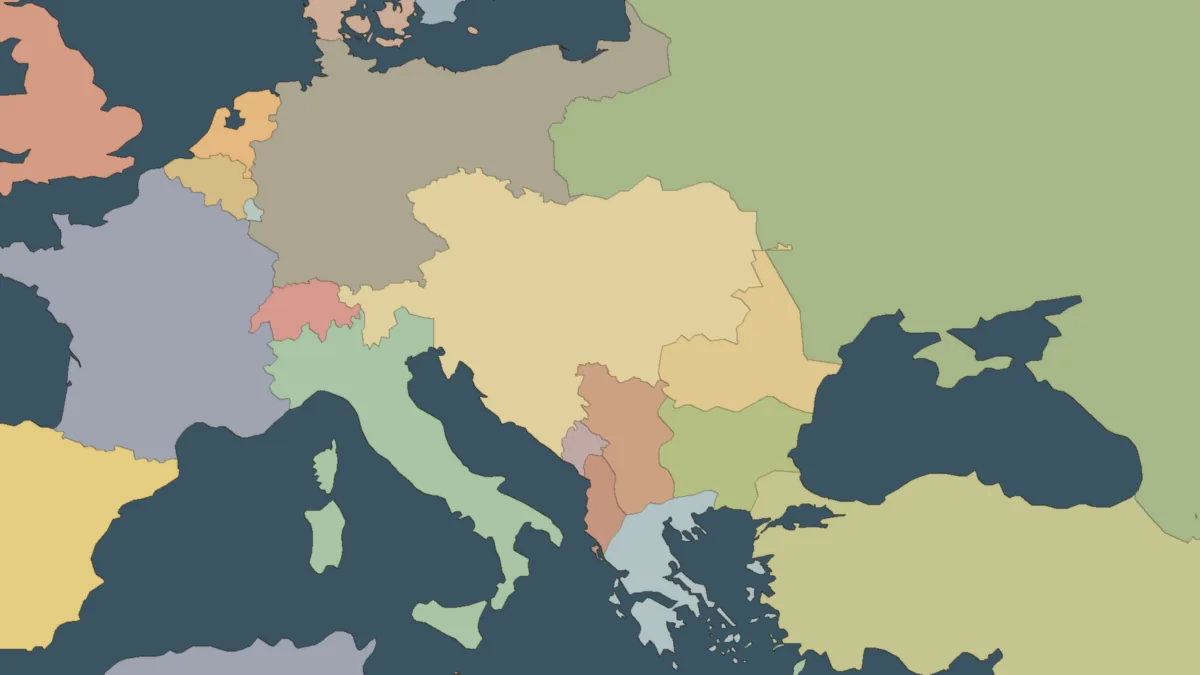
The First World War was fought between two coalitions, the Allied Powers and the Central Powers, from the summer of 1914 to the autumn of 1918. It began as a conflict in the Balkans and grew within a week into a war between the great powers of Europe, then spread to the Middle East, Africa, Asia and the oceans. Around 65 million men were mobilised. When the fighting stopped, four empires had collapsed and the map of Europe and the Middle East was redrawn.
How the war began
By 1914 Europe was divided into two alliance systems: the Triple Alliance of Germany, Austria-Hungary and Italy, and the Triple Entente of France, Russia and Britain. The powers were competing in armaments, in colonies and in influence in the Balkans, where the Ottoman Empire had lost most of its territory in the Balkan Wars of 1912–1913.
On 28 June 1914 the heir to the Austro-Hungarian throne, Archduke Franz Ferdinand, was assassinated in Sarajevo by Gavrilo Princip, a Bosnian Serb linked to a Serbian nationalist secret society. In the weeks that followed, known as the July Crisis, Austria-Hungary, with German backing, sent an ultimatum to Serbia and declared war on it on 28 July. Russia mobilised in support of Serbia. Germany declared war on Russia on 1 August and on France on 3 August, and invaded Belgium to reach France. Britain, a guarantor of Belgian neutrality, declared war on Germany on 4 August.
Historians still debate how responsibility should be shared. In the 1960s Fritz Fischer argued that German leaders had deliberately sought a war; more recent studies, such as Christopher Clark's The Sleepwalkers, describe a crisis in which decisions in several capitals together led to war.
1914: the war of movement ends in the trenches
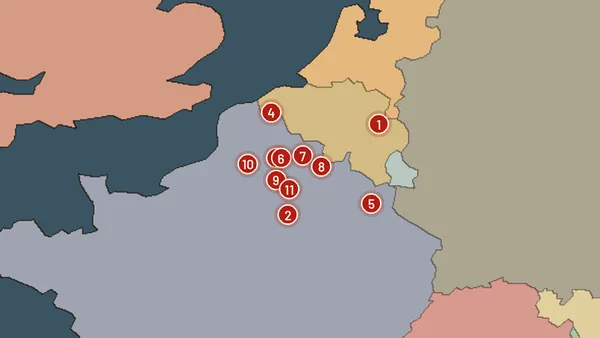
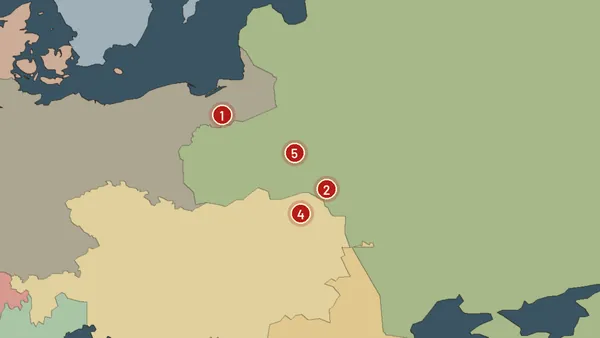
Germany's plan was to defeat France quickly through Belgium and then turn east. The German advance was stopped at the Battle of the Marne in September 1914. Both sides then tried to outflank each other northwards in the "race to the sea", and by the end of the year a line of trenches ran from the Channel coast to Switzerland. In the east, German forces defeated a Russian army at Tannenberg in August, while Russian forces defeated Austria-Hungary in Galicia. Serbia drove back two Austro-Hungarian invasions. The Ottoman Empire entered the war on the side of the Central Powers in November, opening fronts in the Caucasus and the Middle East.
1915: new fronts and new weapons
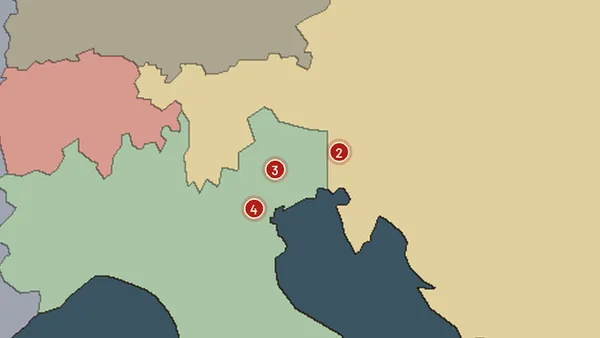
Unable to break through in France, the Allies looked for other routes. In February 1915 Britain and France began the Dardanelles campaign; the naval attack of 18 March and the landings at Gallipoli from 25 April failed, and the peninsula was evacuated by January 1916. Italy joined the Allies in May 1915 and opened a front against Austria-Hungary along the Isonzo river and in the Alps. In the east, the German and Austro-Hungarian offensive at Gorlice–Tarnów pushed the Russian armies out of Poland. Bulgaria joined the Central Powers in October, and Serbia was occupied by the end of the year. In April 1915, at Ypres, the German army made the first large-scale use of poison gas on the Western Front.
1916: the year of attrition
1916 brought the longest battles of the war. At Verdun, from February to December, the German and French armies each lost hundreds of thousands of men killed, wounded or captured. The British and French offensive on the Somme, which began on 1 July, lasted until November and saw the first use of tanks on 15 September. On 31 May and 1 June the British and German fleets met at Jutland, the largest naval battle of the war, which did not change the balance at sea. In the east, the Russian offensive led by Aleksei Brusilov inflicted heavy losses on Austria-Hungary, and Romania entered the war on the Allied side in August, but was largely occupied by the end of the year. In Mesopotamia, a British and Indian force surrendered at Kut in April.
1917: revolution and American entry
In February 1917 Germany resumed unrestricted submarine warfare. Together with the Zimmermann Telegram, this led the United States to declare war on Germany on 6 April. In Russia, the February Revolution ended the rule of Tsar Nicholas II, and the October Revolution brought the Bolsheviks to power; they opened armistice talks with the Central Powers in December. On the Western Front the French Nivelle offensive failed and was followed by mutinies in the French army, while the British offensive at Passchendaele (Third Ypres) lasted from July to November. In October the Austro-Hungarian and German breakthrough at Caporetto forced the Italian army back to the Piave. In the Middle East, British forces took Baghdad in March and Jerusalem in December.
1918: the last offensives and the armistices
In March 1918 Soviet Russia signed the Treaty of Brest-Litovsk and left the war. Germany moved divisions to the west and launched a series of spring offensives from 21 March. They gained ground but did not break the Allied armies. From July the Allies, now under the overall coordination of Ferdinand Foch and joined by more than a million American soldiers, counter-attacked at the Second Battle of the Marne and, from 8 August at Amiens, in the series of advances known as the Hundred Days Offensive. The Central Powers then left the war one by one: Bulgaria signed the Armistice of Salonica on 29 September, the Ottoman Empire the Armistice of Mudros on 30 October, and Austria-Hungary the Armistice of Villa Giusti on 3 November. Germany signed the armistice at Compiègne on 11 November 1918, and the fighting stopped at 11 a.m.
The cost of the war
Encyclopædia Britannica gives about 8.5 million military dead and 21 million wounded; other studies give higher totals, especially for the armies whose records were lost. Several million civilians also died from military action, hunger and disease; estimates differ widely depending on what is counted. The influenza pandemic of 1918–1919, which spread with the movement of troops, killed tens of millions more around the world and is usually counted separately. Detailed figures by country are on our statistics page.
The peace settlement and its consequences
The Paris Peace Conference of 1919 produced a series of treaties: Versailles with Germany (28 June 1919), Saint-Germain with Austria, Neuilly with Bulgaria and Trianon with Hungary. The Treaty of Sèvres with the Ottoman Empire (1920) was never put into effect; after the Turkish War of Independence it was replaced by the Treaty of Lausanne in 1923, which recognised the borders of the new Republic of Turkey. New or restored states appeared, among them Poland, Czechoslovakia, the Kingdom of Serbs, Croats and Slovenes, Finland and the Baltic states. Former Ottoman territories in the Middle East and German colonies became mandates under the new League of Nations. Disputes left by the settlement, together with the economic crises of the following years, are among the factors historians cite in explaining the road to the Second World War.
Did you know?
- The war was usually called "the Great War" at the time; the name "First World War" became common only after a second world war began in 1939.
- The armistice of 11 November 1918 was signed in a railway carriage in the forest of Compiègne. In June 1940 the same carriage was used for the French–German armistice.
- On the Western Front, informal truces took place at Christmas 1914 in several sectors, where soldiers of both sides met in no man's land.
- The front line in France and Belgium was roughly 700 kilometres long and moved relatively little between late 1914 and spring 1918.
Key events, year by year
1906
1914
- Assassination of Franz Ferdinand
- July Crisis
- Germany declares war on Russia and France
- Machine gun in WWI
- Heavy artillery in WWI
- Naval mines in WWI
- Aircraft in WWI
- Invasion of Belgium
- Battle of the Frontiers
- Battle of Galicia
- Battle of Tannenberg
- First Battle of the Marne
- Trench warfare
- U-boats in World War I
- First Battle of Ypres
- Ottoman entry into World War I
- Coronel and the Falklands
- Battle of Kolubara
- Battle of Sarikamish
1915
- Zeppelin raids
- Gallipoli Campaign
- Second Battle of Ypres
- Poison gas in World War I
- Italy enters World War I
- Gorlice–Tarnów Offensive
- Sinking of the Lusitania
- Battles of the Isonzo
- Bulgaria joins the Central Powers
- Battle of Ctesiphon
1916
- Erzurum Offensive
- Battle of Verdun
- Siege of Kut
- Battle of Jutland
- Brusilov Offensive
- Arab Revolt
- Battle of the Somme
- Romania enters the war
- The first tanks (Flers–Courcelette)
- Murder of Rasputin
1917
- U-boats and the Zimmermann Telegram
- Russian Revolutions of 1917
- Fall of Baghdad
- Gaza and Beersheba
- United States enters the war
- Nivelle Offensive
- Kerensky Offensive
- Battle of Passchendaele
- Battle of Caporetto
- Battle of Cambrai
- Capture of Jerusalem
1918
- The Fourteen Points
- Treaty of Brest-Litovsk
- German Spring Offensive
- The Paris Gun
- Battle of the Piave
- Second Battle of the Marne
- Hundred Days Offensive
- Battle of Dobro Pole
- Battle of Megiddo
- Meuse-Argonne Offensive
- Armistice of Salonica
- Battle of Vittorio Veneto
- Armistice of Mudros
- Armistice of Villa Giusti
- Kiel mutiny and German Revolution
- Armistice of 11 November 1918
1919
Leaders
Countries
Play this moment
Free in your browser, no download needed.
Sources and further reading
Figures and dates in this article follow these works; where historians disagree, the range of estimates is given.
- Hew Strachan, The First World War (2003)
- David Stevenson, 1914–1918: The History of the First World War (2004)
- Christopher Clark, The Sleepwalkers: How Europe Went to War in 1914 (2012)
- Margaret MacMillan, The War That Ended Peace: The Road to 1914 (2013)
- Margaret MacMillan, Paris 1919: Six Months That Changed the World (2002)
- Alexander Watson, Ring of Steel: Germany and Austria-Hungary at War, 1914–1918 (2014)
- Wikipedia (English)
 Western Front, 1914–1918
 Eastern Front, 1914–1918
 Italian Front, 1915–1918
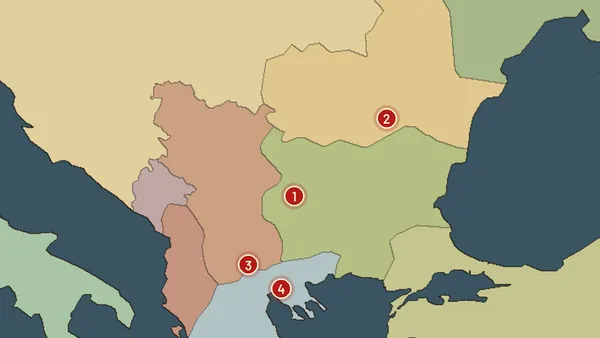 Balkan and Salonika fronts
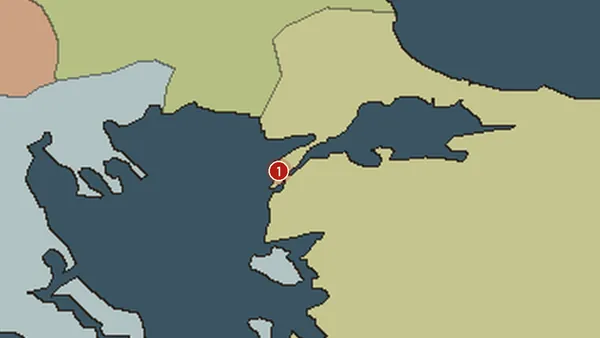 Dardanelles and Gallipoli
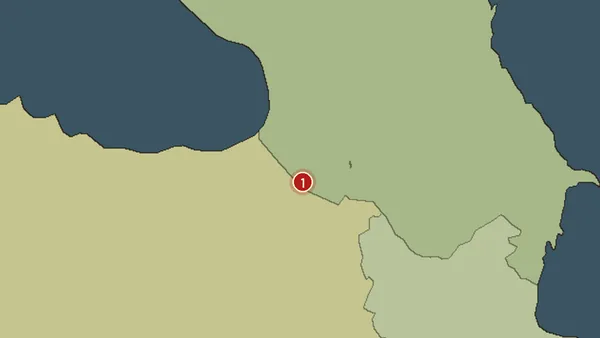 Caucasus Front, 1914–1918
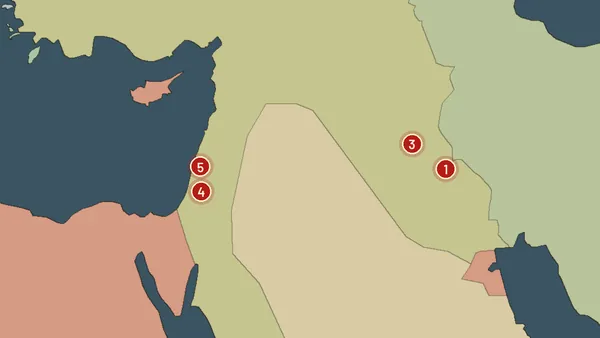 Middle East fronts, 1914–1918
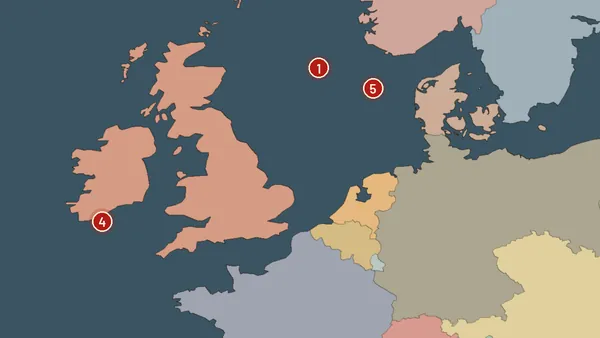 War at sea, 1914–1918
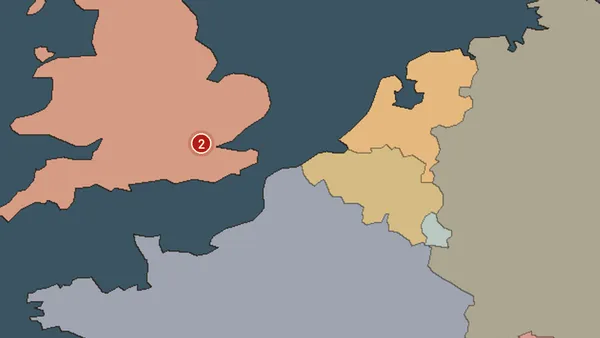 War in the air, 1914–1918